
When customers walk into a grocery store, they are not just looking at one product. They are comparing the overall value they get from their shopping trip. A small difference in the price of milk, rice, snacks, or household essentials can influence where they choose to shop next.
This is why grocery retailers need to understand how their prices compare with competitors. Through grocery retail price benchmarking services, businesses can identify pricing gaps, strengthen their market position, and improve customer trust.
For retailers looking to make informed pricing decisions, Nexdigm helps transform pricing data into practical business insights that support growth and profitability.
How Competitive Is the Grocery Price Position?
The answer lies in how your prices compare with competitors across the products customers buy most often. A retailer may offer low prices on a few key items, but if the overall shopping basket is more expensive, customers may still perceive another store as a better value option. Through grocery retail price benchmarking services, retailers can evaluate basket prices, key categories, leading brands, and promotional offers to understand their true market position. With Nexdigm’s data-driven approach, businesses can identify pricing gaps, improve value perception, and create strategies that balance competitiveness with profitability.
Why Grocery Price Benchmarking Matters
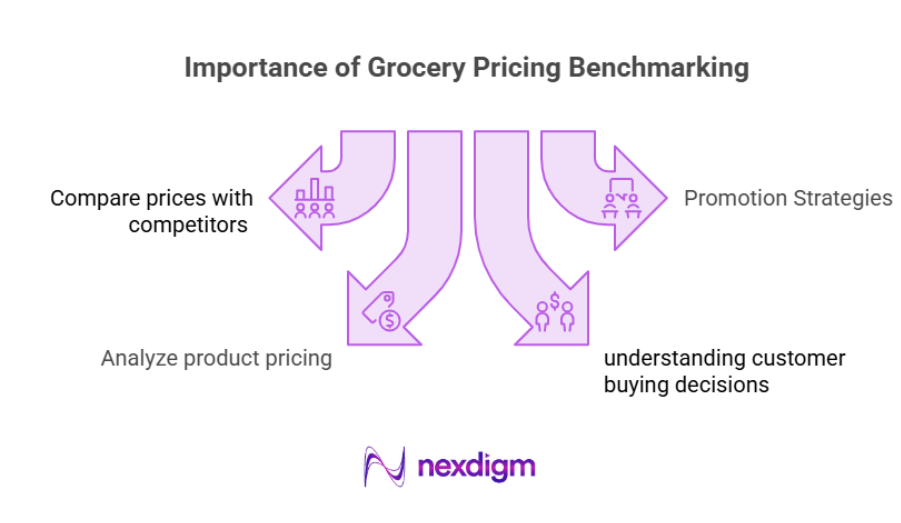
Many retailers focus on pricing individual products. However, customers typically evaluate the total cost of their shopping basket. For example, a store may offer the lowest price on cooking oil but have higher prices across other common grocery items. As a result, customers may still perceive another retailer as offering better overall value. Price benchmarking helps retailers with:
- Compare prices with competitors
- Analyzing products are priced too high or too low
- Understanding the categories influencing customer buying decisions
- Promotion Strategies delivering results
Looking at Prices the Way Customers Do
A strong pricing strategy requires retailers to look beyond single products. A strong pricing strategy requires retailers to look beyond single products. Today shoppers evaluate the overall value they receive from their entire purchase, not just the price of one or two items. They usually compare the following aspects:
Shopping Basket Comparison
Shopping Basket Comparison involves analyzing the total cost of a group of products that customers typically purchase together rather than comparing individual item prices. This approach helps retailers measure their overall price competitiveness and understand how customers perceive value across their entire shopping experience. By evaluating complete baskets, businesses can identify pricing gaps, optimize promotions, and strengthen their market positioning.
Category Comparison
Not all product categories influence customer price perception equally. Retailers focus on high-visibility categories to understand how their pricing compares with competitors and impacts purchasing decisions. Categories that typically attract the most customer attention include:
- Fresh produce
- Dairy products
- Beverages
- Packaged foods
- Household essentials
Benchmarking these categories can reveal where improvements are needed.
Brand Comparison
Well-known brands are often used by customers to compare prices across stores. Monitoring brand-level pricing helps retailers stay competitive without sacrificing margins. Since customers are typically familiar with the prices of popular brands, even small pricing differences can significantly influence store preference and purchasing decisions.
Promotion Comparison
Discounts and offers play a major role in grocery shopping decisions. Retailers must understand how promotional activities influence both customer behavior and overall market competitiveness. Retailers must understand:
- Competitor promotions
- Discount frequency
- Bundle offers
- Loyalty rewards
Analyzing promotional strategies across the market also helps retailers identify which offers resonate most with customers and drive repeat purchases. This helps create effective promotions without unnecessary price reductions. Additionally, it enables retailers to maximize promotional ROI while maintaining profitability and long-term customer loyalty.
How Nexdigm Supports Grocery Retail Markets
In a competitive retail market, pricing decisions need to be based on facts rather than assumptions. This is where Nexdigm’s grocery retail price benchmarking services provide value. Nexdigm helps retailers gain a clear view of the market by analyzing prices across products, categories, brands, and promotional campaigns. Nexdigm’s approach includes:
- Competitor pricing analysis: Monitor competitor pricing trends to identify market positioning opportunities, pricing gaps, and strategies that support competitive advantage.
- Shopping basket benchmarking: Compare the total cost of commonly purchased products to evaluate overall price competitiveness from a customer’s perspective.
- Category-level assessments: Analyze pricing performance within key product categories to identify opportunities for optimization and improved market positioning.
- Brand price comparisons: Evaluate pricing of popular brands across competitors to maintain competitiveness while protecting profitability and customer trust.
- Promotion effectiveness reviews: Assess the impact of discounts, offers, and loyalty programs on sales performance, customer engagement, and margins.
By combining market intelligence with business analysis, Nexdigm helps retailers make confident pricing decisions that support both customer satisfaction and profitability.
Benefits of Nexdigm’s Grocery Retail Price Benchmarking Services
Retailers that leverage Nexdigm’s grocery retail price benchmarking services can gain several strategic advantages in an increasingly competitive market. By providing a clear understanding of market pricing trends and consumer value perceptions, Nexdigm helps businesses:
- Identify pricing gaps and opportunities across key categories
- Improve overall basket competitiveness
- Optimize promotional strategies for better results
- Strengthen customer value perception and loyalty
- Protect margins while remaining competitive
- Make data-driven pricing decisions with confidence
- Enhance brand positioning in the marketplace
Through actionable insights and market intelligence, Nexdigm enables retailers to create pricing strategies that not only attract customers but also support sustainable growth and profitability.
Why Choose Nexdigm?
Nexdigm helps grocery retailers make smarter pricing decisions through its data-driven approach to market and competitor analysis. By evaluating basket prices, categories, brands, and promotions, Nexdigm provides actionable insights that help businesses improve competitiveness, strengthen customer value perception, and protect profitability. With its deep understanding of the retail sector, Nexdigm enables retailers to develop effective pricing strategies that support sustainable growth and long-term success.
Nexdigm’s Case
In a recent engagement, Nexdigm supported a grocery retail client in benchmarking price competitiveness across baskets, categories, brands, and promotions. Real-time analysis improved pricing accuracy by 31%, identified margin improvement opportunities by 20%, enhanced promotional effectiveness by 25%, and strengthened competitive positioning.
This approach enabled the client to optimize price architecture, balance customer value with profitability, and make informed decisions for sustainable retail growth.
To take the next step, simply visit our Request a Consultation page and share your requirements with us.
Harsh Mittal
+91-8422857704