
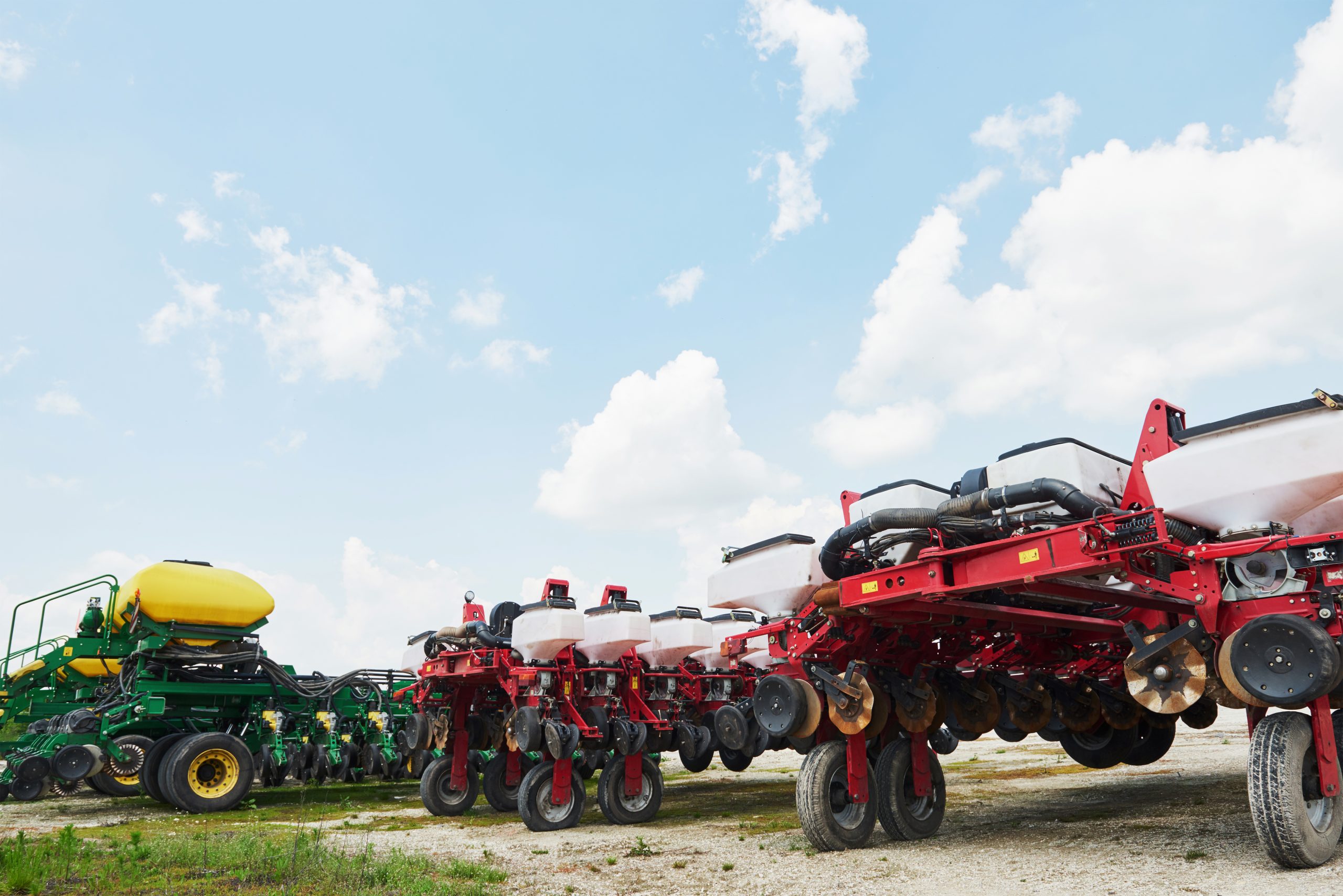
The harvester equipment market is shaped by manufacturers competing across machine capacity, crop specialization, automation, and geographic reach. Mordor Intelligence estimates the global combine harvester market at US$12.74 billion in 2026, with a projected 5.28% CAGR through 2031.
North America accounted for 31.85% of market revenue in 2025, while Asia-Pacific is forecast to grow at 7.85% annually through 2031. Major participants include Deere & Company, CNH Industrial, CLAAS, AGCO, and Kubota. These manufacturers differ in product portfolios, technology capabilities, and regional presence.
Through harvester equipment vendor landscape research, businesses get help in understanding the competitive environment and identifying manufacturers relevant to their market and procurement requirements.
How Harvester Manufacturers Compete Across Equipment Segments
Harvester manufacturers serve different agricultural requirements through self-propelled combines, tractor-mounted machines, forage harvesters, and specialized crop equipment. Competition also varies by power output, harvesting capacity, automation, and precision technology. Mordor Intelligence estimates that self-propelled models represented 71.35% of the global combine harvester market in 2025, highlighting the importance of high-capacity equipment in commercial farming operations.
Factors That Influence Harvester Supplier Selection
Identifying a suitable manufacturer requires evaluating more than equipment specifications. Buyers should consider:
- Capacity and Crop Compatibility: Compare harvesting width, throughput, engine power, and crop-specific configurations against acreage, crop varieties, and seasonal operating requirements.
- Technology and Automation: Assess precision guidance, yield monitoring, automation features, connectivity, and data integration to understand productivity and operational benefits.
- Regional Presence and Service Support: Examine dealer coverage, spare-parts availability, maintenance infrastructure, and technical assistance across intended equipment deployment locations.
These factors help businesses compare manufacturers based on practical equipment requirements and long-term operating considerations.
Nexdigm’s Harvester Manufacturer Intelligence for Supplier Selection
Our industry-led expertise helps agricultural businesses understand the companies shaping the harvester equipment market. Our experts research global and regional manufacturers, product portfolios, manufacturing capabilities, technology offerings, and competitive positioning. This creates a structured view of established brands, specialized equipment providers, and regional participants across different harvesting segments.
Where Nexdigm’s Research Distinguishes Market Leaders from Specialized Providers
A large manufacturer may offer broad product coverage, while a specialized supplier may have stronger capabilities in particular crops or regional markets. Our harvester equipment vendor landscape research can examine three areas:
- Manufacturer Portfolio Mapping: Identify leading and emerging manufacturers across combine, forage, rice, and other specialized harvesting equipment categories.
- Technology and Product Differentiation: Compare equipment capacity, automation features, precision systems, crop adaptability, and product innovation across selected manufacturers.
- Regional Competitive Positioning: Examine manufacturing locations, distribution networks, market presence, and service infrastructure to understand supplier strengths across geographies.
This analysis helps organizations distinguish broad-market leaders from providers with specialized product or regional advantages.
How Nexdigm’s Experts Assess Manufacturer Capabilities Against Procurement Priorities
Our experts help agricultural businesses evaluate whether harvester manufacturers can meet their equipment sourcing and operational requirements. Our research examines four areas:
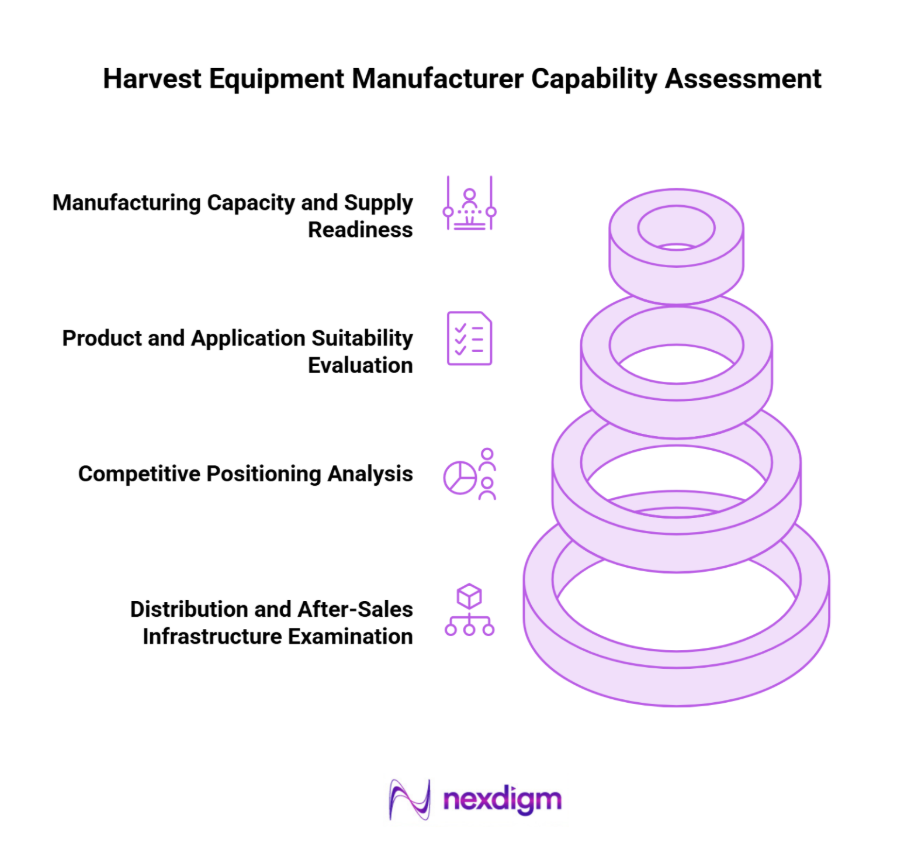
- Manufacturing Capacity and Supply Readiness: Assess production capabilities, manufacturing facilities, output capacity, and product availability to understand manufacturers’ ability to meet demand.
- Product and Application Suitability: Evaluate equipment specifications, harvesting capacity, crop compatibility, and available configurations against the intended applications and operating conditions.
- Commercial and Competitive Positioning: Compare product segments, pricing indicators, market positioning, and value propositions to understand differences among selected manufacturers.
- Distribution and After-Sales Infrastructure: Examine dealer networks, spare-parts availability, maintenance facilities, and technical support to assess manufacturers’ ability to serve customers across target markets.
These insights help organizations identify suitable manufacturers, recognize capability gaps, and establish priorities for further supplier evaluation and procurement decisions.
Nexdigm’s Case
An agricultural equipment distributor sought to evaluate harvester manufacturers to identify suppliers aligned with different crop requirements, equipment capacities, and regional demand. Nexdigm assessed 18 manufacturers across product portfolios, harvesting capabilities, manufacturing capacity, pricing indicators, and distribution networks. The analysis found that 31% had limited product coverage for specialized crop applications, while 26% showed gaps in regional service and distribution infrastructure. Based on these findings, the distributor identified alternative manufacturers and shortlisted suppliers for further technical and commercial evaluation.
To take the next step, simply visit our Request a Consultation page and share your requirements with us.
Harsh Mittal
+91-8422857704