

Healthcare access is not the same for everyone. While medical services continue to expand, many communities still face challenges in reaching the right care at the right time. Distance from healthcare facilities, rising treatment costs, shortage of specialists, and limited digital access can prevent patients from receiving necessary services.
The need to identify these gaps is increasing as healthcare demand continues to grow. According to the WHO, around 4.5 billion people worldwide were not fully covered by essential health services in 2021, highlighting major challenges in healthcare availability and access.
A Healthcare accessibility demand study helps organizations understand where healthcare needs are increasing and where existing services are unable to meet patient requirements. Nexdigm helps healthcare providers analyze these gaps to identify areas where improvements are needed.
Finding Gaps Through Healthcare Data
Healthcare accessibility challenges often remain hidden when organizations look only at overall patient numbers. A region may appear to have sufficient healthcare capacity, while certain communities within that region may still experience limited specialty care availability.
Nexdigm helps organizations study healthcare demand at a deeper level by analyzing:
- Population health patterns
- Patient service utilization
- Geographic healthcare availability
- Care access trends
These insights allow healthcare providers to understand where demand exists and whether current services are reaching the people who need them.
Geographic Barriers Affecting Patient Access
Location continues to be one of the biggest factors influencing healthcare access. Rural and remote communities often experience challenges due to fewer healthcare facilities, limited specialists, and longer travel requirements.
According to the National Rural Health Association, rural populations in the United States continue to face shortages of healthcare professionals compared with urban areas. These shortages can delay diagnosis, treatment, and preventive care.
Nexdigm helps healthcare organizations map geographic demand patterns and identify areas where additional clinics, mobile healthcare services, or digital care options may improve accessibility.
Financial Challenges Impacting Healthcare Usage
Healthcare access is also influenced by affordability. Even when services are available, high costs can prevent patients from seeking timely treatment.
Financial barriers may lead to delayed appointments, postponed procedures, or reduced use of preventive healthcare services.
Nexdigm supports healthcare teams by analyzing utilization trends and identifying how financial factors affect patient behavior. These insights help organizations understand where affordability issues may be reducing healthcare engagement.
Service Availability Impacting Demand
Healthcare demand can change quickly due to population growth, aging trends, and rising chronic disease rates. However, service availability does not always increase at the same pace.
Nexdigm helps providers compare healthcare demand with existing service capacity. This allows organizations to identify underserved areas, plan expansions, and improve resource distribution.
Nexdigm’s Framework for Identifying Access Gaps
Nexdigm uses a data-driven approach to help healthcare organizations understand and address accessibility challenges. By identifying barriers and underserved populations, organizations can improve healthcare access and service delivery by:
- Mapping Healthcare Demand: Nexdigm analyzes population and utilization data to identify regions where healthcare demand is increasing.
- Understanding Patient Barriers: The platform helps organizations evaluate factors affecting access, including location, cost, and service availability.
- Improving Resource Planning: Insights from Nexdigm’s support decisions around new facilities, digital healthcare solutions, and service expansion.
- Measuring Access Improvements: Healthcare organizations can track whether changes improve patient engagement and reduce accessibility gaps over time.
How Nexdigm’s Framework Creates Value
Nexdigm’s healthcare accessibility framework helps organizations move from identifying problems to taking targeted action. By combining population data, patient utilization patterns, and healthcare service insights, the framework provides a clearer view of where demand is unmet and why gaps exist. Some key benefits include:
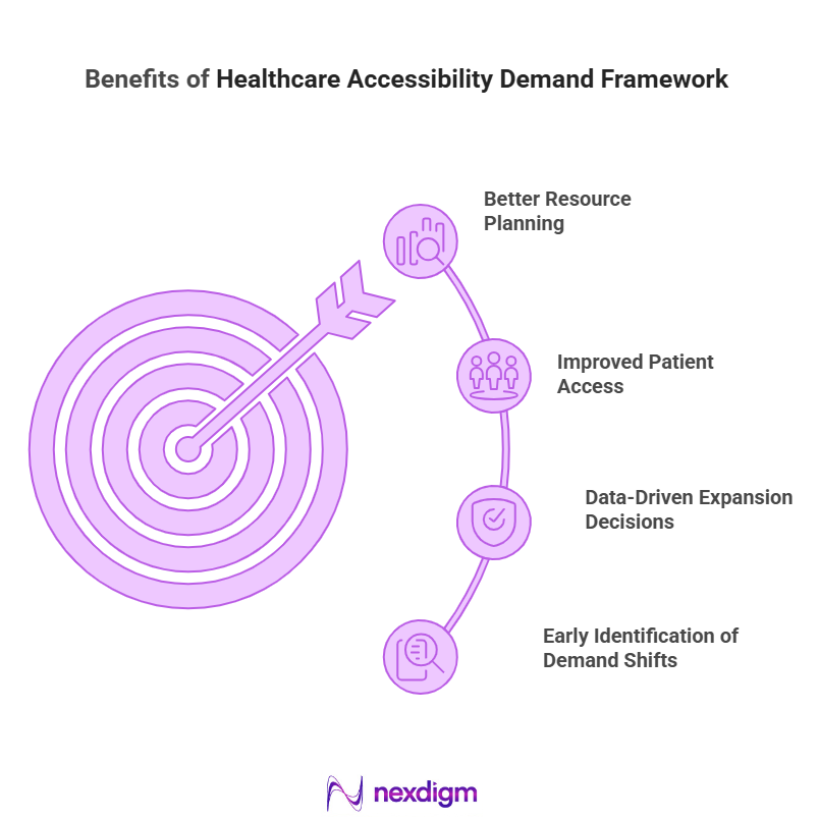
- Better Resource Planning: Nexdigm helps healthcare organizations understand where additional facilities, specialists, or digital care options are required. This supports smarter allocation of investments and resources.
- Improved Patient Access: By identifying geographic and service gaps, organizations can design solutions that make healthcare easier to reach for underserved populations.
- Data-Driven Expansion Decisions: Healthcare providers can use demand insights to evaluate new locations, service lines, and care models based on actual community needs.
- Early Identification of Demand Shifts: Nexdigm helps organizations track changing population trends and healthcare usage patterns, allowing them to prepare for future demand instead of responding after gaps appear.
Through this approach, Nexdigm helps healthcare organizations create targeted strategies that connect available resources with the communities that need them most.
Nexdigm’s Case
A regional healthcare network used Nexdigm’s accessibility analytics framework to identify underserved areas and service gaps. Within nine months, the organization improved patient access by 28%, reduced appointment delays by 22%, and identified new service expansion opportunities. The insights supported better resource allocation and improved community healthcare reach.
To take the next step, simply visit our Request a Consultation page and share your requirements with us.
Harsh Mittal
+91-8422857704