

Healthcare infrastructure is under increasing pressure as populations grow, people live longer, and chronic diseases become more common. Hospitals, clinics, diagnostic centers, and digital healthcare systems need to expand and adapt to meet changing healthcare requirements.
However, infrastructure growth is not always aligned with where demand is increasing. Some regions face overcrowded hospitals, limited specialty care, and shortages of healthcare facilities, while others may have resources that are not fully utilized.
According to the WHO, the global population aged 60 years and older is expected to reach 2.1 billion by 2050, increasing demand for long-term care, chronic disease management, and specialized healthcare services.
Nexdigm helps healthcare organizations evaluate infrastructure requirements by analyzing population trends, healthcare utilization patterns, and service demand data. These insights help providers make informed decisions.
The Growing Pressure on Healthcare Systems
Healthcare infrastructure is facing challenges from multiple directions. According to the WHO, noncommunicable diseases account for nearly 74% of global deaths, creating long-term requirements for hospitals, specialty centers, and continuous care programs.
Healthcare organizations need to understand whether existing infrastructure can support these changing needs. This includes evaluating hospital capacity, specialist availability, diagnostic services, outpatient facilities, and digital healthcare capabilities.
Nexdigm helps organizations study these factors together, providing a clearer picture of current infrastructure performance and future requirements.
Identifying Infrastructure Gaps with Data
Traditional healthcare planning often relies on historical demand and population estimates. However, healthcare needs can change quickly due to demographic shifts, disease patterns, and changes in patient behavior.
Nexdigm uses healthcare analytics to help organizations identify:
- Areas with growing healthcare demand
- Regions with limited service availability
- Gaps between patient needs and infrastructure capacity
- Opportunities for healthcare expansion
This data-driven approach allows providers to understand where investment is needed and where existing resources can be optimized.
Nexdigm’s Support in Building Healthcare Systems
Healthcare infrastructure decisions require a clear understanding of current challenges and future demand. Expanding facilities without understanding patient needs can result in inefficient investments, while insufficient planning can create access problems.
Through a Healthcare infrastructure market assessment, Nexdigm helps organizations evaluate healthcare capacity, identify growth opportunities, and align infrastructure with changing population and disease requirements.
As healthcare demand continues to rise, organizations that use data-driven insights will be better positioned to develop efficient, accessible, and sustainable healthcare systems that support communities over the long term.
Nexdigm’s Healthcare Infrastructure Assessment
Nexdigm’s assessment helps healthcare organizations evaluate infrastructure readiness by connecting demand insights with operational data.
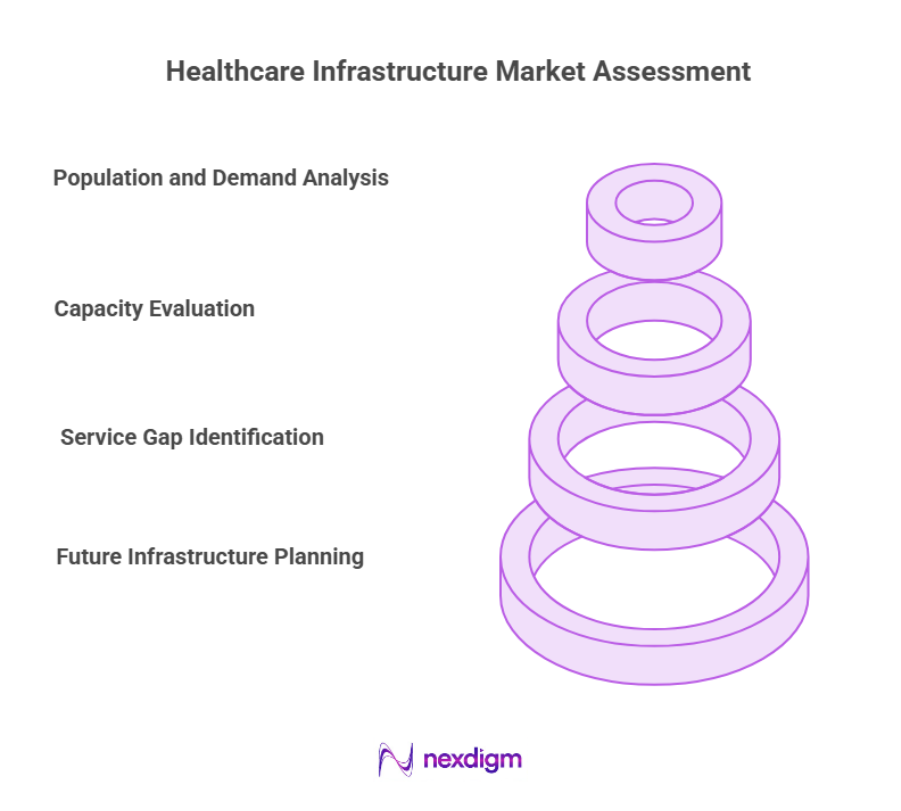
Population and Demand Analysis
Nexdigm analyzes demographic changes, disease trends, and healthcare utilization patterns to identify future demand requirements. This provides organization with:
- Prediction across areas with increasing healthcare needs
- Support towards long-term infrastructure planning
- Identification of emerging healthcare markets
Capacity Evaluation
The framework examines whether current healthcare facilities can support existing and future patient volumes. This leads to:
- Highlighting of capacity shortages
- Improvement in facility planning
- Support towards better workforce and equipment allocation
Service Gap Identification
Nexdigm helps identify where healthcare services are unavailable or insufficient compared with community requirements. This provides organizations with:
- Support in targeted healthcare expansion
- Improvement in access to specialty services
- Help in prioritizing investment decisions
Future Infrastructure Planning
By combining current data with future demand indicators, Nexdigm helps organizations prepare for upcoming healthcare challenges. This leads to:
- Reduction in investment uncertainty
- Support in sustainable healthcare growth
- Proactive decision-making
Through this assessment, Nexdigm helps organizations build resilient healthcare systems that support sustainable growth and improved patient outcomes.
Impact of Nexdigm’s Healthcare Infrastructure Assessment
Nexdigm’s assessment enables healthcare organizations to make informed infrastructure decisions by aligning capacity, resources, and services with evolving community needs. This helps improve healthcare accessibility, optimize investments, and strengthen long-term operational readiness.
Nexdigm’s Case
A regional healthcare provider used Nexdigm’s infrastructure assessment framework to evaluate capacity gaps and future demand. The analysis identified underserved areas, improved facility planning, and supported expansion decisions. Within 12 months, the organization achieved a 25% improvement in resource utilization, reduced planning delays by 20%, and enhanced healthcare access across key locations.\
To take the next step, simply visit our Request a Consultation page and share your requirements with us.
Harsh Mittal
+91-8422857704