

Laboratory supplies sit at the center of diagnostic, research, and clinical workflows, spanning reagents, consumables, instruments, equipment, and supporting products. The global laboratory supplies market was valued at approximately $48.8 billion in 2025 and is projected to reach $104.0 billion by 2034, representing an estimated 8.8% CAGR. North America accounted for 36.3% of the market in 2025.
The broader diagnostic ecosystem reinforces the importance of reliable laboratory sourcing. WHO estimates that diagnostic results influence aproximately 70% of healthcare decisions, while only 3–5% of healthcare budgets are allocated to diagnostic services. Reagents and consumables are also expected to remain an important part of clinical diagnostics, with one industry analysis projecting the segment to grow from $47.8 billion in 2024 to $66.4 billion by 2029.
For healthcare organizations, sourcing therefore requires more than finding available products. Healthcare laboratory supplies sourcing needs to consider product quality, supplier capability, compatibility, recurring demand, delivery reliability, and commercial value across different laboratory categories.
Laboratory Sourcing Is More Diverse Than a Single Procurement Basket
Laboratory requirements can range from frequently purchased reagents and plasticware to specialized analyzers and equipment. Each category carries different purchasing patterns, supplier structures, quality requirements, and replacement cycles. Reagents may require consistent availability and compatibility with specific platforms, while equipment sourcing involves installation, maintenance, training, and lifecycle support. This diversity means hospitals and diagnostic organizations often need different sourcing approaches for different laboratory requirements.
Laboratory Supply Requirements Vary Across the Procurement Cycle
Laboratory sourcing decisions can change depending on whether an organization is purchasing routine consumables, platform-specific reagents, or capital equipment. Factors such as usage frequency, product compatibility, shelf life, technical support, replacement cycles, and supplier availability can influence the appropriate sourcing route. Understanding these differences helps procurement teams build category strategies that balance operational reliability, flexibility, and cost efficiency.
Nexdigm’s Supply-Chain Visibility for Laboratory Sourcing
Nexdigm can help organizations develop a clearer view of the laboratory supply chain by examining five interconnected dimensions:
- Supplier Capabilities: Assess manufacturing strength, product portfolios, quality systems, capacity, certifications, and ability to meet laboratory-specific requirements.
- Product Dependencies: Identify reagents, consumables, or equipment that depend on specific platforms, technologies, manufacturers, or proprietary inputs, limiting substitution options.
- Sourcing Channels: Examine direct manufacturer relationships, distributors, regional suppliers, and other procurement routes to determine where each category can be sourced effectively.
- Geographic Exposure: Evaluate supplier locations, manufacturing concentration, distribution networks, and regional dependencies that could affect availability or lead times.
By connecting these dimensions, Nexdigm can help organizations identify where sourcing flexibility exists, where dependencies may create exposure, and where alternative procurement options could strengthen laboratory supply resilience.
How Experts of Nexdigm Source Potential Procurement Opportunities
Once the laboratory supply chain is mapped, Nexdigm can help identify where procurement opportunities exist across categories and suppliers:
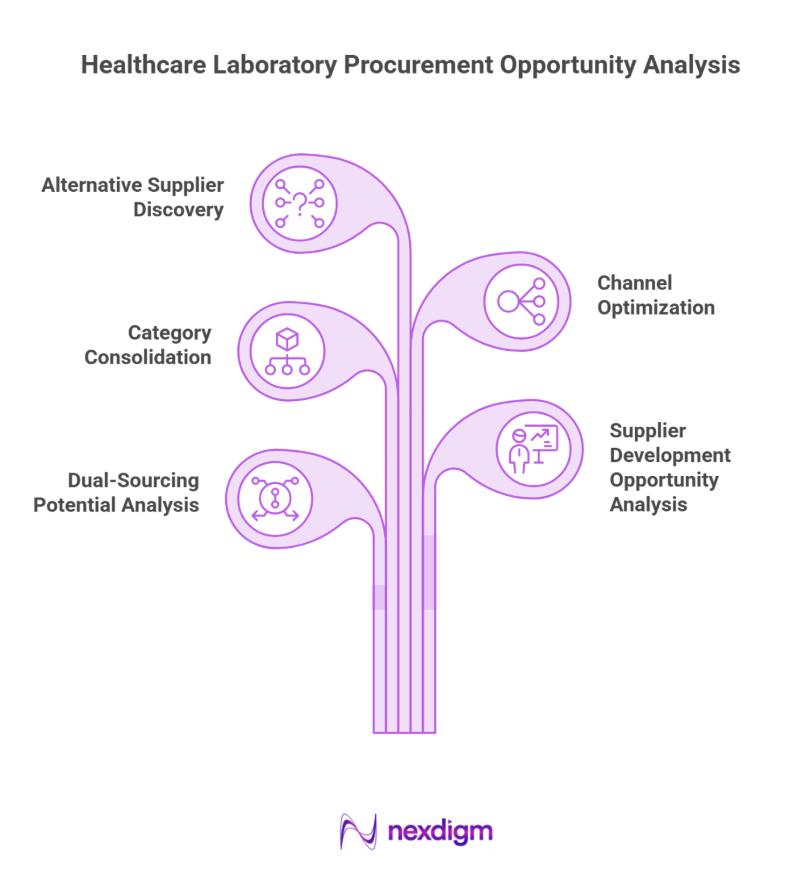
- Alternative Supplier Discovery: Identify qualified manufacturers, regional suppliers, and specialists that can expand the existing supplier pool.
- Category Consolidation: Identify products with similar specifications where supplier rationalization or volume aggregation may improve purchasing leverage.
- Dual-Sourcing Potential: Highlight critical categories where an additional qualified supplier could reduce dependency without unnecessarily increasing complexity.
- Channel Optimization: Assess whether direct sourcing, distributor relationships, or hybrid channels offer better commercial and operational outcomes.
- Supplier Development Opportunities: Identify existing suppliers with relevant capabilities that could potentially support broader product categories or volumes.
This helps convert healthcare laboratory supplies sourcing intelligence into actionable opportunities for cost optimization, supplier diversification, and stronger procurement resilience.
Nexdigm’s Prioritization of Laboratory Sourcing Opportunities
Not every sourcing opportunity carries the same value or feasibility. Nexdigm can help prioritize opportunities by considering spend potential, supplier competition, supply risk, implementation complexity, quality requirements, and expected procurement impact. This allows organizations to distinguish quick-win categories from initiatives requiring deeper validation or supplier development, creating a practical roadmap for sourcing actions rather than treating every identified opportunity equally.
How Nexdigm’s Sourcing Intelligence Adds Value
Nexdigm’s analysis can help healthcare organizations move from fragmented laboratory supply information to clearer procurement priorities. By connecting supplier capability, product dependencies, sourcing channels, geographic exposure, commercial potential, and continuity considerations, the assessment can support better supplier selection, identify diversification opportunities, strengthen negotiation preparation, and improve visibility into categories where sourcing changes could create measurable procurement value.
Nexdigm’s Case
A healthcare organization evaluated 38 laboratory suppliers across three categories using Nexdigm’s sourcing approach. The assessment identified 26% with stronger supply capabilities, 17% with commercial advantages, and 11% with broader geographic coverage. The findings helped expand sourcing options, prioritize suppliers, and strengthen procurement continuity across critical laboratory requirements.
To take the next step, simply visit our Request a Consultation page and share your requirements with us.
Harsh Mittal
+91-8422857704