

In a business environment shaped by evolving consumer preferences, geopolitical developments, and shifting supply chains, understanding where markets are headed requires more than just tracking current trends. While real-time intelligence offers immediate visibility, long-term strategic decisions often depend on understanding how markets have evolved over time. This is where Historical Trade Data becomes an important resource.
By analyzing trade patterns, businesses can uncover trends, identify structural market shifts, and gain a deeper understanding of factors influencing industry growth. Historical trade data not only explains trends but also provides valuable insights about future market opportunities.
What Does Historical Trade Data Reveal
Short-term market movements often attract attention because of their immediate impact. However, they do not always reflect the broader forces shaping an industry. Temporary fluctuations can result from seasonal demand, policy changes, economic disruptions, or one-time events.
Historical Trade Data provides deep insights by allowing organizations to assess trade performance over a long period of time. This long-term view helps differentiate temporary market fluctuations from sustained growth trends, enabling businesses to make more confident strategic decisions.
Historical Trade Data in Identifying Long-Term Growth Patterns
One of the most important advantages of analyzing historical trade data is the ability to identify markets and industries that demonstrate continuous growth. Major advantages of the data contributing to sustainable growth are:
Understanding Demand Evolution
Changes in import volumes over several years can reveal how consumer preferences and industry demand have evolved. Continuous rising of imports within specific product categories often indicate expanding market opportunities and growing consumption patterns.
Tracking Industry Development
Historical trade trends can highlight industries that have strengthened their domestic and international presence. Businesses can use these insights to identify sectors with long-term potential and evaluate opportunities for investment.
Identifying Emerging Growth Markets
Regions showing increases in import or export activity indicate developing economic strength, rising purchasing power, or expanding industries. Such trends can help organizations prioritize high-potential markets for future growth.
Tracking Global Trends with Historical Trade Data
Global trade is shaped by technological advancements, policy changes, and economic developments that change over time. Historical Trade Data helps businesses identify evolving sourcing patterns, emerging manufacturing hubs, and expanding trade relationships. It also reveals how industries and countries diversify into new markets while highlighting the long-term impact of tariffs, trade agreements, and regulatory changes. These insights enable organizations to better understand market evolution and make more informed strategic decisions.
Historical Trade Data for Better Forecasting and Planning
Historical trade analysis provides valuable insights about understanding market trends, assessing risks, and supporting long-term business planning. By examining trade patterns over time, organizations can make more informed decisions for their long-term growth by:
- Demand Forecasting
- Risk Assessment
- Investment Decision-Making
- Market Opportunity Identification
- Supply Chain Planning
- Strategic Business Expansion
- Competitive Benchmarking
- Resource and Capacity Planning
Industry Applications of Historical Trade Data
The insights derived from historical trade analysis benefit businesses across multiple industries:
- Manufacturing: Evaluate long-term sourcing trends, supplier reliability, and shifts in production hubs.
- Retail and Consumer Goods: Understand changing consumer demand patterns and identify product categories with potential growth.
- Logistics and Supply Chain: Analyze freight trends and optimize transportation strategies based on historical trade flows.
- Financial and Investment Firms: Identify industries and markets showing consistent long-term growth and resilience.
- Government and Trade Bodies: Monitor economic development and changing policies to strengthen trade competitiveness.
Nexdigm’s Expertise in Transforming Trade Data into Strategic Insights
Nexdigm’s experts help businesses transform complex trade information into actionable business insights. Through advanced analytics, market research, and strategic advisory services, businesses can derive meaningful insights from Historical Trade Data to support growth and decision-making. Nexdigm’s trade intelligence capabilities help organizations:
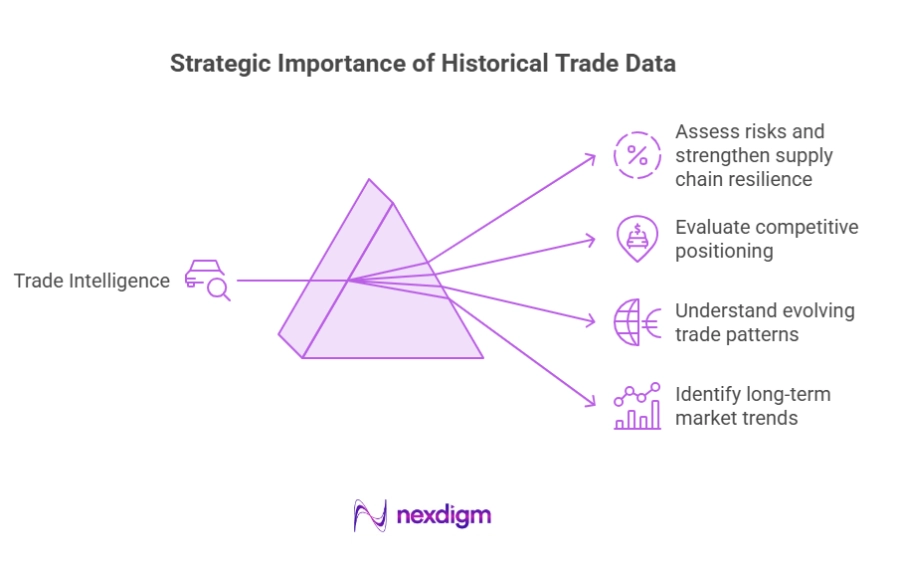
- Identify long-term market trends: Analyze historical trade patterns to uncover sustained growth opportunities, recognize evolving demand dynamics, and understand market developments across industries and geographies.
- Evaluate competitive positioning across industries: Benchmark trade performance against competitors, assess market share movements, and identify strengths or gaps that influence long-term competitive advantage.
- Understand evolving trade patterns: Track shifts in sourcing, exports, and trade partnerships over time to identify emerging markets, changing supply chain structures, and new business opportunities.
- Assess risks and strengthen supply chain resilience: Use historical trade insights to identify disruptions, evaluate supplier dependencies, anticipate vulnerabilities, and develop more robust sourcing strategies.
By combining deep industry expertise with data-driven analysis, Nexdigm enables businesses to move beyond historical data and leverage trade intelligence as a tool for future growth.
Nexdigm’s Case
Nexdigm supported a consumer goods company by analyzing five years of historical trade data to identify market direction. The study revealed a 26% rise in category imports, 19% growth in priority segments, and a significant improvement in market share, enabling stronger forecasting, focused investments, and sustained competitive expansion decisions.
To take the next step, simply visit our Request a Consultation page and share your requirements with us.
Harsh Mittal
+91-8422857704