

Benchmarking personalized care models in data-driven, targeted-therapy markets is becoming a critical priority as healthcare shifts toward precision-driven decision-making. Personalized medicine benchmarking focuses on systematically comparing how effectively different healthcare systems and providers use patient-level data such as genomics, biomarkers, and real-world evidence to deliver tailored treatments.
In markets shaped by advanced analytics and targeted therapies, this benchmarking goes beyond clinical outcomes to include cost efficiency, speed of innovation, and patient-centric value. By integrating competitive intelligence with benchmarking, stakeholders can better understand market positioning, optimize care delivery models, and gain insights into where innovation and investment will drive the greatest impact.
The growth of personalized, data-driven care is reflected in current market metrics. The global precision medicine market is projected to exceed $150 billion by 2030, growing at over 10% annually, while targeted therapies now account for nearly 50% of oncology drug approvals. Studies show biomarker-driven treatments can improve response rates by 30–50% compared to traditional approaches. Additionally, healthcare systems using advanced analytics report up to 20% reductions in treatment costs, reinforcing the value of benchmarking in competitive, innovation-led markets.
Tracking Competitor Innovation in Targeted Therapies
Tracking competitor innovation in targeted therapies involves monitoring pipelines, clinical trials, patents, and partnerships to identify emerging treatments, assess differentiation, anticipate market shifts, and inform strategic positioning through competitive intelligence insights.
-
Clinical Trial Monitoring
Track ongoing trials, endpoints, and results to evaluate innovation progress, efficacy trends, and competitive positioning in therapeutic areas.
-
Patent and IP Intelligence
Analyze patents and filings to understand innovation ownership, exclusivity periods, and potential barriers to entry or collaboration opportunities.
-
Partnerships and Collaborations
Monitor alliances, licensing deals, and research partnerships to uncover strategic moves and capability expansion among competitors.
-
Regulatory Milestones Tracking
Follow approvals, fast-track designations, and regulatory decisions to gauge competitor progress and speed-to-market advantages.
-
Technology and Platform Innovations
Evaluate adoption of AI, genomics, and advanced platforms shaping next-generation targeted therapies and competitive differentiation.
Personalized Care Benchmarking Frameworks by Nexdigm
Personalized Care Benchmarking Frameworks by Nexdigm enable healthcare organizations to systematically evaluate performance across personalized medicine models using clinical, operational, and financial metrics. These frameworks integrate competitive intelligence to compare outcomes, technology adoption, and patient-centric indicators against industry leaders. By leveraging data analytics and real-world evidence, Nexdigm helps clients identify performance gaps, optimize care delivery, and strengthen strategic positioning in data-driven, targeted therapy markets.
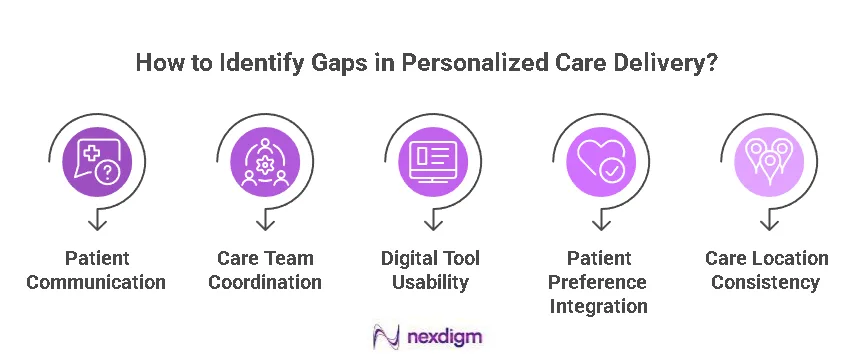
How Nexdigm Identifies Gaps in Personalized Care Delivery?
Nexdigm identifies gaps in personalized care delivery by benchmarking clinical outcomes, patient experience, data utilization, and operational efficiency against competitors, highlighting areas for improvement and strategic optimization:
-
Clarity of Patient Communication
Evaluate how clearly treatment plans and data insights are communicated, ensuring patients understand options and actively participate in decisions.
-
Coordination Across Care Teams
Assess collaboration between specialists, labs, and providers to ensure seamless transitions and continuity in personalized care delivery.
-
Usability of Digital Tools for Clinicians
Review how intuitive and supportive technology platforms are in enhancing clinical workflows and decision-making.
-
Incorporation of Patient Preferences
Assess how patient feedback and preferences are integrated into treatment plans to improve engagement and satisfaction.
-
Consistency Across Care Locations
Identify variations in care quality and delivery across regions or facilities impacting standardized personalized care outcomes.
Nexdigm’s case:
A healthcare provider partnered with Nexdigm to benchmark its personalized care delivery against leading competitors. Using competitive intelligence and value-based care metrics, Nexdigm identified gaps in patient acquisition, clinical performance, and service positioning. As a result, the hospital achieved a 20% increase in patient acquisition and a 15% growth in patient volumes within six months, while improving operational efficiency and care outcomes.
To take the next step, simply visit our Request a Consultation page and share your requirements with us.
Harsh Mittal
+91-8422857704