

Hospital procurement is under increasing pressure as organizations manage higher input costs, changing patient volumes, and tighter operating margins. The latest American Hospital Association data shows that total hospital expenses increased 7.5% in 2025, while hospital prices grew only 3.3%. Supplies increased 9.9% and drug expenses rose 13.6%.
The concentration of spending is also significant. Workforce expenses accounted for approximately 60% of hospital expenses in 2025, while supplies represented 18% and drugs 8%. Inpatient volumes increased 5.3% and outpatient visits increased 9.8% during the year, adding further pressure to resource and procurement requirements.
For procurement teams, the challenge is therefore not simply reducing purchase prices. Hospital procurement cost analysis can help identify where spending is concentrated, which cost drivers are creating pressure, and where supplier, category, contract, or sourcing inefficiencies may exist.
Hospital Cost Pressure Is Not Distributed Evenly
Hospital spending is shaped by a combination of labor, drugs, supplies, purchased services, technology, logistics, and patient-acuity factors. AHA analysis indicates that from 2019 to 2024, about 45% of hospital expense growth was associated with higher input costs, while 36% reflected treating more patients and 19% reflected caring for sicker patients. This makes category-level visibility important. Procurement teams need to understand not only how much they spend, but where spending is concentrated and what is driving changes within each category.
The Same Procurement Category Can Carry Different Cost Profiles
Two hospitals can spend significantly different amounts on similar products or categories even when their clinical requirements are broadly comparable. Differences in purchasing volumes, supplier mix, contract terms, product standardization, utilization patterns, logistics, and sourcing practices can all influence the final cost. Understanding these variations helps procurement teams separate unavoidable cost differences from areas where better sourcing or purchasing practices may improve efficiency.
What Creates Procurement Efficiency Gaps?
Procurement efficiency gaps can emerge when hospitals manage similar purchases differently across suppliers, facilities, or contracts. Experts at Nexdigm can help identify these gaps by assessing:
- Fragmented Purchasing: Identify inconsistent purchasing patterns across facilities, suppliers, or categories that may limit consolidation opportunities and purchasing leverage.
- Contract & Supplier Variations: Compare pricing, terms, volumes, and supplier arrangements to identify differences that may contribute to avoidable procurement costs.
- Limited Market Alignment: Assess internal purchasing against external market intelligence to identify areas where existing prices or procurement practices may warrant review.
A structured view helps Nexdigm connect procurement practices with cost outcomes, highlighting areas where efficiency improvements may be achievable.
Nexdigm’s Industry-Led Healthcare Expertise
Nexdigm brings healthcare-sector expertise to procurement analysis, combining industry understanding with market intelligence and procurement perspectives. Our experts can interpret hospital spending patterns, supplier dynamics, category economics, and operational requirements in context, helping organizations distinguish necessary costs from addressable inefficiencies and identify procurement opportunities aligned with their broader business objectives.
Procurement Intelligence and its Growing Importance
The value of hospital procurement analysis is not limited to identifying high-spend categories. Nexdigm can help connect procurement findings with hospital procurement cost analysis, allowing hospitals to focus on opportunities with meaningful financial or operational relevance through:
- Cost Optimization: Identify categories and supplier relationships where pricing, terms, or purchasing practices may offer opportunities for improvement.
- Supplier Management: Highlight supplier concentration, performance differences, and relationship areas that may benefit from closer commercial or strategic review.
- Procurement Consistency: Identify variations across facilities, products, or purchasing practices that may limit the benefits of consolidated demand.
This helps translate hospital procurement cost analysis into focused priorities, enabling organizations to direct procurement resources toward areas with the greatest potential impact.
What Makes Nexdigm’s Hospital Procurement Intelligence Different?
Nexdigm’s approach goes beyond reviewing hospital spend or comparing supplier prices in isolation. It brings together healthcare-sector understanding, procurement intelligence, supplier analysis, and market benchmarking to:
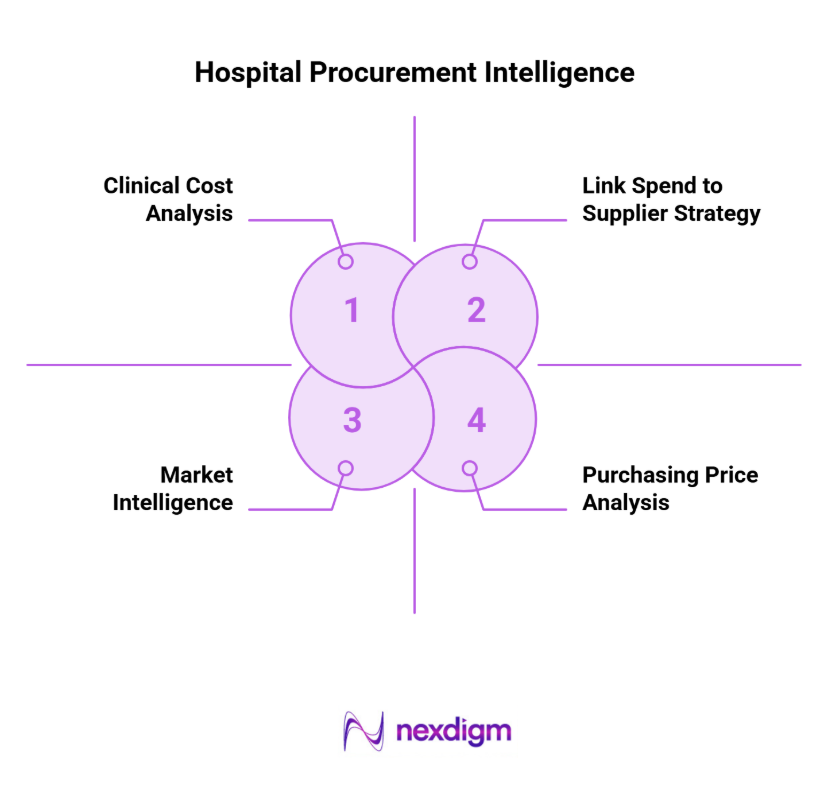
- Connect Cost With Clinical Context: Consider clinical requirements and utilization patterns alongside procurement costs, helping distinguish necessary expenditure from addressable inefficiencies.
- Look Beyond Purchase Price: Examine supplier terms, volumes, logistics, contracts, sourcing patterns, and other factors that influence the effective cost.
- Use External Market Intelligence: Compare internal purchasing patterns with supplier and market information to provide greater context around pricing and procurement performance.
- Link Spend to Supplier Strategy: Connect category-level costs with supplier concentration, sourcing alternatives, negotiation opportunities, and broader procurement priorities.
This enables Nexdigm to provide a more contextual view of hospital procurement costs, helping organizations understand not only where they spend, but why they spend it and where meaningful improvement may be possible.
Nexdigm’s Healthcare Procurement Insights Creating a Business Impact
Nexdigm’s expert led analysis help hospitals translate complex procurement data into focused financial and operational priorities. By identifying high-impact categories, supplier opportunities, pricing gaps, and purchasing inefficiencies, the assessment can support better negotiations, sourcing decisions, contract management, and cost-control initiatives while keeping clinical requirements in view.
Nexdigm’s Case
Nexdigm supported a hospital network in analyzing procurement across major categories and supplier relationships. The assessment identified 9 high-spend categories requiring deeper review, 11 supplier relationships with notable pricing or contractual variations, and 16 product groups with fragmented purchasing patterns. These findings helped the organization prioritize category-level negotiations, supplier reviews, and purchasing standardization initiatives.
To take the next step, simply visit our Request a Consultation page and share your requirements with us.
Harsh Mittal
+91-8422857704