
The global automotive industry is steadily moving toward electrification, with governments, manufacturers, and consumers increasingly embracing cleaner mobility solutions. While battery electric vehicles (BEVs) often dominate the conversation, hybrid vehicles continue to occupy a critical position in the transition journey.
A comprehensive Hybrid vehicle market opportunity assessment suggests that hybrids are playing a far more strategic role than many industry observers anticipated. Their ability to balance fuel efficiency, affordability, convenience, and familiar driving experiences positions them as a significant contributor to the next phase of automotive transformation.
Understanding the Electric Hybrid Markets
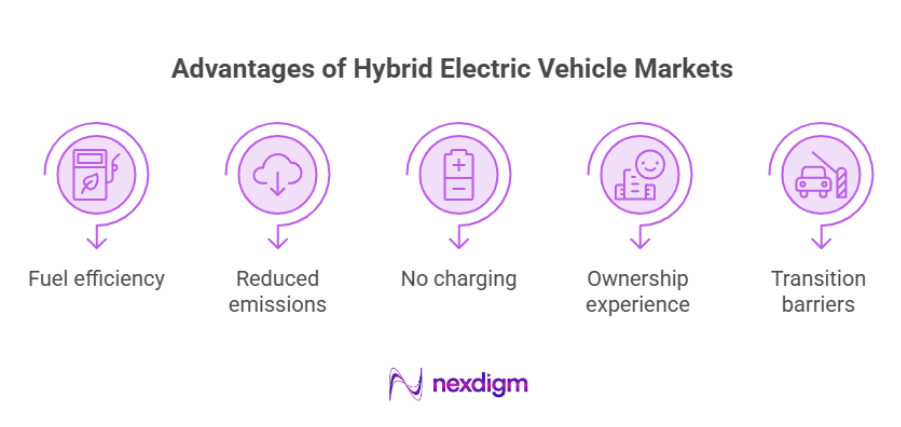
The hybrid electric markets comprise of an internal combustion engine with an electric motor and battery system. This creates several advantages:
- Improved fuel efficiency
- Reduced emissions
- No charging dependency
- Familiar ownership experience
- Lower transition barriers
As a result, hybrids appeal to consumers seeking environmental benefits without drastically changing their daily mobility habits. A robust Hybrid vehicle market opportunity assessment reveals that this balance is becoming increasingly attractive in markets where EV infrastructure development is still evolving.
Assessing Demand Trends
Consumer demand for hybrid vehicles is being driven by practicality rather than ideology. Many vehicle buyers appreciate sustainability but remain concerned about:
- Charging accessibility
- Battery replacement costs
- Long-distance travel limitations
- Infrastructure reliability
Hybrids effectively address these concerns.
Key Demand Drivers
- Fuel Cost Savings: Rising fuel prices continue to encourage consumers to seek more efficient transportation options.
- Gradual Electrification Adoption: Consumers can experience electric-assisted driving without fully committing to EV ownership.
- Infrastructure Independence: Unlike EVs, hybrids do not require extensive charging infrastructure.
- Greater Buyer Confidence: For many first-time electrification buyers, hybrids feel less disruptive and more familiar.
At Nexdigm, market assessments increasingly indicate that electrification adoption should be viewed as a spectrum rather than a binary shift. Organizations evaluating growth opportunities should identify customer segments that are not yet fully prepared for EV ownership.
High-Potential Consumer Segments
- Urban Professionals: Consumers seeking improved fuel economy while maintaining flexibility.
- Family Vehicle Buyers: Households prioritizing reliability and practicality.
- Long-Distance Travelers: Drivers concerned about EV charging availability during extended journeys.
- Emerging Market Consumers: Buyers seeking electrified mobility solutions without infrastructure-related challenges.
A Nexdigm-led Hybrid vehicle market opportunity assessment often finds strong growth potential among these consumer groups, particularly in markets where EV ecosystems remain under development.
The Economics of Hybrid Adoption
Economics remains one of the most influential factors affecting vehicle purchasing decisions. Hybrid vehicles occupy a unique position within the automotive pricing spectrum. They are generally:
- More affordable than many EV models
- More fuel efficient than traditional ICE vehicles
- Less dependent on public infrastructure investments
For consumers, this creates an attractive value proposition. In many scenarios, hybrids offer a compelling balance between upfront affordability and long-term operational savings. At Nexdigm, economic assessments focus on the price, by evaluating:
- Lifetime Operating Costs: Understanding long-term savings can significantly influence consumer purchasing behavior.
- Market-Specific Fuel Economics: Fuel prices vary substantially across regions, affecting hybrid competitiveness.
- Residual Value Analysis: Strong resale values improve ownership economics and buyer confidence.
- Portfolio Profitability: For automakers, hybrids often provide an efficient pathway toward achieving emissions compliance while maintaining profitability.
This broader economic lens provides a clearer understanding of long-term market opportunities.
Consumer Acceptance
Technology adoption ultimately depends on consumer trust. While EV awareness continues to grow, many consumers remain cautious about making a complete transition. Hybrids help bridge this confidence gap. Consumers view hybrids as:
- Proven technology
- Reliable transportation
- Lower-risk investment
- Environmentally responsible choice
- Easy-to-use solution requiring no behavioral change
This familiarity significantly reduces resistance to adoption. As a result, hybrids often become the first electrified vehicle purchased within a household.
The Strategic Role of Hybrids in the EV Industry
Hybrids have emerged as a practical stepping stone in the transition toward electrified mobility. By combining the familiarity of conventional vehicles with the efficiency benefits of electrification, they address many of the concerns that continue to influence consumer adoption decisions. This unique positioning has strengthened their appeal among buyers seeking a gradual transition to cleaner transportation solutions.
Where Do Hybrids Fit in the Electrification Transition?
Hybrids serve as the practical bridge between conventional internal combustion engine (ICE) vehicles and fully electric mobility. They reduce fuel consumption and emissions while eliminating many of the concerns associated with early EV adoption, including charging availability and infrastructure dependence. For millions of consumers, hybrids represent a low-risk entry point into electrified transportation. From a market perspective, this transition role is creating substantial opportunities for manufacturers, suppliers, investors, and mobility stakeholders.
Nexdigm’s Support towards Electrification Transition
From a Nexdigm standpoint, hybrid ownership can serve as a steppingstone towards a broader electrification. Consumers who gain positive experiences with:
- Regenerative braking
- Electric-assisted driving
- Improved fuel efficiency
- Sustainability benefits
become more receptive to purchasing fully electric vehicles in the future. This creates an important strategic opportunity for manufacturers seeking to build long-term customer relationships within electrified mobility ecosystems.
Nexdigm’s Case
Nexdigm supported an automotive player in evaluating hybrids’ role as they captured 8.02% of passenger-vehicle registrations in July 2026. The assessment linked demand, ownership economics, and consumer acceptance, helping refine portfolio priorities.
To take the next step, simply visit our Request a Consultation page and share your requirements with us.
Harsh Mittal
+91-8422857704