
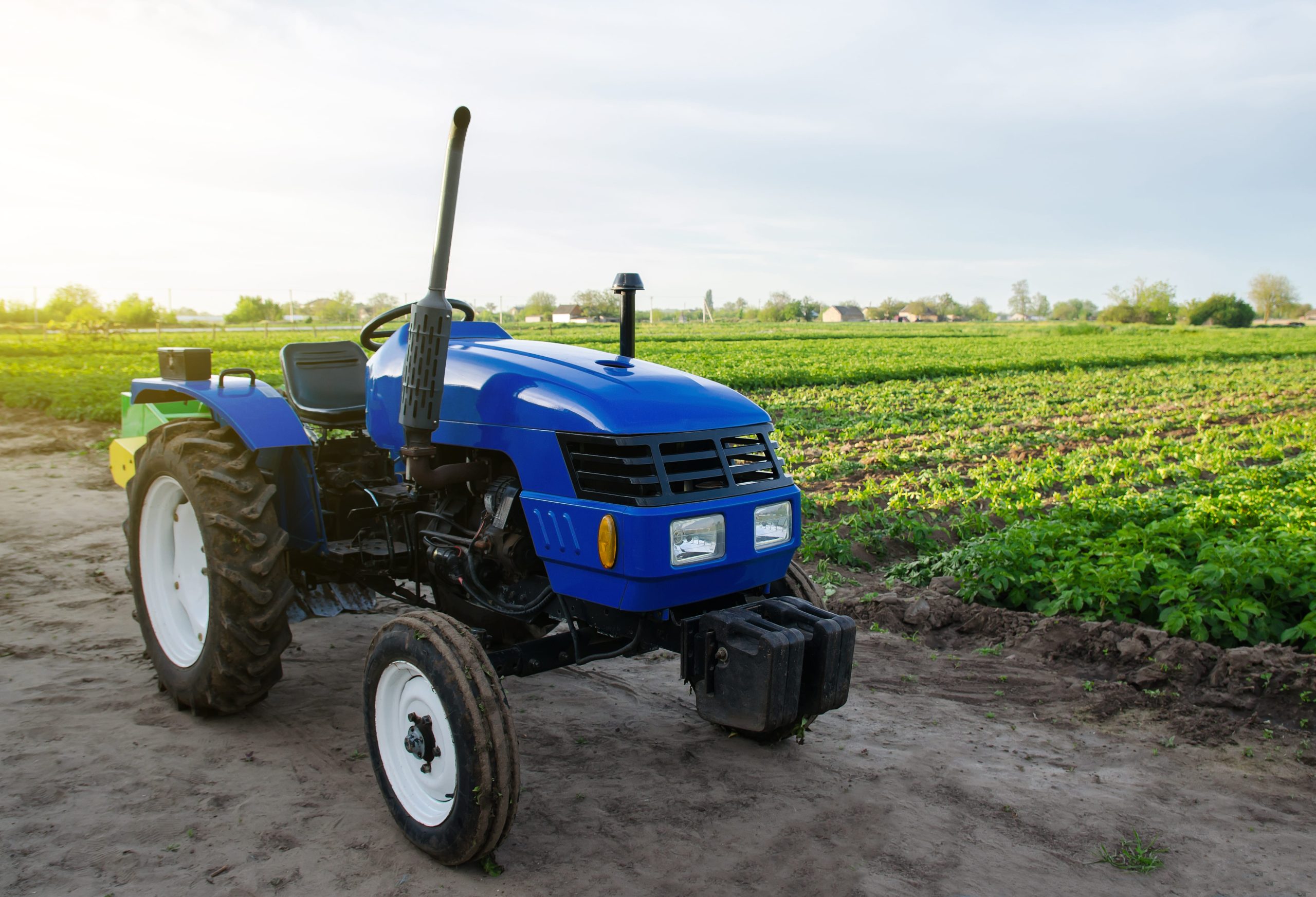
India’s agricultural tractor market is witnessing a steady expansion as farm mechanization becomes increasingly critical to improving agricultural productivity and rural incomes. As of 2026, India remains the world’s largest tractor market by volume, supported by its vast agricultural base and a large population dependent on farming for livelihood. Mechanization levels in India are still uneven across regions, with higher adoption in states such as Punjab, Haryana, and Maharashtra, while eastern and northeastern regions remain relatively under-mechanized. Government initiatives promoting farm mechanization, increasing rural credit availability, and rising demand for higher farm productivity are collectively driving tractor adoption. At the same time, evolving technologies, precision agriculture, and demand for fuel-efficient equipment are reshaping the competitive landscape of the tractor market in India.
What’s Driving the Agricultural Tractor Market in India?
Rising Farm Mechanization and Labor Shortages
India’s agriculture sector is gradually shifting toward mechanization as farmers seek to improve productivity and address rising labor shortages. Rural migration toward urban areas has reduced the availability of agricultural labor, especially during peak farming seasons. As a result, tractors are increasingly being used for plowing, sowing, harvesting, and transportation activities. The adoption of tractors, particularly in the 40–60 horsepower category, is expanding among small and medium-sized farmers who require versatile machinery capable of handling multiple farming operations.
Growth in Rural Financing and Farm Credit
Improved access to rural credit and financing schemes has played a significant role in boosting tractor purchases. Public sector banks, non-banking financial companies (NBFCs), and microfinance institutions are increasingly offering farm equipment loans with flexible repayment terms. Tractor financing schemes often align repayment schedules with crop cycles, making them accessible for farmers with seasonal income streams. This improved financial accessibility has helped accelerate mechanization in rural regions where upfront capital constraints previously limited tractor ownership.
Increasing Demand from Non-Agricultural Applications
Beyond farming, tractors are increasingly used in construction support, rural logistics, and haulage applications. Many farmers and rural entrepreneurs utilize tractors for transporting goods, construction materials, and agricultural produce between villages and nearby markets. This diversification of applications is expanding the functional value of tractors, making them viable income-generating assets beyond agricultural activities.
Government-Led Initiatives
The Indian government has introduced several programs to promote farm mechanization and improve agricultural efficiency. Schemes such as the Sub-Mission on Agricultural Mechanization (SMAM) provide financial assistance to farmers for purchasing agricultural equipment including tractors. These subsidies are particularly targeted at small and marginal farmers to reduce capital costs and encourage mechanization. Additionally, state-level initiatives and cooperative farming models are enabling the establishment of custom hiring centers, where farmers can rent tractors and machinery at affordable rates. These programs are helping expand tractor accessibility even among farmers who may not be able to afford ownership.
Market Competition
The India agricultural tractor market is moderately consolidated, with several domestic manufacturers holding strong market positions. Key players include Mahindra & Mahindra, TAFE (Tractors and Farm Equipment Limited), Escorts Kubota Limited, and Sonalika International Tractors. Mahindra & Mahindra continues to lead the market through its wide product portfolio and extensive rural distribution network. Meanwhile, Escorts Kubota has strengthened its technology capabilities through its partnership with Japan’s Kubota Corporation. Sonalika International has also expanded its export footprint and introduced advanced tractor models with improved fuel efficiency and operator comfort.
Fragmented Landholdings Limiting Tractor Adoption
One of the major challenges in the India agricultural tractor market is the fragmented nature of farmland. A large proportion of Indian farmers operate on small and marginal landholdings, often less than two hectares, which reduces the economic feasibility of owning tractors. For many farmers, the high upfront investment and maintenance costs outweigh the benefits of mechanization on small plots. Although custom hiring centers and equipment rental models are emerging, affordability constraints and uneven access to shared machinery continue to limit widespread tractor adoption in several regions.
Future Outlook
The India agricultural tractor market is expected to experience sustained growth through 2035 as mechanization expands into underpenetrated regions and farming practices become increasingly technology-driven. The demand for compact and mid-horsepower tractors is likely to increase, particularly among small and marginal farmers. In addition, advancements in precision farming, GPS-enabled guidance systems, and telematics integration are expected to improve operational efficiency and attract tech-savvy farmers. Electric and alternative-fuel tractors may also gradually emerge in the Indian market as manufacturers explore environmentally sustainable machinery solutions. Furthermore, the growth of custom hiring centers, farm equipment leasing platforms, and digital marketplaces will improve equipment accessibility for small farmers. As India continues to modernize its agricultural sector, tractors will remain a critical enabler of productivity and rural economic development.
Consultants at Nexdigm, in their latest publication “India Agricultural Tractor Market Outlook to 2035”, analyzed the market by Horsepower (Below 40 HP, 40–60 HP, Above 60 HP), By Application (Agriculture, Haulage and Transportation, Construction Support), and By Sales Channel (Dealership Networks, Rural Equipment Retailers, Online Platforms, Leasing and Custom Hiring Centers). Nexdigm believes that manufacturers should prioritize fuel-efficient tractor models, expand financing partnerships, and strengthen rural service networks while leveraging digital platforms and precision agriculture technologies as key differentiators in the evolving agricultural machinery landscape.
To take the next step, simply visit our Request a Consultation page and share your requirements with us.
Harsh Mittal
+91-8422857704