
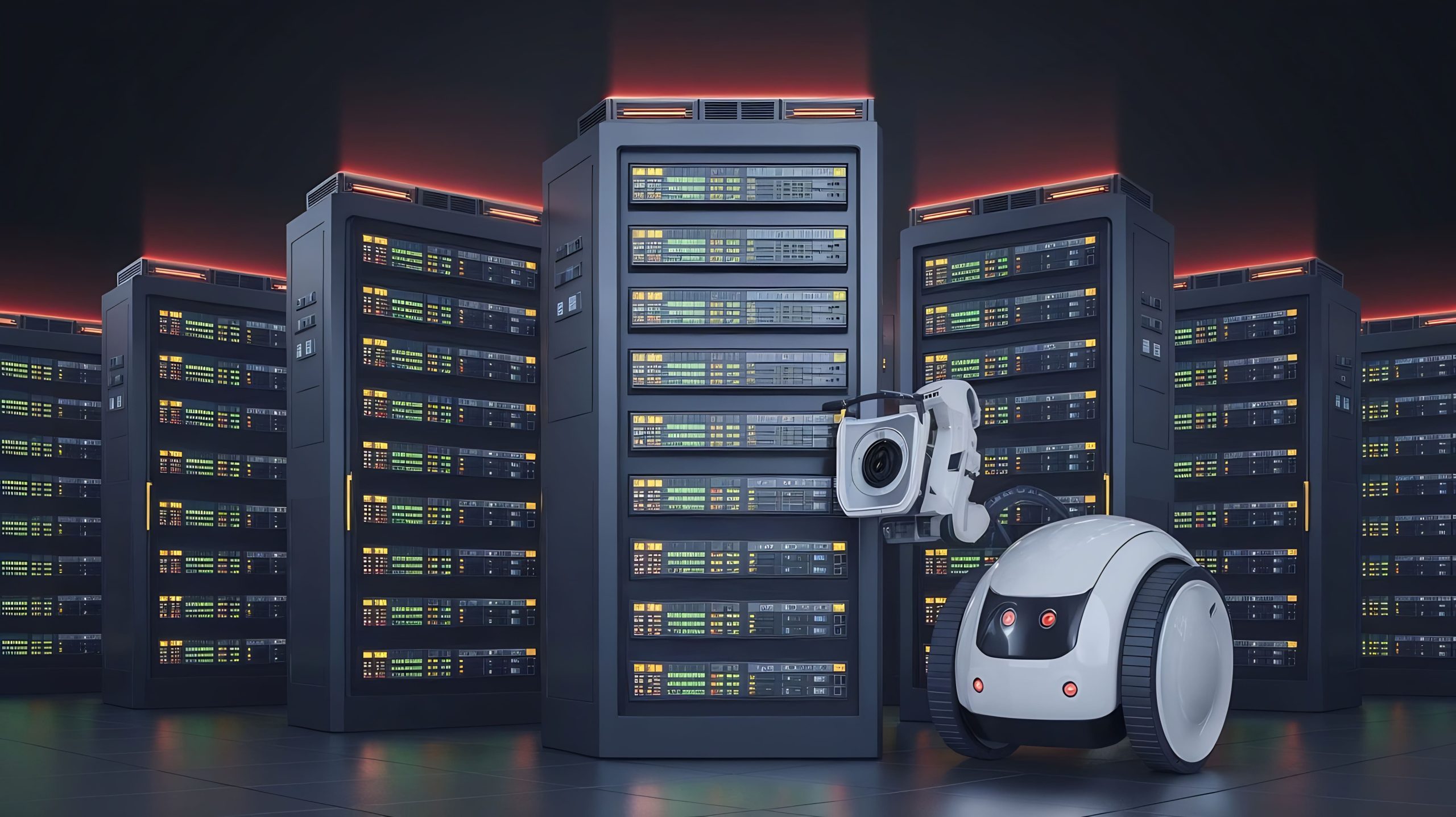
India’s AI servers and GPU hardware market is entering a high-growth phase as enterprises, hyperscalers, and government agencies scale artificial intelligence (AI) workloads across sectors. As of 2026, India accounts for a small share of global AI compute capacity compared to the US and China yet demand for high-performance computing (HPC) infrastructure is rising sharply. The rapid adoption of generative AI, increasing data localization requirements under the Digital Personal Data Protection Act, and expansion of domestic data centers are reshaping the country’s digital backbone. However, India remains heavily dependent on imported GPUs and AI accelerators, making supply chain resilience and domestic value addition critical themes through 2035.
What’s Driving the AI Servers and GPU Hardware Market in India?
Rapid Enterprise Adoption of Generative AI and Advanced Analytics
Indian enterprises across BFSI, healthcare, retail, manufacturing, and IT services are integrating AI-driven automation, predictive analytics, and large language models (LLMs) into core operations. The emergence of GenAI use cases—ranging from automated customer support to code generation and fraud detection—is significantly increasing demand for GPU-accelerated servers. Leading global chipmakers such as NVIDIA, Advanced Micro Devices, and Intel Corporation continue to dominate the supply of AI accelerators deployed in Indian data centers. As training and inference workloads scale, enterprises are transitioning from CPU-based infrastructure to GPU-rich clusters, driving server upgrades.
Expansion of Hyperscale and Colocation Data Centers
India’s data center capacity has expanded rapidly across Mumbai, Chennai, Hyderabad, and Noida, supported by cloud service providers such as Amazon Web Services, Microsoft Azure, and Google Cloud. These hyperscalers are deploying AI-optimized infrastructure to cater to enterprise AI workloads and public sector digitization projects. Additionally, domestic telecom operators and conglomerates are investing in AI-ready facilities, increasing rack densities and liquid cooling deployments to handle high thermal loads associated with GPUs.
Start-up Ecosystem and India Stack Integration
India’s thriving start-up ecosystem, particularly in fintech and healthtech, is leveraging AI models trained on large local datasets integrated with digital public infrastructure such as Aadhaar and UPI. AI-native start-ups prefer cloud-based GPU rentals initially but gradually shift toward hybrid or on-premise GPU clusters as workloads stabilize. This transition supports sustained hardware demand across Tier I and emerging Tier II data center hubs.
Government-Led Initiatives and Semiconductor Push
The Government of India has launched the IndiaAI Mission to build indigenous AI capabilities, including the establishment of national AI compute infrastructure accessible to researchers and start-ups. Parallelly, semiconductor incentives under the Production Linked Incentive (PLI) scheme aim to strengthen chip design and advanced electronics manufacturing. While India currently lacks large-scale GPU fabrication facilities, policy focus on semiconductor assembly, testing, and packaging is expected to improve value capture in the AI hardware supply chain over the next decade. Public sector investments in sovereign AI clouds and supercomputing clusters will further stimulate demand for high-density AI servers.
Market Competition and Ecosystem Landscape
The India AI server market is moderately concentrated, with global OEMs and system integrators playing a dominant role. Companies such as Dell Technologies, Hewlett Packard Enterprise, and Lenovo supply AI-optimized servers integrated with NVIDIA and AMD GPUs. Meanwhile, domestic IT leaders including Tata Consultancy Services and Reliance Industries Limited are investing in AI cloud platforms and digital infrastructure partnerships. System integrators and managed service providers are increasingly offering GPU-as-a-Service (GPUaaS) models to reduce capital expenditure barriers for enterprises. Over time, certified AI-ready data center facilities and energy-efficient infrastructure are expected to become key differentiators in competitive positioning.
High Import Dependency and Infrastructure Constraints
Despite strong demand, India remains highly dependent on imported high-end GPUs and AI accelerators. Supply constraints, export controls, and currency fluctuations can significantly impact procurement timelines and costs. Advanced chips used for AI training are predominantly manufactured overseas, exposing India to geopolitical and trade risks. Additionally, AI servers require high power density and advanced cooling systems. Power availability, rising electricity costs, and sustainability compliance pose operational challenges for data center operators. The carbon footprint of large AI clusters is also under scrutiny, prompting investments in renewable energy integration and energy-efficient chip architectures.
Future Outlook
India’s AI servers and GPU hardware market is expected to witness robust double-digit growth through 2035, driven by enterprise AI adoption, public sector digitalization, and expansion of domestic data center capacity. By 2030, India is projected to significantly expand its AI compute capacity through sovereign AI clouds and hyperscale expansions, with increasing localization of server assembly and component manufacturing. By 2035, the market is expected to evolve toward more energy-efficient AI accelerators, liquid-cooled racks, and edge AI deployments across smart cities, manufacturing plants, and telecom networks. While India may continue to rely on global semiconductor leaders for advanced node fabrication, domestic value addition in system integration, server assembly, and AI platform services is likely to strengthen.
Consultants at Nexdigm, in their latest publication “India AI Servers and GPU Hardware Market Outlook to 2035,” analyzed the market by Component (GPUs, AI Servers, Interconnects, Cooling Systems), By Deployment (Cloud, On-Premise, Hybrid), By End User (BFSI, IT & Telecom, Healthcare, Government, Manufacturing), and By Region (West, South, North, East India). Nexdigm believes that businesses should prioritize energy-efficient AI infrastructure, diversify GPU sourcing strategies, and explore domestic partnerships in semiconductor packaging and AI cloud services to build long-term resilience in India’s rapidly evolving AI hardware ecosystem.
To take the next step, simply visit our Request a Consultation page and share your requirements with us.
Harsh Mittal
+91-8422857704