
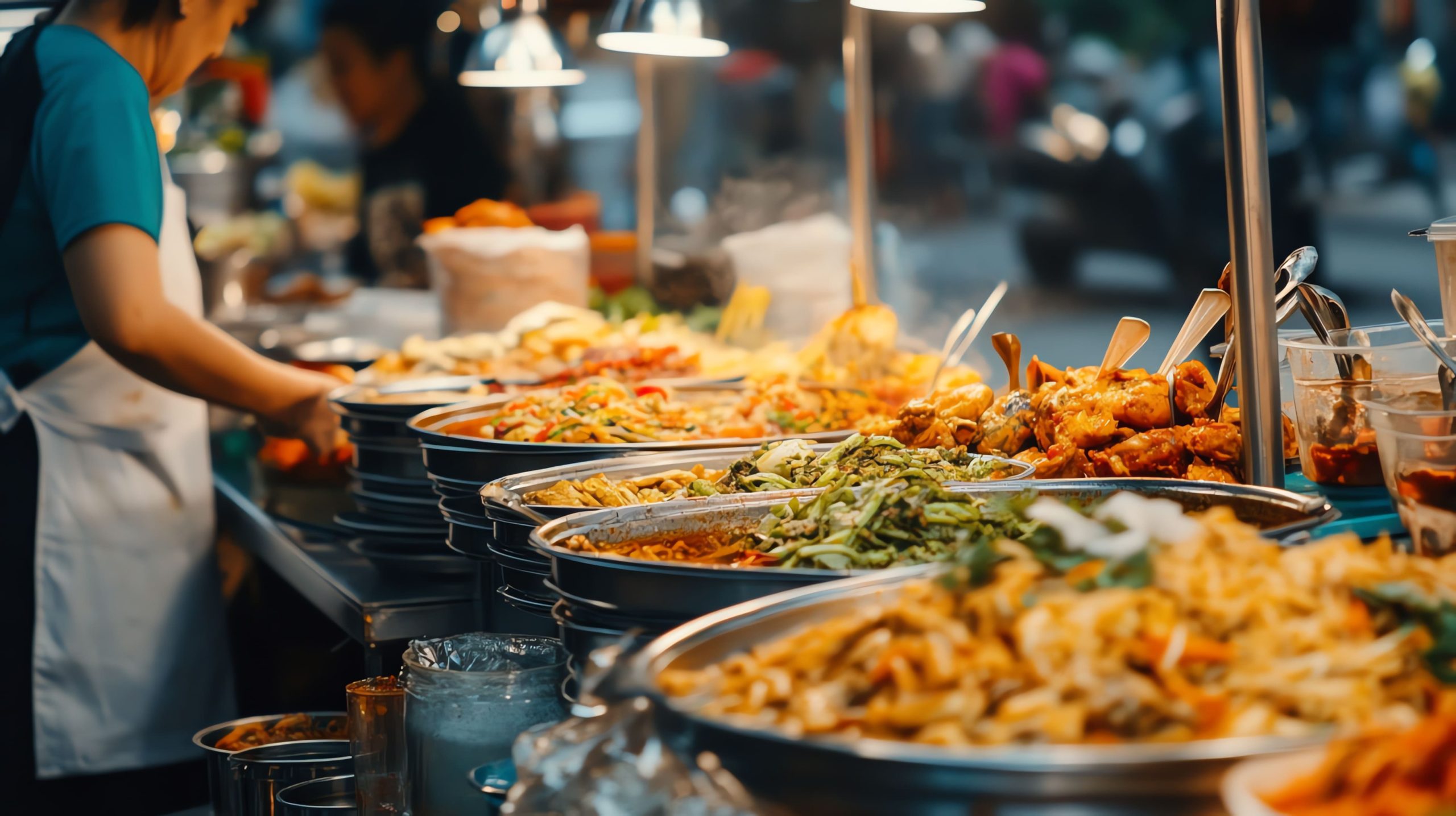
The India catering market has been expanding steadily, driven by urbanization, a growing workforce, and rising disposable incomes. In 2025 the market was estimated at approximately USD 50 billion, with commercial catering accounting for about 60 % and institutional catering the remaining 40 %. The sector encompasses corporate cafeterias, event catering, airline catering, and educational institution food services. The increasing demand for convenience foods and professional catering services is reshaping consumer preferences, while the food service industry’s formalization is attracting investments from organized players.
What’s driving the catering services market in India
Urbanization and changing lifestyles
Rapid urban migration and evolving lifestyles are increasing demand for outsourced food services. As more individuals enter the workforce and spend longer hours away from home, the need for accessible, affordable, and varied meal options grows. This trend drives expansion of corporate cafeterias, quick service food solutions, and event catering, supporting sustained market growth over the next decade.
Expansion of organized food services
The penetration of organized catering brands and technology enabled platforms is professionalizing the market. Investments in hygiene standards, digital ordering, and supply chain integration are enhancing consumer confidence. Partnerships between catering firms and large corporate or institutional clients further stimulate demand and broaden service offerings across regions.
Competitive Landscape
The India catering market remains fragmented with both domestic and international players competing across segments. Major catering service providers include global firms such as Compass Group, Sodexo, and LSG Sky Chefs, which operate alongside local and regional operators offering event catering, corporate meal services, and institutional food supply. Competition is shaped by service quality, menu customization, pricing flexibility, and technological adoption in booking and delivery management. Larger players are increasing headcount and investment in India to capture growth in corporate and capability centre food services.
Maintaining Consistent Food Quality and Safety Standards
maintaining consistent food quality and safety standards across diverse geographic regions and service contexts. Ensuring compliance with food safety regulations and managing supply chain complexities in remote locations can increase operational costs. Catering firms must invest in training, quality control systems, and technology solutions to uphold service quality, which may constrain profit margins for smaller operators.
Future Outlook
Over the next decade the India catering market is expected to see continued diversification of service models and widening customer segments. Corporate catering will remain a significant revenue contributor as office spaces expand and demand for employee welfare services increases. Institutional catering in educational and healthcare settings is also projected to grow, supported by government initiatives toward nutrition and wellness. By 2035 the market is projected to grow at a compound annual growth rate (CAGR) of near 10 %, reaching upward of USD 130 billion as dining out and offpremise consumption become more prevalent.premise consumption become more prevalent.Technology adoption, including digital ordering systems, cloud kitchens, and data analytics for menu optimization, will drive operational efficiencies and enhance customer engagement.2020s, reflecting a shift from informal to formal service providers. Technology adoption, including digital ordering systems, cloud kitchens, and data analytics for menu optimization, will drive operational efficiencies and enhance customer engagement.
Consultants at Nexdigm, in their latest publication “India Catering Market Outlook to 2035”, analyzed the market by Service Type (Corporate Catering, Healthcare Catering, Education Catering, Aviation Catering, Event Catering), By Client Segment (IT & ITES, Manufacturing, Hospitals, Educational Institutions, Event Organizers), and By Service Model (On-site Cafeteria Management, Centralized Kitchen Delivery, Hybrid Models). Nexdigm believes catering companies should prioritize centralized kitchen infrastructure, digital order management, standardized food safety compliance, and nutrition-focused menu innovation to capture long-term institutional demand while expanding footprint across Tier-2 and Tier-3 cities.
To take the next step, simply visit our Request a Consultation page and share your requirements with us.
Harsh Mittal
+91-8422857704