
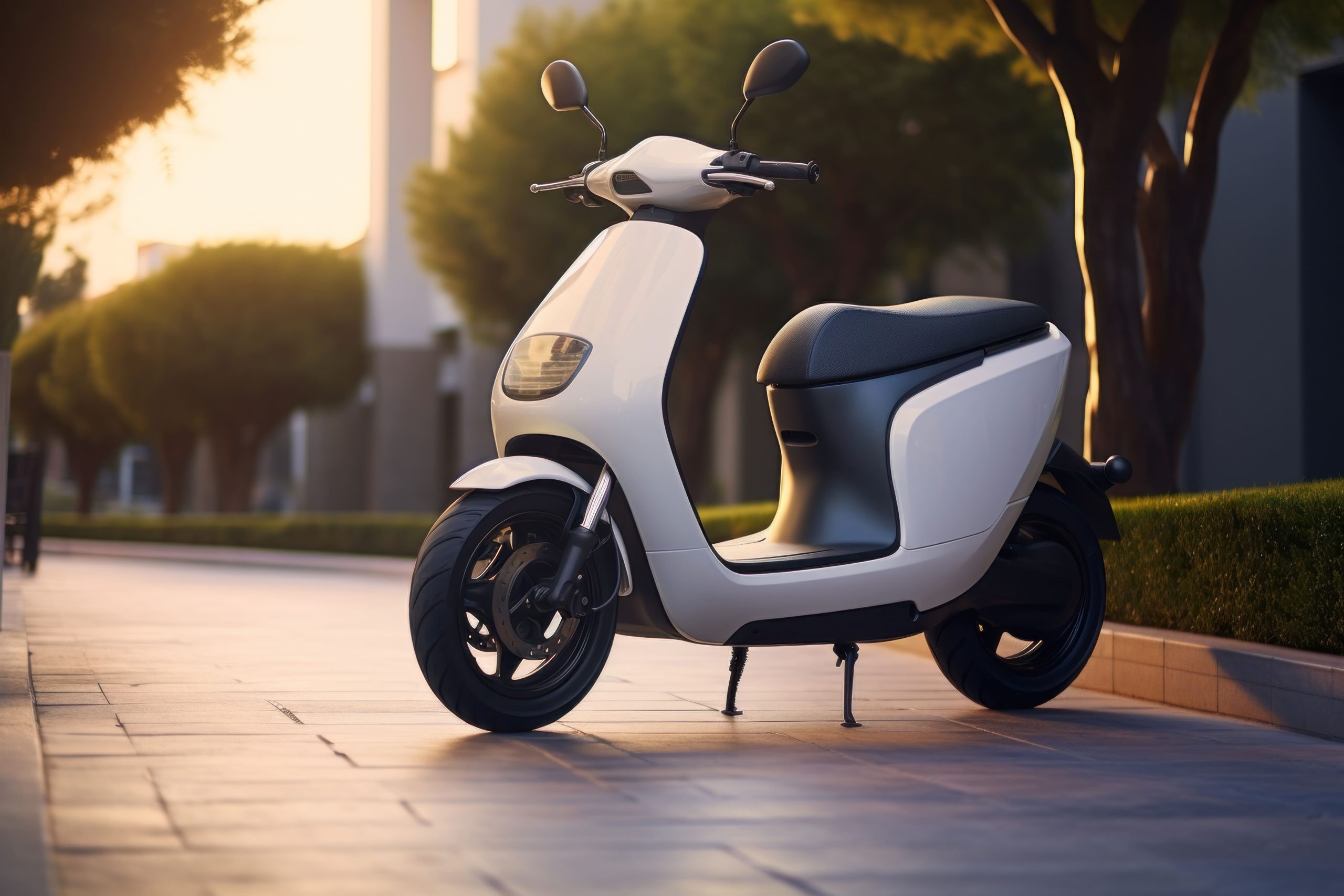
India’s electric two-wheeler market has moved well beyond the early-adopter phase. What was once a niche category limited to a few urban buyers now sits at the center of the country’s EV transition. By 2025, electric two-wheelers had become the largest EV segment in India by volume, helped by rising fuel costs, improving product quality, and stronger consumer familiarity with battery-powered mobility. In a country where scooters and motorcycles are often the first and most practical mode of personal transport, this shift carries real weight. The category is no longer being shaped only by environmental narratives. It is increasingly about economics, convenience, and whether an electric scooter can reliably replace a petrol one for everyday use.
What’s Driving the Electric Two-Wheeler Market in India?
Lower Daily Running Costs for Urban Commuters
One of the clearest reasons behind adoption is simple: daily commuting in Indian cities is expensive, crowded, and time-sensitive. For office-goers, students, and delivery riders, electric scooters offer a noticeably lower running cost than petrol alternatives. That matters in practical terms. A commuter in Bengaluru or Pune who travels 25 to 30 kilometers a day can save a meaningful amount every month, especially when fuel prices remain unpredictable. Maintenance is another advantage. Fewer moving parts and lower servicing needs have made EVs appealing to cost-conscious households, even if the upfront purchase price still feels high to many buyers.
Better Products and Stronger Consumer Confidence
At the same time, the products themselves have improved. A few years ago, buyers worried about weak range, patchy quality, and uncertain after-sales support. Those concerns have not disappeared, but they are less dominant than before. Newer models now come with better battery packs, improved software, navigation-enabled dashboards, reverse mode, regenerative braking, and stronger warranties. That has changed perception. For many urban users, an electric scooter is no longer seen as a compromise purchase. In some cases, it feels more modern than the petrol equivalent.
Legacy OEM Entry and Wider Market Validation
There is also a broader market shift at play. Established manufacturers such as TVS and Bajaj have brought credibility to the category, while EV-first brands have pushed innovation and visibility. In practice, that combination matters more than headline sales numbers. Consumers tend to trust what they can see, test ride, and service nearby.
Government-Led Initiatives
Policy support has played a major role, although the market has not grown on subsidies alone. Schemes such as FAME and, more recently, PM E-DRIVE have helped narrow the price gap between electric and petrol two-wheelers, particularly in the mass commuter segment. State-level incentives in regions like Maharashtra, Delhi, and Gujarat have also nudged adoption by lowering ownership costs. That said, incentives only work when supply chains and local manufacturing keep pace. This is where the PLI schemes for automotive components and advanced chemistry cells become more important than they first appear. The real long-term value lies not just in boosting sales, but in helping India build batteries, electronics, and EV components at home rather than depending too heavily on imports.
Market Competition
Competition in the Indian electric two-wheeler market has become sharper and, frankly, more interesting. TVS, Bajaj, Ola Electric, Ather Energy, and Hero MotoCorp are all chasing different parts of the market, from premium urban commuters to high-volume mass buyers. Some brands have leaned heavily into software and direct-to-consumer retail, while others are relying on dealership depth and service reach. On the ground, service quality may matter more than marketing. Buyers are increasingly asking practical questions: how long will the battery last, what happens if a charger fails, and how quickly can a replacement part be sourced? The brands that answer those questions well are likely to hold their advantage.
Affordability Still Remains the Biggest Barrier
One of the biggest hurdles in India’s electric two-wheeler market is the gap between long-term savings and upfront affordability. While running costs are lower, many buyers still compare showroom prices first, especially in the commuter segment where budget sensitivity is extreme. A petrol scooter often feels easier to justify immediately, even if it costs more over time. On top of that, financing for EVs is not always as accessible or attractive as conventional two-wheelers, particularly outside major cities.
Recent Market Developments and Competitive Shifts
A notable recent development in India’s electric two-wheeler market is the visible reshuffling in brand leadership and pricing strategy. In February 2026, the segment recorded over 1.11 lakh retail sales, up 45.6% year-on-year despite a month-on-month dip. TVS retained the lead, while competitive pressure intensified for EV-first brands as buyers increasingly leaned toward products backed by stronger service networks and reliability. At the same time, concerns around the possible expiry or tapering of PM E-DRIVE support have raised questions around future pricing. This could make affordability, rather than awareness, the next decisive factor in category expansion.
Future Outlook
By 2035, electric two-wheelers are likely to claim a far larger share of India’s new two-wheeler sales, especially in cities and high-density commuter corridors. The next wave of growth will probably come from practical use cases rather than novelty – family scooters, commercial fleets, last-mile delivery, and affordable commuter motorcycles. Battery chemistry will improve, charging options will broaden, and local production should become more cost-efficient over time. Still, the winners in this market will not be decided by who launches the flashiest product. They will be determined by reliability, service coverage, financing access, and whether the vehicle fits Indian roads and Indian usage patterns. That is where this market will be won or lost.
Consultants at Nexdigm, in their latest publication “India Electric Two-Wheeler Market Outlook to 2035”, analyzed the market by Vehicle Type (Electric Scooters, Electric Motorcycles, Electric Mopeds), By Battery Type (Lithium-ion, LFP, Swappable Batteries), By End User (Personal Use, Fleet & Delivery, Commercial Mobility), and By Distribution Channel (OEM Dealerships, Multi-Brand Retailers, Online Platforms). Nexdigm believes that businesses should prioritize localization of batteries and electronics, expansion of service networks, and affordable financing models to unlock the next phase of scale in India’s E2W market.
To take the next step, simply visit our Request a Consultation page and share your requirements with us.
Harsh Mittal
+91-8422857704