
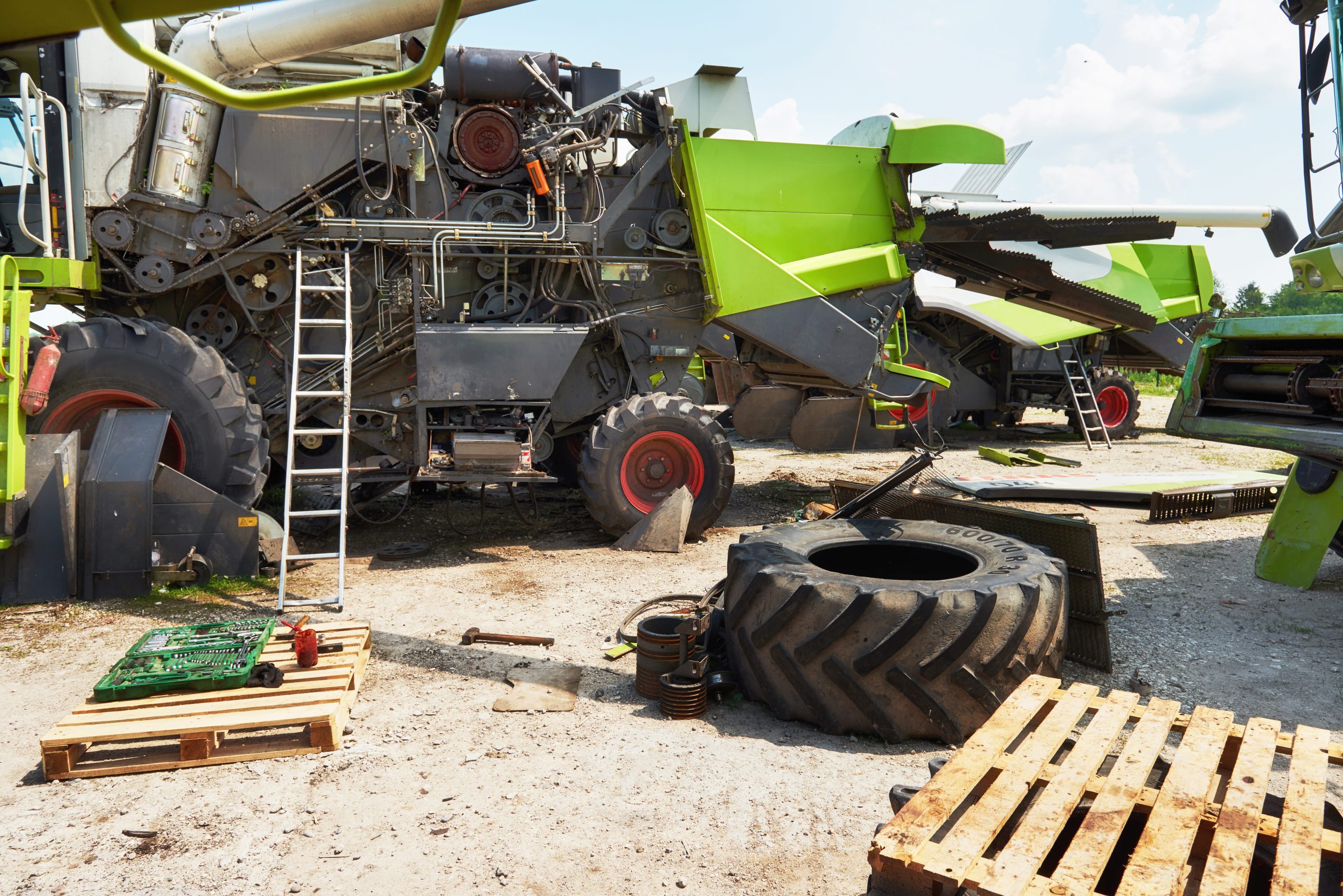
India’s agricultural mechanization landscape is entering a new growth phase, driven not only by rising tractor and farm equipment sales but also by the expanding aftermarket ecosystem. As of 2026, India remains one of the largest tractor markets globally, supported by government subsidies, increasing rural credit penetration, and growing farm consolidation. With over 9 million tractors estimated to be operational across the country, the demand for spare parts, maintenance, repair, and overhaul (MRO) services has become a critical pillar of the farm equipment value chain. The aftermarket segment is evolving from an unorganized, price-driven market to a more structured and quality-focused ecosystem, supported by OEM-led distribution expansion and digital integration.
What’s Driving the Farm Equipment Aftermarket in India?
Expanding Installed Base of Tractors and Harvesting Equipment
India’s strong domestic manufacturing presence led by players such as Mahindra & Mahindra Ltd., TAFE – Tractors and Farm Equipment Limited, and Escorts Kubota Limited has resulted in a large and aging fleet of tractors across rural regions. A significant share of tractors in Tier 2 and Tier 3 markets are over 5–10 years old, increasing the need for periodic overhaul, engine components replacement, transmission repairs, and hydraulic system servicing. This aging fleet is a structural driver for recurring demand in filters, clutches, brake assemblies, lubricants, and electrical parts.
Rising Mechanization Across Non-Traditional States
Mechanization is expanding beyond Punjab, Haryana, and Western Uttar Pradesh into Eastern India and Central states such as Bihar, Odisha, and Madhya Pradesh. Increasing adoption of rotavators, harvesters, seed drills, and balers is widening the spare parts basket. Seasonal usage intensity during sowing and harvesting cycles further accelerates wear and tear, strengthening the recurring MRO market. Custom Hiring Centers (CHCs), promoted under central and state schemes, also generate bulk servicing demand due to higher equipment utilization rates.
Price Sensitivity and Growth of the Unorganized Segment
The Indian aftermarket remains highly price sensitive. A large proportion of farmers prefer non-OEM or local-brand spare parts due to lower costs and easy availability. This has historically led to the dominance of regional distributors and local manufacturers in states such as Punjab, Maharashtra, and Tamil Nadu. However, concerns around counterfeit parts and performance inefficiencies are gradually shifting preference toward branded and certified components, especially for high-value aggregates like engines and transmission systems.
Distribution Structure and Channel Evolution
India’s farm equipment spare parts distribution structure is traditionally multi-layered. OEMs typically operate through regional warehouses supplying authorized dealers, who in turn serve retailers and rural mechanics. Independent distributors and wholesalers also play a significant role, particularly in high-density agricultural belts. In recent years, OEMs have strengthened direct dealer networks to protect brand integrity and ensure genuine parts availability. Digital ordering platforms and inventory management systems are being integrated at the dealership level, improving turnaround times and reducing stock-outs. E-commerce penetration in rural India is also enabling online platforms to supply spare parts directly to mechanics and small retailers, gradually formalizing parts procurement.
Government-Led Mechanization Support
Government schemes such as the Sub-Mission on Agricultural Mechanization (SMAM) and credit-linked subsidy programs continue to promote equipment adoption. Increased mechanization naturally expands the installed base, thereby supporting long-term aftermarket growth. Additionally, rural infrastructure development, improved road connectivity, and digital penetration under initiatives such as Digital India are indirectly strengthening distribution efficiency in semi-urban and rural markets. Financing institutions and NBFCs are also supporting equipment refurbishment and resale markets, creating a secondary ecosystem where pre-owned tractors generate sustained demand for overhaul kits and replacement parts.
Market Competition and Key Participants
The India farm equipment aftermarket is moderately fragmented, with OEM-backed genuine parts divisions competing alongside strong independent brands. Companies such as TVS Motor Company (through its aftermarket distribution arm), Bosch Limited, and Schaeffler India Limited are active in supplying components such as filters, bearings, and engine parts. OEMs are increasingly launching branded spare parts programs to capture higher aftermarket margins and ensure lifecycle customer retention. Dealer training, mechanic engagement programs, and warranty-backed spare parts are emerging as competitive differentiators.
Counterfeit Parts and Informal Market Dominance
One of the most pressing challenges in India’s farm equipment aftermarket ecosystem is the widespread presence of counterfeit and low-quality spare parts. A large portion of rural demand is still served by informal and unorganized suppliers offering cheaper alternatives to OEM components. While these products reduce upfront costs for farmers, they often compromise equipment efficiency, durability, and safety. The lack of strong enforcement mechanisms, limited farmer awareness, and price sensitivity continue to restrict the organized sector’s ability to fully formalize and standardize the aftermarket distribution network.
Future Outlook
The India farm equipment aftermarket spare parts and MRO market is expected to witness steady expansion through 2035, driven by a growing installed base, increasing average tractor age, and rising mechanization intensity. By 2035, organized and OEM-led distribution is projected to gain a larger market share, supported by digital supply chains and improved rural connectivity. Preventive maintenance practices are likely to increase as farmers become more aware of lifecycle cost optimization. Telematics integration in higher-horsepower tractors could further enable predictive maintenance models, especially among commercial farm operators and fleet owners. India is not only strengthening domestic manufacturing of tractors but also building a robust aftermarket ecosystem that supports equipment longevity and productivity.
Consultants at Nexdigm, in their latest publication “India Farm Equipment Aftermarket Spare Parts MRO & Distribution Structure Analysis Outlook to 2035”, analyzed the market by Product Type (Engine Components, Transmission Parts, Hydraulic Systems, Electrical Parts, Consumables), By Equipment Type (Tractors, Harvesters, Implements), and By Distribution Channel (OEM Dealers, Independent Distributors, Rural Retailers, Online Platforms). Nexdigm believes that businesses should prioritize channel formalization, counterfeit control mechanisms, mechanic training programs, and digital integration to capture long-term value in India’s evolving farm equipment aftermarket landscape.
To take the next step, simply visit our Request a Consultation page and share your requirements with us.
Harsh Mittal
+91-8422857704