
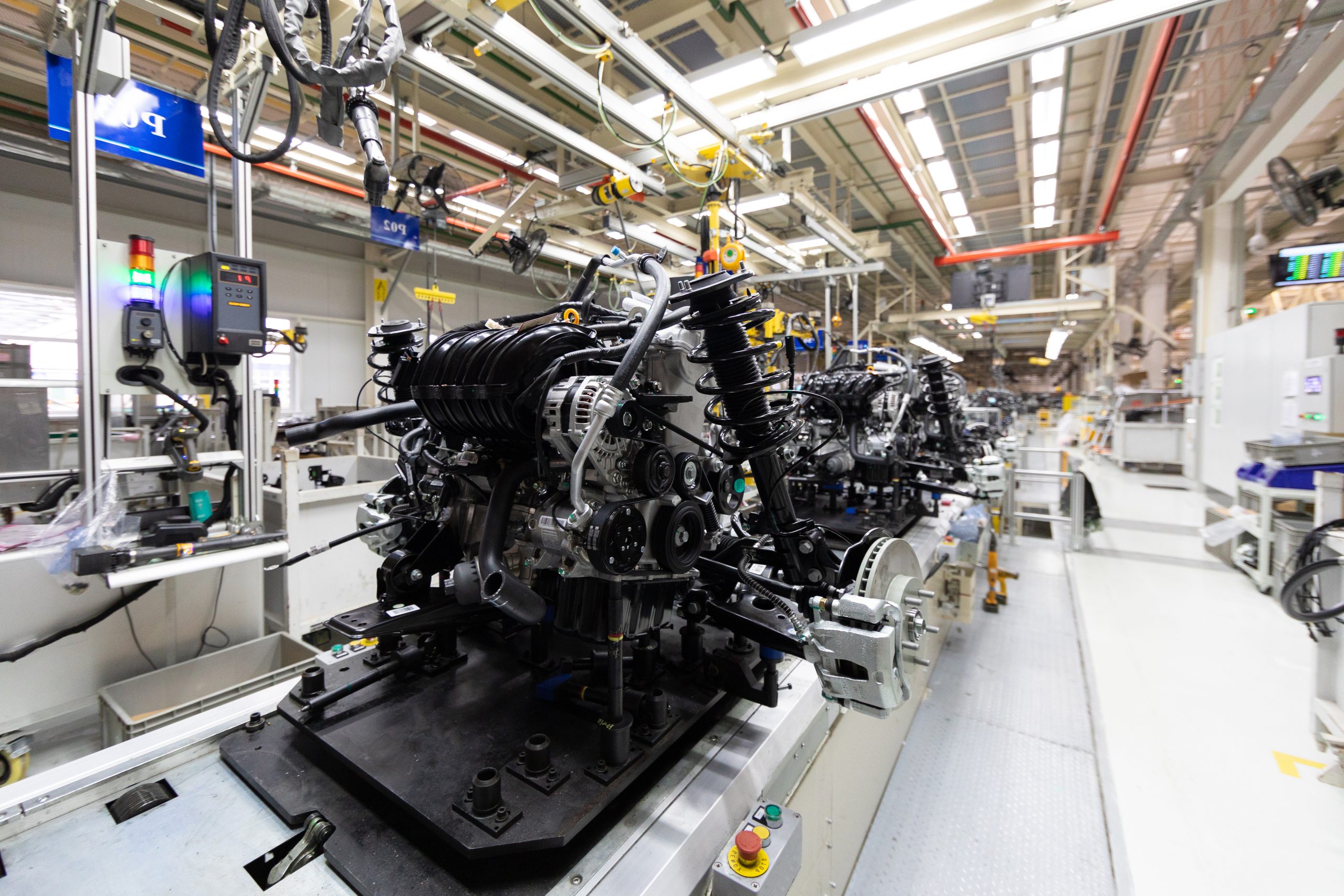
India’s industrial electric motors market is gaining momentum as the country strengthens its manufacturing capabilities, expands infrastructure and accelerates industrial automation. Electric motors are essential to industries such as automotive, cement, steel, pharmaceuticals, textiles, power generation, and water treatment. Rising investments in industrial facilities and the growing need for energy-efficient machinery are creating fresh opportunities for manufacturers. The market is also witnessing a gradual shift towards technologically advanced motors, including IE3 and IE4 efficiency-class motors, smart motors and variable-speed solutions. These developments are expected to shape the industry’s growth trajectory through 2035.
Key Factors Driving the Growth of India’s Industrial Electric Motors Industry
Expansion of Manufacturing and Industrial Infrastructure
India’s expanding manufacturing ecosystem is creating sustained demand for industrial electric motors. Investments in automotive production, electronics, chemicals, metals, food processing and other industrial sectors are increasing the requirement for motors used in pumps, compressors, conveyors, fans and heavy machinery. Government-backed infrastructure development and industrial corridor projects are further supporting demand. As manufacturing facilities expand and modernize their production lines, motor manufacturers are likely to benefit from both new equipment installations and replacement requirements.
Rising Adoption of Energy-Efficient Motor Technologies
Energy efficiency has become a major consideration for Indian industries as electricity expenses account for a significant share of operating costs in motor-intensive facilities. Consequently, businesses are increasingly adopting high-efficiency IE3 and IE4 motors to reduce power consumption, improve equipment performance, and achieve sustainability targets. According to industry estimates presented in a 2025 regulatory filing, India’s industrial electric motors market was valued at approximately ₹95 billion in FY2025 and is projected to reach ₹127 billion by FY2030, registering a CAGR of around 6%. The IE3 segment accounted for approximately 39% of the market in FY2025, highlighting the growing preference for efficient motor technologies.
Industrial Automation and Smart Manufacturing
The growing adoption of Industry 4.0, robotics and automated production systems is creating additional opportunities for industrial motor suppliers. Modern manufacturing facilities increasingly require precision-controlled motors, servo motors, permanent magnet motors, and digitally connected solutions. These technologies help improve production accuracy, minimize equipment downtime, and support predictive maintenance. Furthermore, the integration of variable frequency drives (VFDs) allows industries to regulate motor speed according to operational requirements, improving overall energy performance. This transition towards intelligent manufacturing is expected to strengthen demand for advanced motor solutions over the coming decade.
Government Initiatives Are Strengthening Domestic Motor Manufacturing
The Indian government is supporting industrial development through initiatives such as Make in India, the Production Linked Incentive (PLI) schemes and the Scheme on Enhancement of Competitiveness in the Indian Capital Goods Sector. These programmers encourage domestic manufacturing, technology development, and modernization. Additionally, the Bureau of Energy Efficiency’s energy conservation initiatives and Perform, Achieve and Trade (PAT) scheme promote industrial energy efficiency. Such measures indirectly support the adoption of efficient electric motors while encouraging manufacturers to strengthen local production capabilities and technological competitiveness.
Competitive Landscape Is Shaped by Established and Emerging Manufacturers
India’s industrial electric motors market features a combination of domestic manufacturers and international engineering companies. Major participants include ABB India, Siemens, CG Power and Industrial Solutions, Bharat Bijlee, Kirloskar Electric and Nidec. Competition is increasingly centered on product efficiency, reliability, customized engineering, pricing and after-sales service. Manufacturers are also investing in advanced motor technologies, automation capabilities, and wider distribution networks. Companies offering energy-efficient products alongside strong technical support are likely to strengthen their market positions as industrial customers increasingly prioritise lifecycle costs over initial purchase prices.
Market Challenges Could Influence Industry Expansion
Fluctuating Raw Material Prices
Industrial motor manufacturing depends heavily on copper, aluminum, electrical steel, and other essential materials. Fluctuations in commodity prices can increase production expenses and put pressure on manufacturers’ profit margins. Smaller manufacturers may find it particularly difficult to absorb these cost increases while remaining competitive on pricing.
High Initial Investment and Technology Adoption Costs
Although energy-efficient and smart motors offer long-term operating savings, their initial purchase and installation costs can be relatively high. Small and medium-sized enterprises may hesitate to replace existing equipment due to budget limitations and longer investment payback periods. Limited technical awareness and the need for specialized maintenance capabilities can also slow adoption.
Future Outlook
India’s industrial electric motors market is expected to witness steady expansion through 2035, supported by manufacturing growth, infrastructure investments and increasing automation. The transition towards IE3 and IE4 motors, smart monitoring systems, and digitally controlled motor technologies will gradually reshape product demand. Renewable energy, electric mobility, water infrastructure, and industrial modernization are also expected to create additional opportunities. While the market’s precise value by 2035 will depend on investment cycles, regulatory developments and technology adoption, manufacturers focusing on energy efficiency, localization and innovation are well positioned to benefit from India’s evolving industrial landscape.
Consultants at Nexdigm, in their latest publication “India Industrial Electric Motors Market Outlook to 2035,” analyze the sector By Product Type (AC Induction Motors, Synchronous Motors, DC Motors, Specialized Motion Control), By Industry End-User (Heavy Manufacturing, Infrastructure and Utilities, Mining and Aggregates), and By Efficiency Class (IE1 Standard Efficiency, IE2 High Efficiency, IE3 Premium Efficiency). Nexdigm suggests that businesses should prioritise investments in energy-efficient motor technologies, strengthen domestic manufacturing capabilities and adopt smart automation solutions to remain competitive. Focusing on operational efficiency, supply chain resilience and technological innovation will help businesses capitalise on India’s expanding industrial electric motors market through 2035.
To take the next step, simply visit our Request a Consultation page and share your requirements with us.
Harsh Mittal
+91-8422857704