
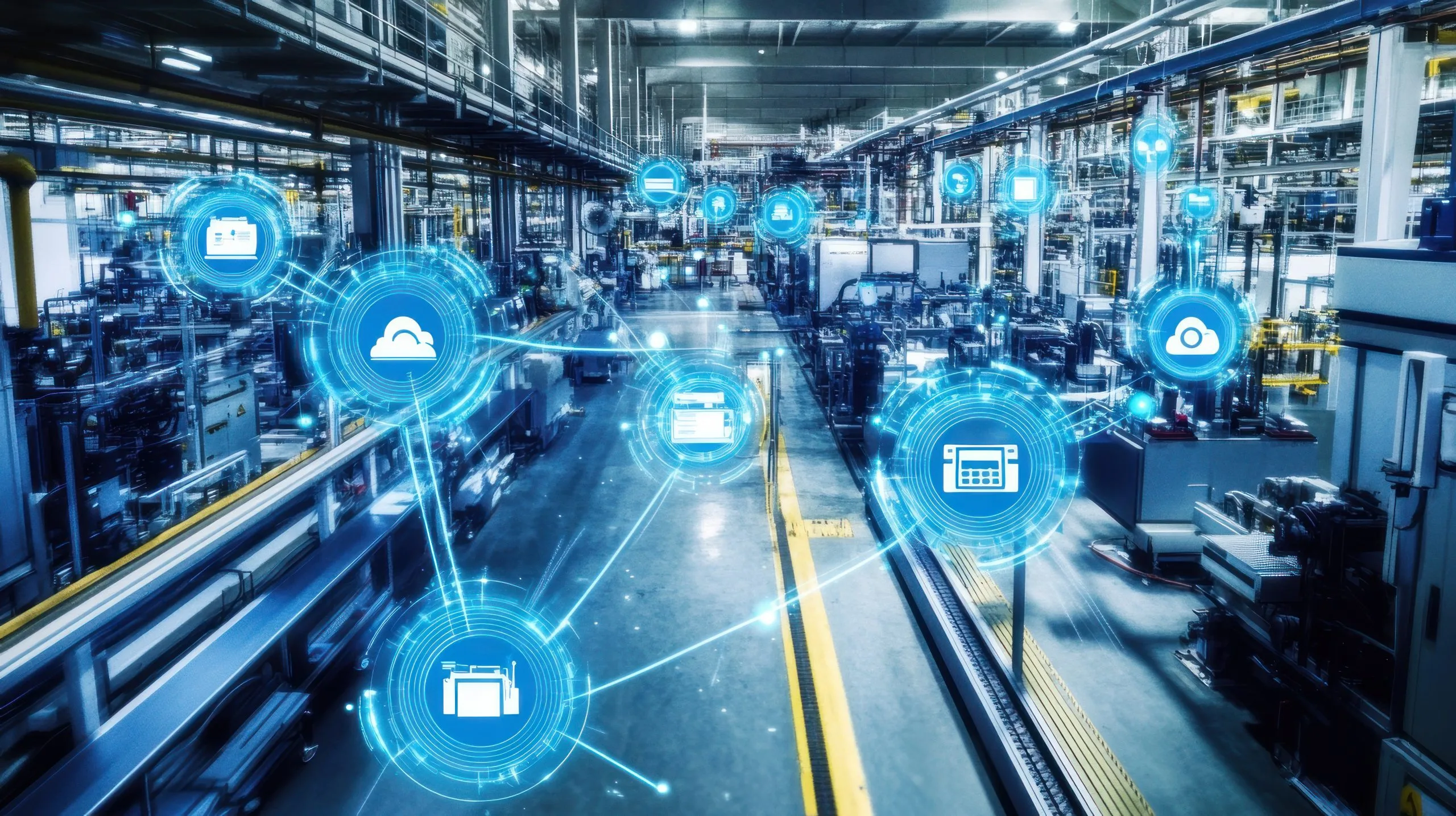
India’s Industrial Internet of Things (IIoT) market is set to experience significant growth over the next decade, with industries across manufacturing, logistics, and energy increasingly adopting connected technologies. As businesses strive for greater efficiency and productivity, IIoT solutions are becoming central to how they operate. With projections showing a strong rise in the use of smart devices, sensors, and automation, IIoT will play a pivotal role in transforming India’s industries. As digital transformation continues to accelerate, India is embracing IIoT as the future of its industrial landscape, driving innovation and competitive growth.
Major Contributors of India’s IoT Market Growth
Manufacturing Revolution and Efficiency Boosts
A major factor driving the growth of IIoT in India is the ongoing modernization of the manufacturing sector. Industries like automotive and electronics are integrating connected systems to improve the quality of production and boost output. By using IIoT technologies for things like predictive maintenance, real-time monitoring, and data analytics, companies can spot issues before they cause downtime, ultimately saving money and reducing operational risks.
E-Commerce and Logistics Transformation
With the explosive growth of e-commerce in India, logistics companies are turning to IIoT to handle rising demands for fast and reliable deliveries. From automated warehouses to real-time tracking of inventory and shipments, IIoT is helping businesses optimize their logistics networks. As online shopping continues to grow by 15-20% annually, connected technologies are becoming essential for managing more efficient and transparent supply chains. IIoT is enabling faster order fulfillment, better route optimization for deliveries, and more effective inventory management all critical for keeping up with consumer expectations in an increasingly fast-paced e-commerce environment.
Smart Energy and Utilities Management
The energy sector in India is also embracing IIoT to improve efficiency, reduce waste, and better integrate renewable energy sources. With IIoT devices providing real-time data on energy consumption and grid stability, energy companies can better forecast demand, reduce losses, and improve service reliability. IIoT technology helps utilities track performance, detect outages early, and manage the distribution of energy more effectively.
Indian Government’s Support and Initiatives Driving IoT Market Innovation
The Indian government has been actively supporting IIoT adoption through initiatives and the Production-Linked Incentive (PLI) scheme, which encourage companies to innovate and integrate digital technologies. These programs are designed to support industries in scaling up their operations while also fostering local manufacturing of IIoT solutions. In addition, state-level initiatives are helping build the infrastructure and talent required to scale up IIoT deployments. With growing policy backing, the Indian government is making it easier for businesses to embrace these cutting-edge technologies, enabling greater industry-wide integration.
Competitive Insights of India’s IoT Market
The competitive landscape of India’s IIoT market is diverse and dynamic. Large global tech players provide cutting-edge solutions, while local companies are gaining traction by offering customized, cost-effective IIoT systems suited to India’s specific industrial needs. System integrators play a vital role in deploying these technologies, ensuring smooth integration into existing infrastructure. The collaboration between global and local players is creating a fertile ground for innovation and market growth. As IIoT adoption accelerates, competition will continue to intensify, with companies striving to differentiate themselves through tailored solutions and enhanced customer service.
Major Challenges experienced in India’s IoT Market
Integration with Legacy Systems and Infrastructure
One of the biggest hurdles for India’s IIoT market is integrating new technologies with existing legacy systems. Many industries still rely on older machinery and infrastructure that lack built-in connectivity, meaning retrofitting and additional investments are often required. This adds complexity and cost to IIoT adoption, particularly for smaller companies. Simplifying this integration and making IIoT systems more adaptable to older setups will be key to overcoming this challenge and accelerating adoption.
Talent Shortage and Skills Development
Another challenge India faces is the shortage of skilled professionals who can manage and implement IIoT technologies. There’s a significant gap between the rapid technological advancements in industries and the availability of qualified workers. To address this, businesses must invest in upskilling their existing workforce and collaborating with educational institutions to build a pipeline of skilled talent. Bridging this skills gap will be crucial for maximizing the full potential of IIoT and ensuring smooth operations.
Future Outlook
As we move towards the future, India’s IIoT market is expected to evolve rapidly, with increasing adoption across industries ranging from manufacturing to energy and logistics. The shift toward smart factories and connected infrastructure will enable greater efficiency and real-time decision-making, while the widespread use of data analytics will empower businesses to make more informed choices. With continued government support, advances in technology, and the expansion of digital infrastructure, India’s IIoT landscape will be transformed into a highly competitive, innovation-driven sector. The future looks bright, with IIoT playing a central role in India’s journey towards becoming a global leader in industrial automation and sustainability.
Consultants at Nexdigm, in their latest publication India Industrial IoT Market Outlook 2035 analyze the sector by Platform Types (Cloud based Platforms, Edge promoting platforms, On premises Platforms, Embedded systems, Hybrid Platforms), by End User Segment (Automotive sector, Oil and Gas, Manufacturing Industries, Electronics and Semiconductors and Energy and Utilities).
Nexdigm suggests that businesses in India should be investing in smart technologies like predictive maintenance, real-time monitoring, and data analytics which will help businesses optimize processes, cut costs, and meet growing consumer demands. Additionally, businesses should be collaborating with IIoT solution providers and leverage government initiatives which can further support businesses in this digital transformation journey.
To take the next step, simply visit our Request a Consultation page and share your requirements with us.
Harsh Mittal
+91-8422857704