
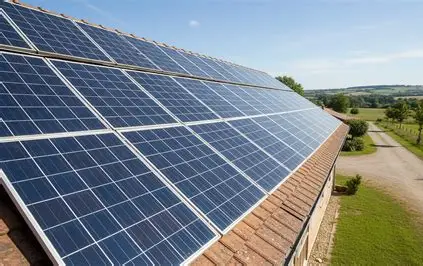
India’s Off-Grid Solar Energy Market is experiencing significant growth as the country accelerates rural electrification, energy access, and clean energy adoption initiatives. Off-grid solar systems are playing a critical role in providing reliable electricity to remote villages, agricultural operations, telecom towers, healthcare centers, and households where grid connectivity remains unreliable or costly. India has surpassed 110 GW of installed solar capacity, making it one of the world’s largest solar markets. Rising demand for energy independence, falling battery costs, and increasing deployment of solar-powered irrigation systems and microgrids are creating strong growth opportunities across the off-grid solar value chain.
Key Market Drivers for India’s Off-Grid Solar Energy Market
Rural Electrification and Energy Access Programs Drive Adoption
India has a rural population exceeding 900 million people, creating vast opportunities for decentralized energy solutions. Off-grid solar systems are increasingly used to power rural homes, schools, healthcare facilities, and community infrastructure where grid reliability remains a challenge. Government-supported electrification initiatives and solar microgrid projects continue to support demand for standalone solar systems across underserved regions.
Solar-Powered Agriculture Creates Significant Market Opportunities
Agriculture remains a major growth driver for off-grid solar in India. The country has more than 140 million hectares of agricultural land and millions of irrigation pumps, many of which are being transitioned to solar power. Solar-powered water pumping systems reduce dependence on diesel fuel and unreliable electricity supply while helping farmers lower operating costs. Growing adoption of solar irrigation solutions is expected to support sustained demand for off-grid solar systems.
Falling Battery Costs Improve System Economics
Advancements in lithium-ion battery technology and increasing domestic energy storage investments are making off-grid solar systems more reliable and affordable. Improved battery storage allows households, businesses, and rural enterprises to access electricity beyond daylight hours, enhancing the practicality of standalone solar installations. As storage prices continue to decline, solar-plus-storage systems are becoming increasingly viable across residential, agricultural, and commercial applications.
Government Initiatives Supporting India’s Off-Grid Solar Energy Market
The Government of India continues to support decentralized renewable energy adoption through programs such as PM-KUSUM, the National Solar Mission, and rural electrification initiatives. PM-KUSUM aims to deploy millions of solar-powered agricultural pumps while encouraging distributed solar generation in rural areas. Additionally, India’s target of achieving 500 GW of non-fossil fuel energy capacity is driving investments in solar infrastructure, energy storage systems, and decentralized energy solutions. These initiatives are creating favorable conditions for continued expansion of the off-grid solar ecosystem.
Competitive Landscape of India’s Off-Grid Solar Energy Market
India’s Off-Grid Solar Energy Market is characterized by growing demand from rural households, farmers, telecom operators, commercial establishments, and microgrid developers. Competition is increasingly focused on system efficiency, battery performance, affordability, remote monitoring capabilities, and after-sales support. Market participants are investing in integrated solar-plus-storage solutions, smart energy management systems, and modular deployment models to address diverse energy requirements across urban and rural applications. The market is also benefiting from increasing domestic manufacturing capabilities and policy support for renewable energy equipment.
Major Challenges Facing India’s Off-Grid Solar Energy Market
High Upfront Costs for Rural Consumers
Although off-grid solar systems provide significant long-term savings, initial installation costs can remain a barrier for low-income households and small agricultural users. Access to financing and subsidy support continues to play an important role in market expansion.
Battery Storage and Maintenance Requirements
Reliable off-grid operation depends on adequate battery storage and regular system maintenance. In remote areas, challenges related to battery replacement, technical support, and service accessibility can affect long-term system performance.
Future Outlook
India’s Off-Grid Solar Energy Market is expected to witness robust growth through 2035, supported by 110 GW+ of installed solar capacity, a rural population exceeding 900 million people, and rising adoption of solar-powered irrigation, microgrids, and battery storage systems. The expansion of PM-KUSUM, increasing deployment of solar pumps, and growing demand for resilient power solutions in agriculture, telecommunications, and rural infrastructure will continue to strengthen market opportunities. Companies investing in affordable solar-plus-storage systems, smart energy management technologies, and localized service networks will be well-positioned to capitalize on India’s expanding decentralized energy landscape.
Consultants at Nexdigm, in their latest publication “India Off-Grid Solar Energy Market Outlook to 2035,” analyse the sector By Solar Component Technology (Monocrystalline PERC Panels, Polycrystalline Silicon Panels and Thin-Film Solar Cells), By Application Sector (Residential Electrification and Agricultural Off-Grid Utility) and By System Capacity (Micro Systems Up to 500W, Small Systems 500W to 5kW and Medium Systems 5kW to 50kW).
Nexdigm suggests that businesses in India’s Off-Grid Solar Energy Industry prioritize integrated solar-plus-storage solutions, solar-powered irrigation technologies, AI-enabled energy management platforms, and localized service networks to capitalize on the country’s 110 GW+ solar capacity, extensive rural population, expanding agricultural electrification initiatives, and increasing demand for reliable, decentralized, and sustainable energy solutions across residential, agricultural, telecom, and commercial applications.
To take the next step, simply visit our Request a Consultation page and share your requirements with us.
Harsh Mittal
+91-8422857704