
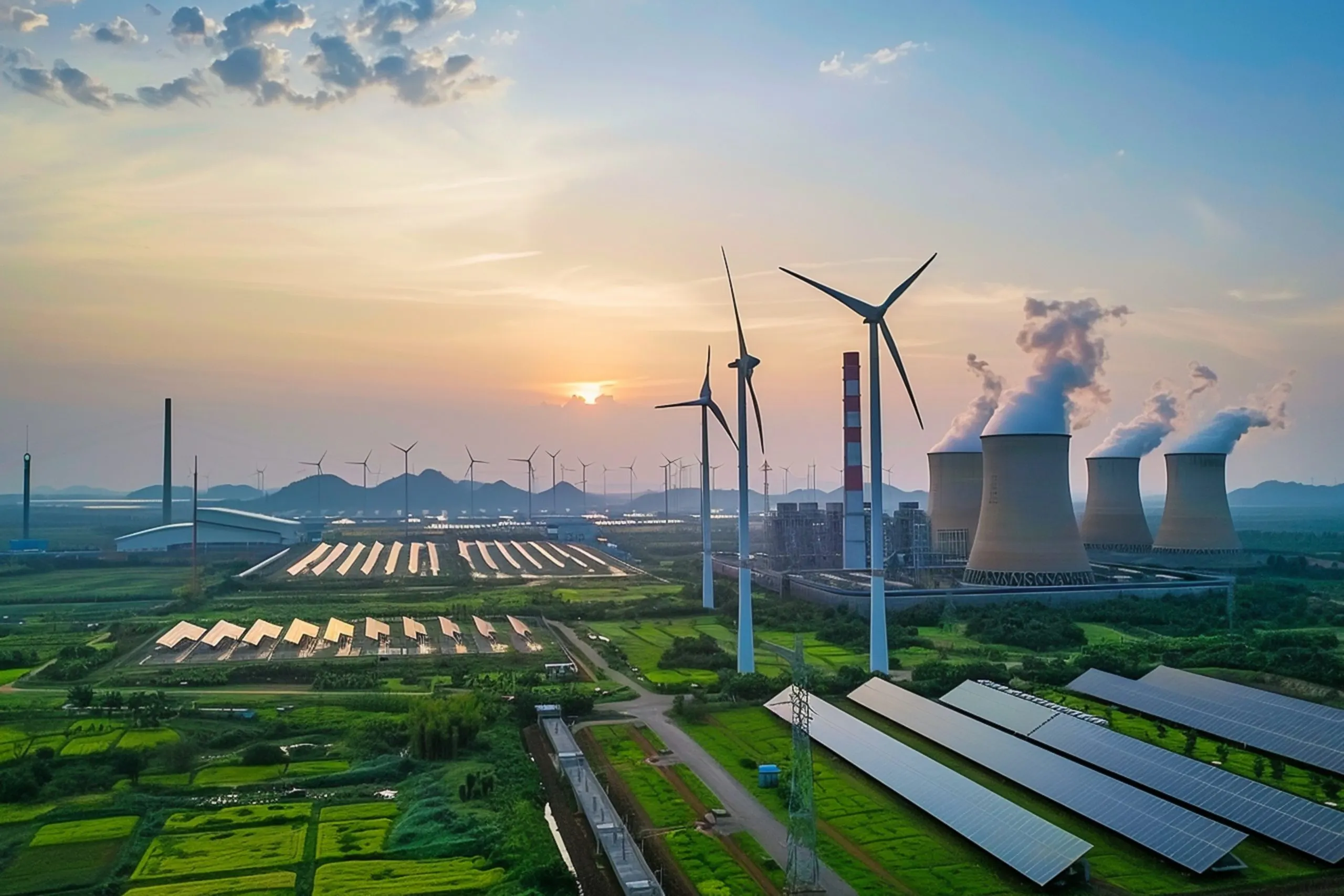
India’s renewable energy sector has ranked among the fastest‑growing markets globally, driven by robust additions in solar and wind capacity and increasing policy commitments to decarbonize its power mix. Installed renewable capacity has nearly tripled over the past decade, positioning India as a leading market for clean energy investment and deployment. Projections to 2035 show continued expansion across technologies as the country addresses rising electricity demand and climate commitments under global agreements.
Key Market Drivers Shaping India’s Renewable Energy Growth
Rapid Capacity Growth
The renewable energy market in India has expanded significantly, with installed capacity growing from around 76 GW in 2014 to over 226 GW by mid‑2025. Solar PV has been the dominant contributor, with large‑scale installations and declining module costs accelerating uptake. The pace of installations remains high; in early 2025 alone India added more than 26 GW of new solar capacity, a year‑on‑year rise of over 50 per cent.
Energy Demand and Policy Alignment
India’s overall energy demand is projected to increase substantially through 2035 as economic and industrial activity expands. The government’s strategy to balance energy security with sustainability objectives has elevated renewables as a central focus, reflected in national targets and infrastructure planning. Renewable sources are expected to supply an increasingly large share of the country’s electricity requirements as coal dependency gradually lowers.
Cost Competitiveness and Investment Appeal
Declines in cost for solar and wind technologies, alongside improvements in financing structures and private sector participation, have made India attractive for investors and developers. Competitive auctions and long‑term power purchase agreements (PPAs) have helped lower levelized cost of energy (LCOE) for renewables relative to new thermal power assets, encouraging capacity buildout. — (data points general industry trend)
Government Support and Initiatives Driving Renewable Energy Expansion in India
The Indian government has set ambitious clean energy targets, aiming for 500 GW of non‑fossil fuel capacity by 2030 and a significant expansion beyond to 2035. Policy measures include tax incentives, accelerated depreciation benefits for renewable assets, renewable purchase obligations, and support for wind‑solar hybrid projects. Central and state‑level renewable energy policies work in tandem to streamline land acquisition, grid access, and project permitting.
Key Players and Market Dynamics in India’s Renewable Energy Sector
India’s renewable market is populated by a mix of large utilities, independent power producers, and financial investors. Major players in solar, wind, and hybrid project deployment compete on scale, cost efficiency, and technology integration. International firms and domestic conglomerates alike are expanding green energy portfolios to capture opportunities in utility‑scale and decentralized power generation. — (industry structure based on common sector knowledge)
Key Barriers to Accelerating Renewable Energy Growth in India
Grid Integration and Storage Needs
As intermittent renewable penetration increases, grid balancing and storage solutions become critical. Insufficient transmission and distribution infrastructure and the variability of wind and solar output pose technical and operational challenges that need to be resolved through investments in flexibility and storage capacity. — (general sector challenge)
Land and Financing Constraints
Large renewable projects require significant land parcels and capital investment. Delays in land acquisition, financing hurdles for smaller developers, and currency risks remain barriers to faster deployment outside core high‑resource regions. — (common sector constraints)
Future Outlook
Looking to 2035, India’s renewable energy market is expected to continue strong growth, with non‑fossil fuel capacity projected to account for a majority share of the country’s power mix. Estimates suggest installed renewable capacity could exceed 800 GW by 2035, reinforcing India’s position among the top global clean energy markets. Continued declines in technology costs, coupled with advancements in storage and grid integration, are likely to improve system reliability and reduce carbon intensity. Policy evolution and private investment will shape the pace of deployment as India balances energy security, affordability, and sustainability goals over the next decade.
Consultants at Nexdigm, in their latest publication “India Renewable Energy Market Outlook to 2035,” analyze the sector by System Type (Solar Energy, Wind Energy, Hydropower, Biomass Energy), By Platform Type (Grid-connected Systems, Off-grid Systems, Hybrid Systems), and By Fitment Type (Onshore Solutions, Offshore Solutions, Rooftop Solutions). Nexdigm suggests that businesses should create market-relevant context by aligning their strategies with current industry trends, understanding regulatory changes, and leveraging technology advancements to stay competitive in the evolving renewable energy landscape.
To take the next step, simply visit our Request a Consultation page and share your requirements with us.
Harsh Mittal
+91-8422857704