
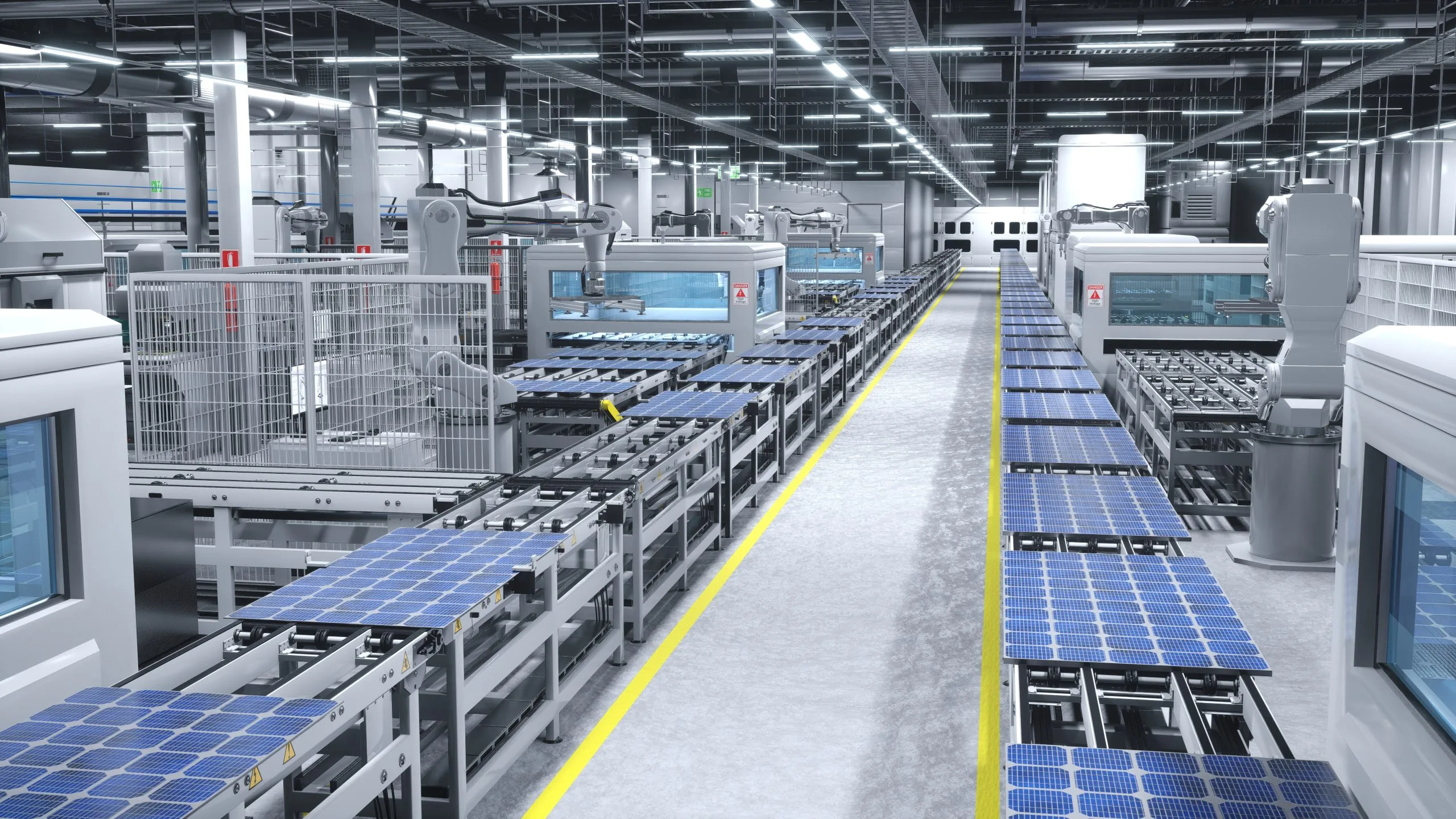
India’s solar photovoltaic (PV) market is becoming a central element of the nation’s energy transition. Driven by ambitious renewable energy targets and rapidly falling technology costs, solar PV capacity in India has expanded significantly in recent years. As of 2025, the market reached around 20.48 GW of PV capacity and is forecast to grow markedly over the next decade. This growth reflects increased adoption across utility‑scale, commercial, and residential segments, with solar power now accounting for a substantial share of India’s renewable energy mix.
Key Drivers Fueling the Growth of India’s Solar PV Market
Rapid Capacity Deployment
India’s solar PV segment has grown due to sustained capacity additions and expanding project pipelines. Installed solar capacity nationwide crossed more than 129 GW by late 2025, up sharply from just 3 GW a decade ago, underscoring the scale of deployment. This expansion is supported by competitive auction mechanisms that have driven tariff rates for utility‑scale solar, enhancing the economic case for new projects. Recent data shows annual renewable capacity additions reaching record levels, with solar contributing to the largest share of new installations.
Corporate and Distributed Demand
Corporate renewable procurement and net‑metering policies have stimulated demand for rooftops and distributed solar across industrial, commercial and residential segments. Sustainability commitments, cost‑savings objectives, and decentralized generation strategies are motivating businesses and consumers to adopt solar PV solutions. Projections indicate that India’s solar PV capacity could grow to approximately 70 GW by 2035 at a compound annual growth rate (CAGR) of over 13 %.
Technology and Cost Trends
Declining module prices and advancements in PV technology continue to improve return on investment. Lower capital costs improve bankability of projects, while technological improvements in panel efficiency and energy storage integration enhance system performance. These trends are essential to making solar PV competitive with conventional electricity generation in diverse market segments.
Government Policies and Initiatives Driving Solar PV Growth in India
Policy support remains a primary catalyst for solar PV expansion. India’s targets for renewable capacity include 500 GW of non‑fossil generation by 2030, with solar being a core contribution. Central and state‑level schemes such as Production‑Linked Incentives (PLI), PM‑KUSUM, and rooftop solar subsidies, alongside net‑metering frameworks, are designed to accelerate deployment and encourage domestic manufacturing.
Key Players and Competitive Dynamics in India’s Solar PV Market
The India solar PV market comprises established domestic and international players engaged in manufacturing and project development. Key names include Tata Power Solar, Waaree Energies, Vikram Solar, Adani Solar and others that are expanding their footprints across utility and rooftop segments. Competitive dynamics are shaped by efforts to increase local module production, secure supply chains, and form strategic partnerships to serve both domestic and export markets.
Key Challenges Hindering the Growth of India’s Solar PV Market
Grid Integration and Infrastructure
Despite strong growth, integrating large volumes of variable solar generation poses operational challenges for grid stability. Distribution networks require upgrades to handle increased PV injection, particularly in regions with high rooftop solar penetration.
Land and Supply Chain Constraints
Securing suitable land for utility‑scale projects can be complex, especially in states with competing land use pressures. Additionally, reliance on imported PV components and potential trade barriers could disrupt supply chains and affect project costs.
Future Outlook
India’s solar PV market is positioned for sustained growth toward 2035, underpinned by supportive policies, expanding demand and technological maturation. Forecasts project solar PV capacity to reach approximately 70.14 GW by 2035 at a robust CAGR, reflecting a significant scale‑up from current levels. Continued cost reductions, digitalization of energy systems, and integration with energy storage will enhance the role of solar PV in India’s energy mix. With renewables increasingly contributing to power generation, solar PV is expected to remain a cornerstone of the country’s decarbonization and energy security strategies.
Consultants at Nexdigm, in their latest publication “India Solar PV Market Outlook to 2035,” analyze the sector by System Type (Utility-Scale Solar Systems, Residential Solar Systems, Commercial Solar Systems, Industrial Solar Systems), By Platform Type (Ground-Mounted Solar Systems, Roof-Top Solar Systems, Floating Solar Systems), and By Fitment Type (On-Grid Solar Systems, Off-Grid Solar Systems, Hybrid Solar Systems). Nexdigm suggests that businesses should focus on leveraging technological advancements, sustainable practices, and regulatory support to adapt to the rapidly evolving solar PV market. By strategically addressing these market dynamics, businesses can effectively navigate challenges and seize growth opportunities.
To take the next step, simply visit our Request a Consultation page and share your requirements with us.
Harsh Mittal
+91-8422857704