
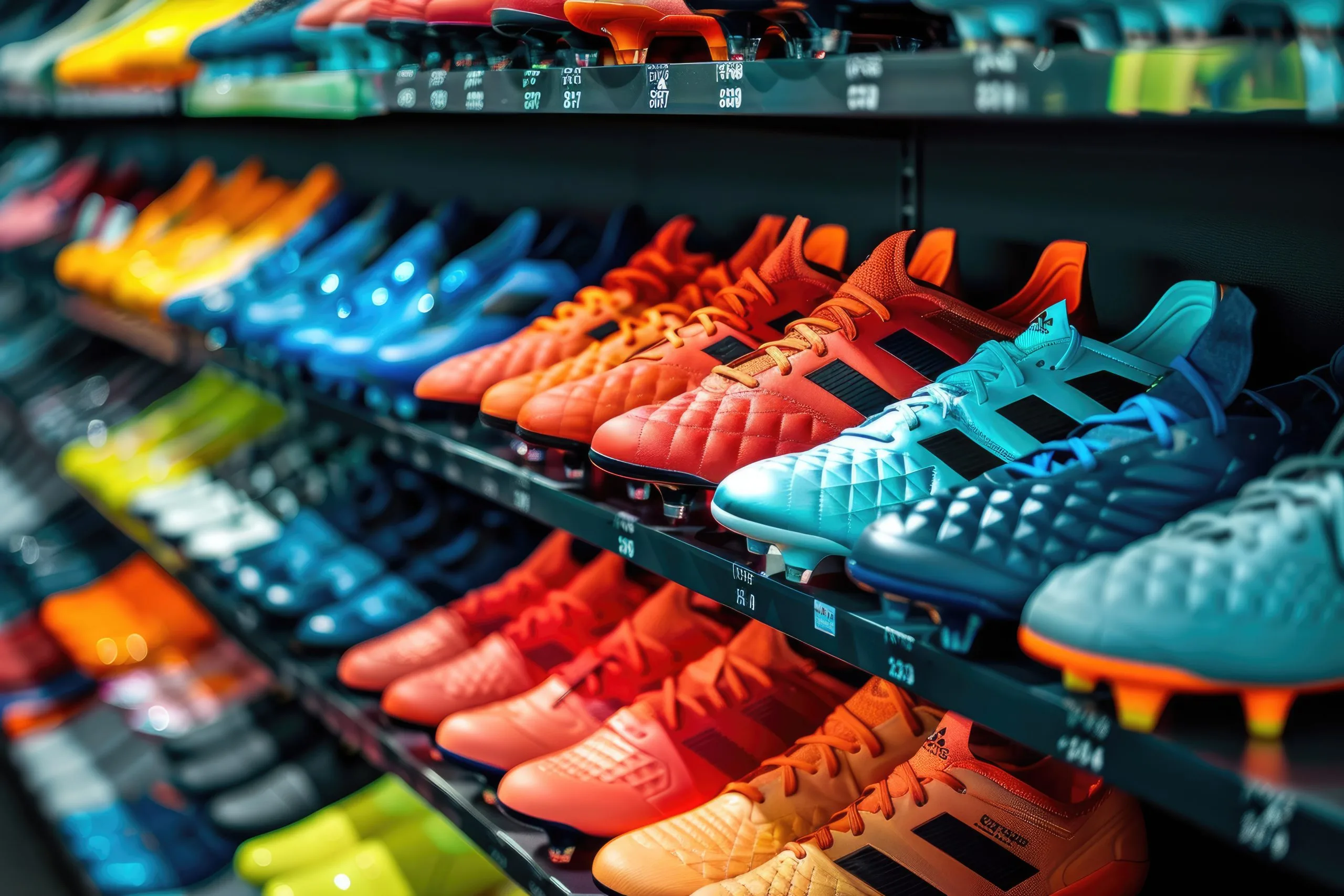
India’s sports shoes market is expanding rapidly, supported by rising fitness awareness, increasing sports participation, athleisure adoption, and growing demand for comfortable everyday footwear. Sports shoes are now widely used not only for running, gym training, cricket, football, and badminton, but also for commuting, casual wear, and lifestyle fashion. India’s athletic footwear market reached around USD 6.2 billion in 2025 and is projected to reach USD 9.9 billion by 2034. The broader India footwear market was estimated at USD 20.11 billion in 2025, highlighting the scale of the opportunity.
Key Market Drivers: Fitness, Athleisure, and E-Commerce Growth
Rising Fitness and Sports Participation
Growing interest in fitness, sports, and wellness is one of the strongest drivers of India’s sports shoes market. Urban consumers are increasingly participating in gym workouts, running, walking, cycling, cricket, football, badminton, and recreational sports. Running events, marathons, fitness clubs, and app-based health tracking have also encouraged more consumers to invest in performance footwear. The India running gear market reached USD 2.5 billion in 2025 and is expected to grow to USD 4.9 billion by 2034, reflecting stronger demand for running and fitness-related products. Consumers are becoming more aware of cushioning, grip, durability, breathability, and injury prevention, which is supporting demand for specialized sports shoes.
Growth of Athleisure and Everyday Comfort
Athleisure is reshaping footwear preferences in India. Consumers, especially younger buyers, increasingly prefer sneakers and athletic-inspired shoes for daily use because they combine comfort, versatility, and style. Casual workplaces, college fashion, travel, and social media trends are helping sports shoes move beyond performance use into mainstream lifestyle wear.
Expansion of E-Commerce and Tier-2 Demand
Online platforms, brand websites, marketplaces, and quick-commerce channels are improving access to sports shoes across metro and non-metro cities. E-commerce allows consumers to compare prices, access discounts, view product reviews, and purchase premium or niche brands. Tier-2 and tier-3 cities are becoming important growth markets as disposable income rises and branded footwear awareness improves.
Government Support: Sports Development Programs
Government initiatives are indirectly supporting the sports shoes market by encouraging wider sports participation and fitness culture. The Khelo India Programme aims to broaden sports participation and develop sporting excellence across India. For FY 2025–26, the government allocated ₹1,000 crore to Khelo India as part of a record ₹3,794 crore allocation to the Ministry of Youth Affairs and Sports. Policies focused on youth sports, school-level participation, sports infrastructure, and athlete development create a favorable environment for long-term demand in sports footwear.
Global and Local Brand Competition
The India sports shoes market is highly competitive, with global brands such as Nike, Adidas, Puma, ASICS, Skechers, New Balance, Reebok, Under Armour, HOKA, and On competing with domestic players such as Campus, Red Tape, Liberty, Bata India, Asian Footwear, HRX, and Sparx. Competition is shaped by pricing, product comfort, brand image, distribution reach, celebrity endorsements, online discounts, and sport-specific features. Local brands are gaining traction by offering affordable performance and lifestyle footwear for mass-market consumers.
Price Sensitivity and Counterfeit Risks
High Price Sensitivity
A large share of Indian consumers remains value-conscious, especially outside metro cities. Premium sports shoes can be difficult to scale unless brands offer discounts, entry-level models, or localized pricing. Inflation and household budget pressures may also delay discretionary footwear purchases.
Counterfeit and Unorganized Market Competition
The presence of counterfeit, low-cost, and unorganized footwear products creates pricing pressure for branded players. These alternatives may attract consumers seeking cheaper options, but they can also affect brand trust and product safety.
Future Outlook
The India sports shoes market is expected to maintain strong growth as fitness awareness, athleisure fashion, sports participation, and digital retail adoption continue to rise. Demand will likely be strongest in running, walking, cricket, football, badminton, training, and lifestyle sneaker categories. Brands that combine affordability, comfort, durability, breathable materials, and India-specific designs are likely to gain wider acceptance. E-commerce, quick-commerce, direct-to-consumer platforms, and influencer-led product discovery will further support market expansion. Despite price sensitivity and counterfeit competition, India remains one of the most attractive long-term sports footwear markets globally.
Consultants at Nexdigm, in their latest publication “India sports shoes market Outlook to 2035” analyze the sector By Product Type (Running, Training and Gym, Walking, Football Shoes, By Price Category (Mass/Economy, Mid-Range, Premium Sports Shoes).
Nexdigm suggests that businesses should focus on product innovation, localized pricing, stronger digital distribution, and consumer-focused positioning to capture emerging opportunities in the sports shoes market.
To take the next step, simply visit our Request a Consultation page and share your requirements with us.
Harsh Mittal
+91-8422857704