
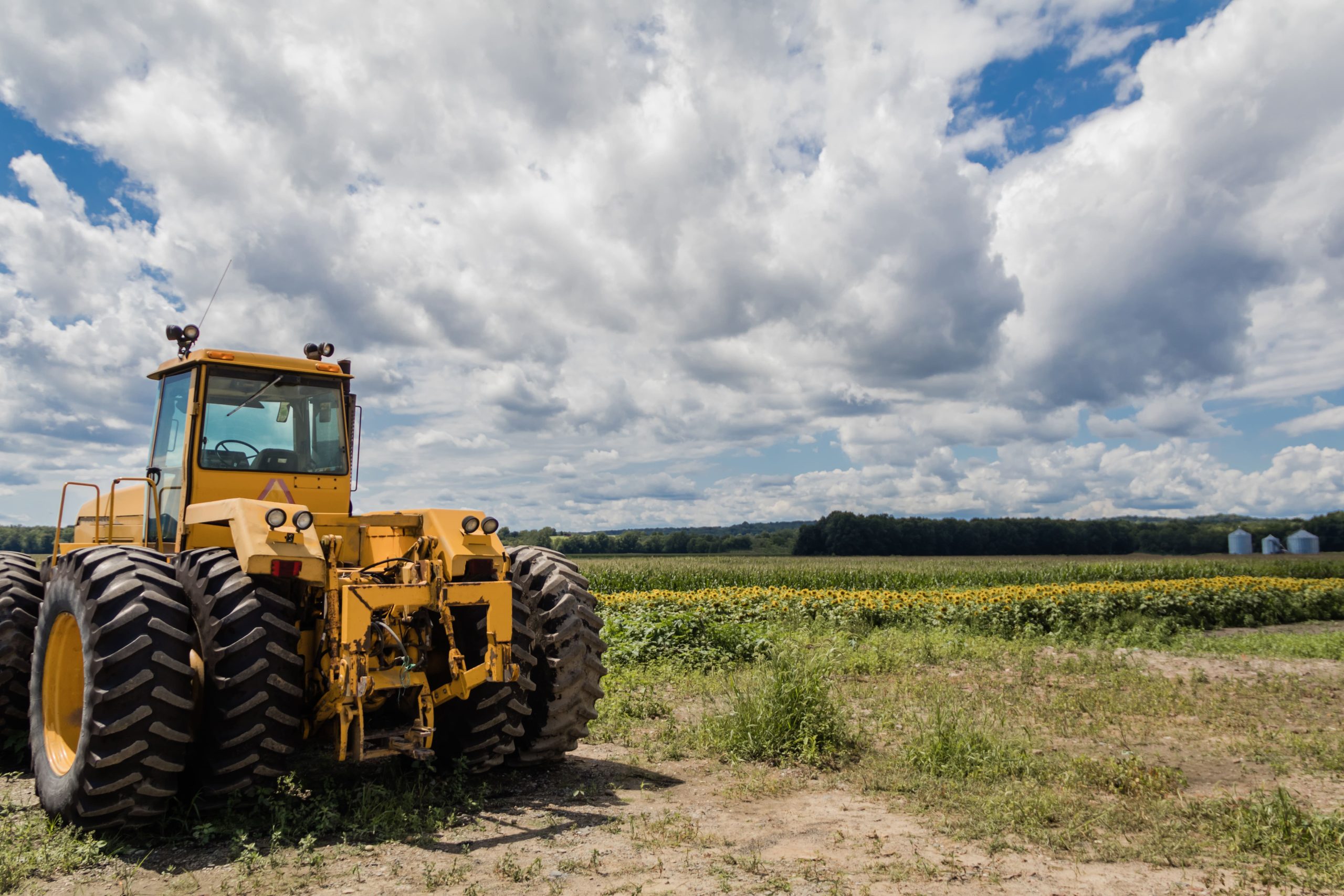
India’s agricultural machinery sector is entering a new growth phase as farm mechanization, rural income support, and export competitiveness gather momentum. As of 2026, India remains the world’s largest tractor market by volume, supported by its vast agrarian base and increasing adoption of farm equipment across small and medium landholdings. With over 55% of India’s workforce still dependent on agriculture, tractors have become central to improving farm productivity and reducing labor dependency. While domestic manufacturing is strong and India is a global export hub for compact tractors, regional disparities in mechanization levels and fragmented landholdings continue to influence demand patterns. Over the next decade, policy support, financing access, and technology integration are expected to redefine the India tractor market landscape through 2035.
What’s Driving the Tractor Market in India?
Rising Farm Mechanization Across States
India’s farm mechanization levels have steadily improved, particularly in agriculturally advanced states such as Punjab, Haryana, Uttar Pradesh, and Maharashtra. However, eastern states including Bihar, Odisha, and West Bengal still offer significant headroom for growth. Increasing labor shortages during peak sowing and harvesting seasons are pushing farmers toward tractor adoption for ploughing, tilling, spraying, and haulage applications. Compact tractors below 50 HP are witnessing strong demand among small and marginal farmers who account for over 80% of landholdings.
Growth in Rural Financing and Tractor Loans
Improved access to rural credit through public and private sector banks, NBFCs, and microfinance institutions has expanded tractor affordability. Flexible repayment cycles aligned with harvest seasons and government-backed interest subvention schemes are supporting first-time buyers. Additionally, custom hiring centers and tractor rental platforms are enabling small farmers to access mechanization without full ownership, indirectly stimulating overall market penetration.
Infrastructure Development and Non-Farm Usage
Beyond agriculture, tractors are increasingly used in rural infrastructure projects, road construction support, and material transportation. Government initiatives such as rural road expansion and irrigation infrastructure development have increased demand for higher horsepower tractors above 50 HP. This diversification of applications is stabilizing tractor sales even during periods of agricultural income volatility.
Government-Led Initiatives Supporting Growth
The Government of India continues to promote farm mechanization under schemes such as the Sub-Mission on Agricultural Mechanization (SMAM), which provides subsidies for tractor purchases and farm equipment attachments. Various state governments also offer additional financial assistance to encourage mechanization among small farmers and farmer-producer organizations (FPOs). Moreover, the push for “Make in India” and export promotion policies has strengthened India’s position as a manufacturing hub for compact tractors. Favorable export incentives and trade agreements have enabled Indian manufacturers to expand shipments to Africa, Southeast Asia, and Latin America. Mechanization is also aligned with the government’s broader objective of doubling farmers’ income through productivity enhancement and cost optimization.
Market Competition and Key Players
The India tractor market is moderately consolidated, with a few dominant domestic manufacturers accounting for a significant share of total sales. Key players include Mahindra & Mahindra Ltd., TAFE (Tractors and Farm Equipment Limited), Escorts Kubota Limited, and Sonalika International Tractors Ltd. Mahindra & Mahindra continues to maintain leadership in domestic volumes and exports, particularly in the sub-50 HP segment. TAFE remains a strong exporter with a wide international distribution footprint. Escorts Kubota is expanding its premium and technology-integrated offerings, while Sonalika has strengthened its presence in export-focused markets. Increasing investments in fuel-efficient engines, telematics-enabled tractors, and precision farming solutions are intensifying competitive differentiation.
Fragmented Landholdings and Price Sensitivity
India’s agricultural landscape is characterized by highly fragmented landholdings, with a majority of farmers operating on small and marginal plots. This structural constraint limits the economic viability of high-horsepower tractors in several regions, particularly where farm sizes do not justify larger investments. As a result, demand is concentrated in lower horsepower segments. Price sensitivity remains a critical factor influencing purchase decisions, especially in rain-fed and low-income belts where farm incomes are volatile. Moreover, fluctuations in monsoon performance and crop prices significantly affect farmer liquidity, leading to cyclical variations in annual tractor sales across states.
Future Outlook
The India tractor market is expected to witness steady expansion through 2035, driven by deeper mechanization penetration in eastern and northeastern states, rising non-agricultural applications, and export growth. By 2035, farm mechanization levels in India are projected to approach those of other major agrarian economies in Asia, supported by technology adoption and government incentives. Electric and hybrid tractors are likely to emerge gradually, particularly for orchard farming and intra-farm logistics, as sustainability and fuel efficiency gain importance. Digital integration through GPS tracking, telematics, and precision farming attachments will further enhance productivity. Export volumes are expected to strengthen India’s role as a global supply hub for compact tractors under 75 HP.
Consultants at Nexdigm, in their latest publication “India Tractor Market Outlook to 2035,” analyzed the market by Horsepower (Below 30 HP, 31–50 HP, 51–75 HP, Above 75 HP), By Application (Agriculture, Haulage, Infrastructure Support, Commercial Use), By Drive Type (2WD and 4WD), and By Region (North, South, East, West India). Nexdigm believes businesses should focus on expanding rural financing partnerships, investing in fuel-efficient and electric models, strengthening after-sales service networks, and leveraging export opportunities in emerging markets to sustain long-term growth in the India tractor market.
To take the next step, simply visit our Request a Consultation page and share your requirements with us.
Harsh Mittal
+91-8422857704