
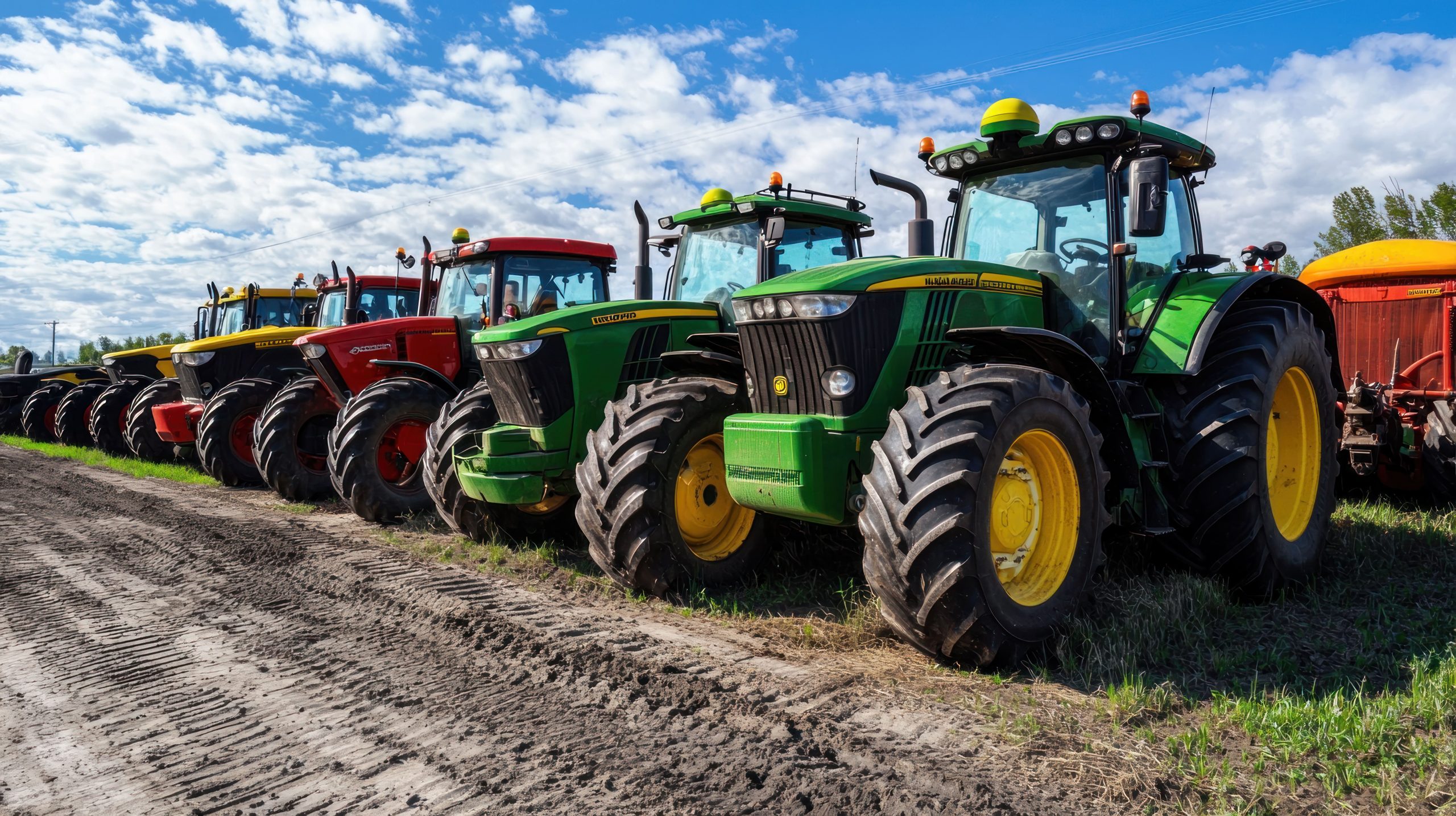
The India agricultural equipment market is going through a steady shift as mechanization deepens across small and marginal farms. While new equipment sales remain strong, the used agricultural equipment segment is emerging as a critical access point for cost-conscious farmers and rural contractors. As of 2026, over 86% of Indian landholdings were small and marginal farms, operating on less than two hectares of land. For these farmers, purchasing new tractors, harvesters, and implements often remains financially out of reach. The growing availability of pre-owned equipment, supported by dealer-led refurbishment and informal resale channels, is expanding mechanization beyond large commercial farms. With farm labor shortages, rising rural wages, and tighter seasonal timelines, demand for affordable machinery is expected to keep the secondary equipment market relevant through 2035.
What’s Driving the Used Agricultural Equipment Market in India?
Rising Mechanization Needs Across Smallholder Farms
India’s farm mechanization level crossed 55% by 2025, compared to under 40% in 2014, driven by labor scarcity and higher cropping intensity. However, mechanization remains uneven across states such as Bihar, Odisha, and parts of the Northeast. Used tractors and power tillers offer an economical entry point for farmers transitioning from animal or manual labor. Pre-owned equipment priced 30–50% lower than new models is increasingly preferred for tasks such as ploughing, haulage, and inter-cultivation, particularly for farms below five acres.
Expansion of Custom Hiring Centers (CHCs)
Government-supported Custom Hiring Centers are expanding access to farm machinery without ownership. As of 2024, more than 35,000 CHCs were operational nationwide, many of which procure refurbished or lightly used equipment to optimize capital costs. These centers play a key role in extending the life cycle of tractors, seed drills, and rotavators, creating steady demand in the secondary market.
High Cost of New Equipment and Financing Gaps
Despite subsidies, new tractor prices have risen steadily due to input cost inflation and tighter emission norms. Credit access remains uneven in rain-fed regions, pushing farmers toward used equipment purchased through informal dealers or local brokers. This dynamic is supporting the circulation of 3–8-year-old tractors and implements in rural markets.
Government-Led Initiatives Supporting Mechanization
Schemes such as Sub-Mission on Agricultural Mechanization (SMAM) and state-level farm mechanization programs continue to promote equipment adoption. While incentives focus on new machinery, the indirect effect is higher equipment turnover among progressive farmers and agribusinesses, increasing supply in the used market. The digitization of land records and Direct Benefit Transfer (DBT) has also improved subsidy reach, indirectly strengthening overall equipment circulation.
Market Competition and Distribution Landscape
The used agricultural equipment market in India remains highly fragmented. Authorized dealers of OEMs such as Mahindra Farm Equipment, TAFE, Sonalika, and Escorts Kubota dominate certified resale in select states, while a large unorganized network of village traders and mechanics handles most transactions. Digital platforms and agri-marketplaces are improving price discovery, but trust, inspection quality, and after-sales support remain key differentiators.
Quality Inconsistency and Lack of Standardized Refurbishment
The used agricultural equipment market in India faces a major challenge due to inconsistent quality of pre-owned machinery. Most transactions occur through informal channels where equipment condition is difficult to verify, leading to frequent breakdowns and higher maintenance costs for farmers. The absence of standardized refurbishment, inspection protocols, and limited warranty coverage reduces buyer confidence. This discourages first-time mechanization adopters and slows the formalization of the secondary equipment market, particularly in remote rural regions.
Future Outlook
India’s used agricultural equipment market is expected to grow steadily through 2035, supported by mechanization in eastern and northeastern states, expansion of CHCs, and ongoing replacement cycles among large farms. By 2035, the secondary market is likely to become more organized, with certified refurbishment, basic warranty coverage, and digital platforms playing a larger role. Used tractors in the 30–50 HP range are expected to remain the most liquid segment, catering to smallholders and rural service providers.
Consultants at Nexdigm, in their latest publication “India Used Agricultural Equipment Market Outlook to 2035”, analyzed the market by Equipment Type (Tractors, Power Tillers, Harvesters, Implements), By Power Segment (Below 30 HP, 30–50 HP, Above 50 HP), By Application (Cultivation, Harvesting, Haulage, Custom Hiring), and By Sales Channel (Authorized Dealers, Independent Traders, Digital Marketplaces, Auctions). Nexdigm believes that businesses should prioritize certified refurbishment models, transparent pricing, and rural service networks to build long-term trust and scale in India’s secondary farm equipment market.
To take the next step, simply visit our Request a Consultation page and share your requirements with us.
Harsh Mittal
+91-8422857704