
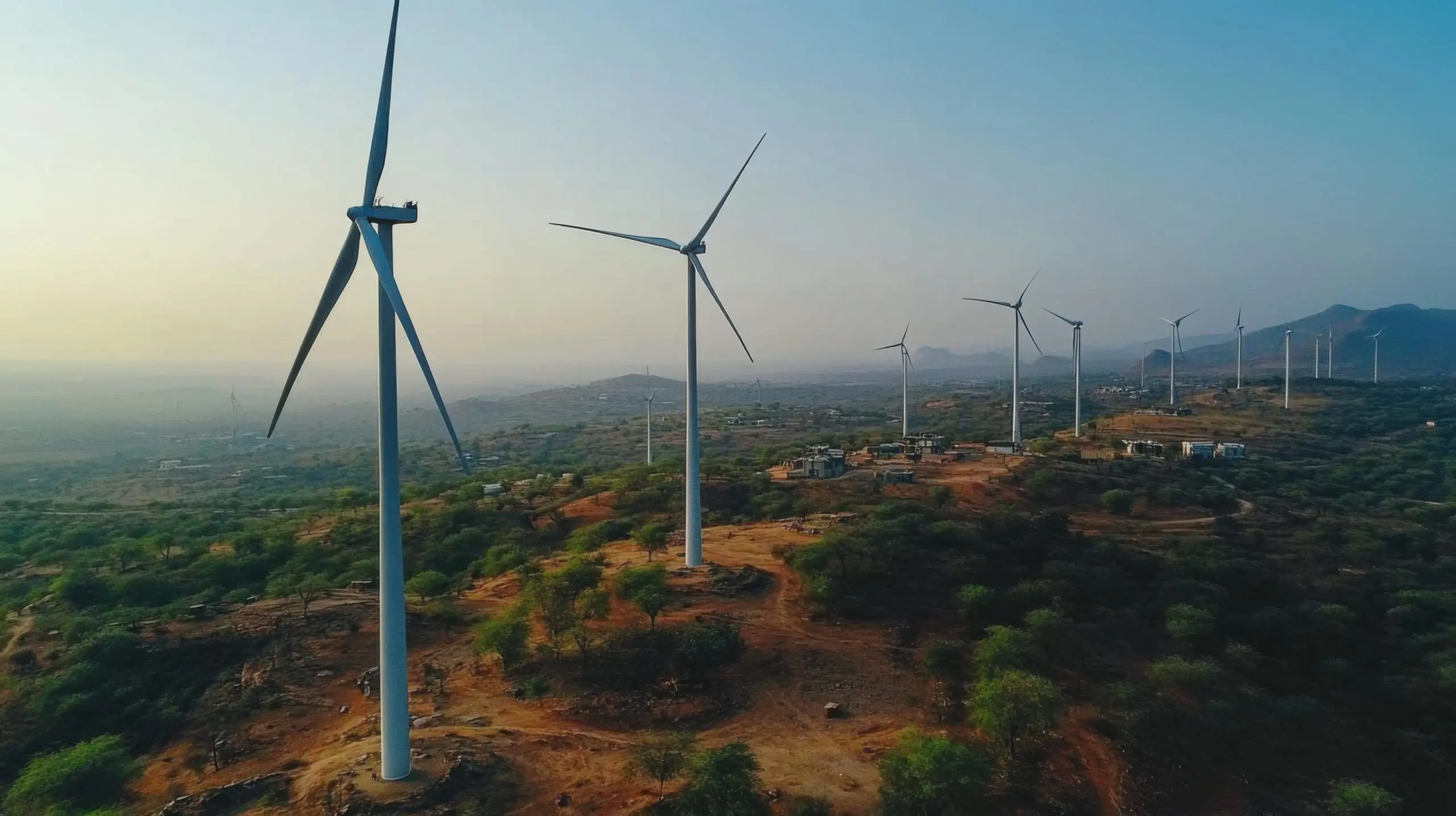
India’s wind energy sector has gained substantial momentum, becoming a cornerstone of the country’s renewable energy strategy. With installed wind capacity crossing 55 GW as of FY2025–26, India is one of the top four wind energy markets globally. This growth is fueled by the country’s increasing energy demands, a shift toward clean energy, and significant technological advancements in the sector. As India looks to achieve its renewable energy targets, the wind energy market is expected to continue growing rapidly, with projections indicating over 150 GW of installed capacity by 2035.
Key Factors Driving Growth in India’s Wind Energy Market
Rising Energy Demand
India’s energy demand is expected to grow significantly due to rapid urbanization and industrialization. As the world’s third-largest energy consumer, India is increasingly relying on renewables to meet its energy requirements sustainably. Wind energy, being a clean and abundant resource, is poised to play a central role in India’s energy mix.
Technological Advancements
Technological innovations in wind turbine design have made wind energy more cost-efficient. Larger turbines with higher capacity and efficiency are being deployed, leading to lower costs of generation. This technological progress helps make wind energy an attractive option compared to fossil fuels. The cost of wind energy is expected to continue decreasing as technology matures, supporting growth in the sector.
Government Initiatives and Investments
India’s government has set ambitious targets, aiming to achieve 100 GW of wind energy capacity by 2030. These targets are supported by policy incentives, such as tax benefits and subsidies, making wind energy projects more attractive to investors. With the government’s backing, the sector is witnessing increased private and foreign investments in both onshore and offshore wind energy projects.
Government Policies and Initiatives Promoting Wind Energy Growth
The Indian government has committed to achieving 100 GW of wind energy capacity by 2030, along with a long-term goal of 156 GW by 2036. Initiatives such as Generation Based Incentive (GBI), ISTs for fee waivers, and offshore wind development plans are designed to boost wind energy growth. Additionally, the government is supporting grid infrastructure upgrades and promoting wind energy research and development to ensure long-term success in the sector.
Key Players and Market Dynamics in India’s Wind Energy Sector
The Indian wind energy market is competitive, with key players like Suzlon, Inox Wind, Vestas, and GE Renewable Energy leading the charge. These companies dominate both manufacturing and project development. New entrants are focusing on offshore wind, while established players continue to expand their portfolios. The sector is also attracting international investment, which is driving technological innovations and making wind energy increasingly cost-effective.
Key Challenges Impacting the Growth of India’s Wind Energy Market
Land Acquisition and Grid Integration
Securing land for wind farms remains a significant challenge due to land use conflicts, regulatory hurdles, and opposition from local communities. Additionally, the integration of wind energy into India’s grid infrastructure faces difficulties due to the remoteness of optimal wind sites and grid capacity issues, delaying project timelines and increasing costs.
Financing Challenges
Wind energy projects require large capital investments, and securing long-term financing can be difficult. While interest in the sector is growing, uncertainties related to financing mechanisms and infrastructure limitations persist.
Future Outlook
India’s wind energy market is projected to experience robust growth through 2035, with over 150 GW of capacity expected by the mid-2030s. Key drivers of this growth include technological innovation, government incentives, and increasing private sector involvement. Offshore wind energy is set to become a major contributor to the market as India explores its vast coastal potential. With continued policy support and advancements in grid integration, the wind sector will play a crucial role in meeting India’s clean energy goals.
Consultants at Nexdigm, in their latest publication “India Wind Energy Market Outlook to 2035,” analyze the sector by System Type (Onshore Wind Systems, Offshore Wind Systems, Hybrid Wind Systems, Vertical Axis Wind Turbines), By Platform Type (Land-based Platforms, Hybrid Platforms, Floating Platforms), and By Fitment Type (On-premise Solutions, Cloud-based Solutions, Hybrid Solutions). Nexdigm suggests that businesses should focus on providing detailed, market-relevant context, including an analysis of current trends, challenges, and growth opportunities. This approach helps stakeholders gain a deeper understanding of the factors shaping the wind energy sector and enables them to make more informed decisions about investments and strategic planning in this dynamic industry.
To take the next step, simply visit our Request a Consultation page and share your requirements with us.
Harsh Mittal
+91-8422857704