
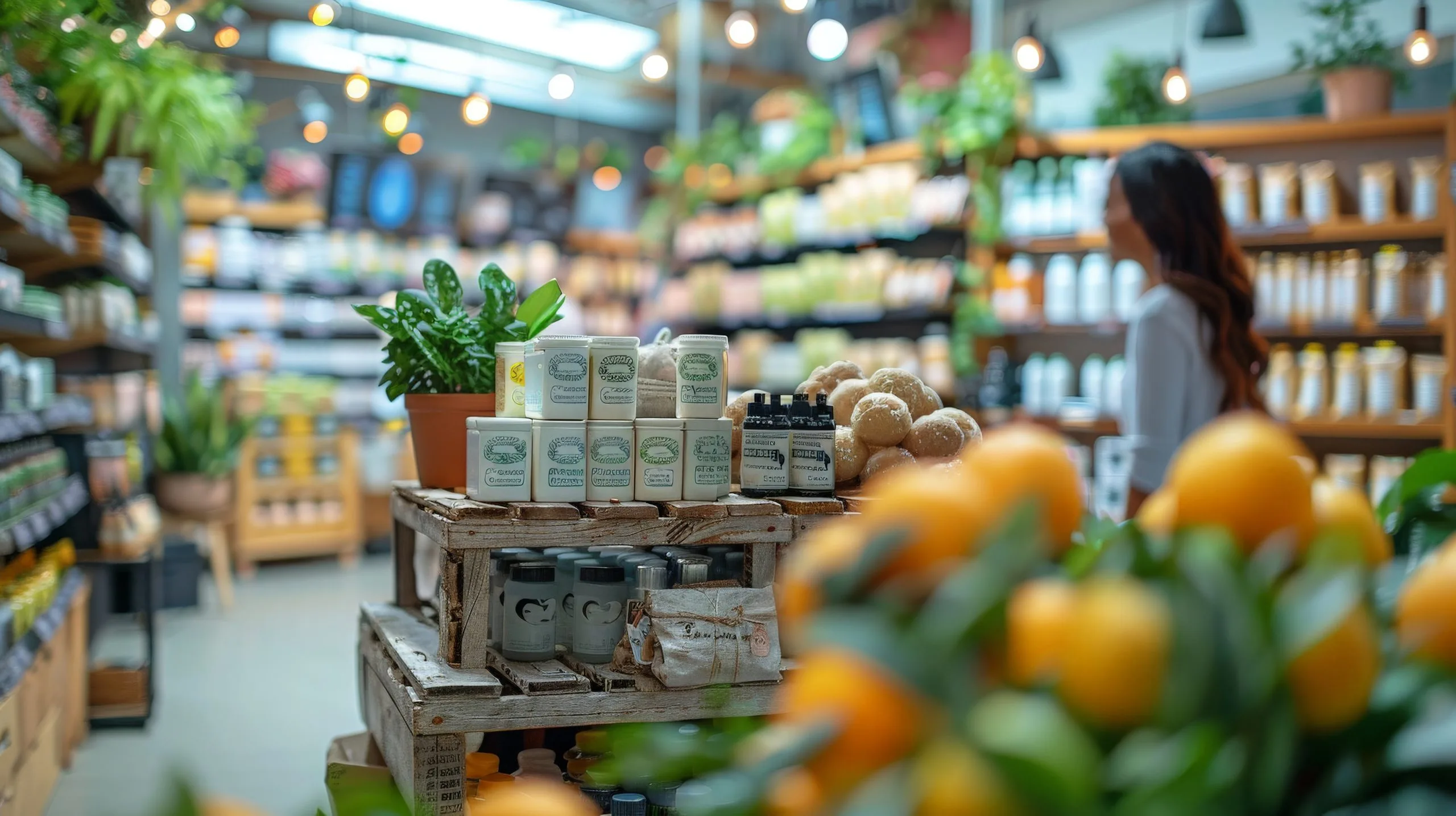
The India zero waste grocery stores market is gaining momentum as consumers, retailers, and policymakers focus more on reducing plastic waste, food waste, and unnecessary packaging. Zero waste grocery stores encourage shoppers to buy in bulk, bring reusable containers, choose refillable formats, and purchase only the quantity they need. The market is projected to grow at around 9.4% CAGR between 2025 and 2035, supported by rising environmental awareness, sustainable packaging adoption, and urban retail innovation. As Indian consumers become more conscious about health, affordability, and sustainability, low-waste grocery formats are becoming more relevant.
Key market drivers are strengthening zero waste grocery store adoption in India
Sustainability-conscious consumers are changing grocery habits
Indian consumers are increasingly aware of the environmental impact of plastic packaging, food waste, and single-use products. This is encouraging demand for grocery formats that offer bulk foods, refill stations, reusable containers, locally sourced products, and plastic-free alternatives. Urban shoppers, in particular, are becoming more open to sustainable retail models when they are convenient and affordable. Zero waste grocery stores also appeal to households that want to buy only what they need, reducing both packaging waste and food wastage. As sustainability becomes part of everyday decision-making, low-waste grocery stores can build stronger consumer loyalty.
Refill and bulk formats are improving value and waste reduction
Bulk buying and refill-based models are central to India’s zero waste grocery stores market. Consumers can purchase grains, pulses, spices, nuts, oils, detergents, soaps, personal care products, and household essentials in flexible quantities. This model supports affordability while reducing dependence on single-use packaging. It is especially relevant in Indian households, where unpackaged staples and local grocery buying habits already have a strong cultural base. Retailers that combine traditional bulk buying with hygienic, modern, and transparent store formats can attract both value-conscious and sustainability-focused customers.
Sustainable packaging demand is supporting retail innovation
India’s sustainable packaging market reached around USD 10.23 billion in 2025 and is projected to reach USD 17.73 billion by 2034. This growth supports wider use of recyclable, compostable, reusable, and low-impact packaging solutions across grocery retail.
Government initiatives and plastic reduction policies are supporting market development
Government initiatives related to plastic waste management, single-use plastic restrictions, recycling, circular economy practices, and sustainable packaging are supporting India’s zero waste grocery stores market. Policies aimed at reducing plastic pollution and improving waste segregation are encouraging retailers and consumers to adopt lower-waste alternatives. Local municipal efforts around composting, recycling, and responsible waste handling also support the ecosystem. As compliance expectations increase, grocery businesses have stronger incentives to introduce refill stations, reusable packaging, and packaging-light retail formats.
Competitive landscape is becoming more local and sustainability focused
The India zero waste grocery stores market includes independent zero waste shops, organic grocers, bulk food retailers, local kirana stores, co-operatives, sustainability-focused brands, online grocery platforms, and larger retailers exploring refill and low-packaging formats. Competition is shaped by affordability, hygiene, product variety, location, supplier relationships, digital visibility, and trust in sustainability claims. Independent stores often build loyalty through community engagement and local sourcing, while larger retailers can scale low-waste concepts through distribution strength. Refill stations, plastic-free aisles, and reusable packaging programs are becoming key differentiators.
Market challenges continue to affect affordability and adoption
Price sensitivity can slow consumer adoption
Many Indian consumers remain highly value-conscious, and sustainable or package-free products may appear costlier than conventional alternatives. Retailers must balance sustainability with affordability and convenience.
Hygiene and convenience expectations require careful execution
Consumers may hesitate to use refill or bulk formats if stores lack clear hygiene practices, simple weighing systems, and transparent product information. Trust-building is critical for repeat purchases.
Future outlook
The future outlook for the India zero waste grocery stores market remains positive, supported by rising sustainability awareness, plastic reduction policies, sustainable packaging growth, and growing interest in responsible consumption. Opportunities are expected across bulk staples, household refills, personal care refills, organic foods, compostable packaging, local sourcing, and hybrid online-offline models. As the market grows at around 9.4% CAGR between 2025 and 2035, businesses that combine affordability, hygiene, convenience, and transparent sustainability practices will be better positioned for long-term growth.
Consultants at Nexdigm, in their latest publication “India zero waste grocery stores market outlook to 2035,” analyze the sector By Store Format (Standalone Zero Waste Grocery Stores, Bulk and Refill Stores, Cooperative and Community-based Stores), By Product Category (Food and Beverages, Household Cleaning Products, Reusable Packaging and Storage Products)
Nexdigm suggests that businesses in the India zero waste grocery stores market should focus on refill formats, bulk staples, reusable packaging, and locally sourced products to serve sustainability-conscious consumers.
To take the next step, simply visit our Request a Consultation page and share your requirements with us.
Harsh Mittal
+91-8422857704