
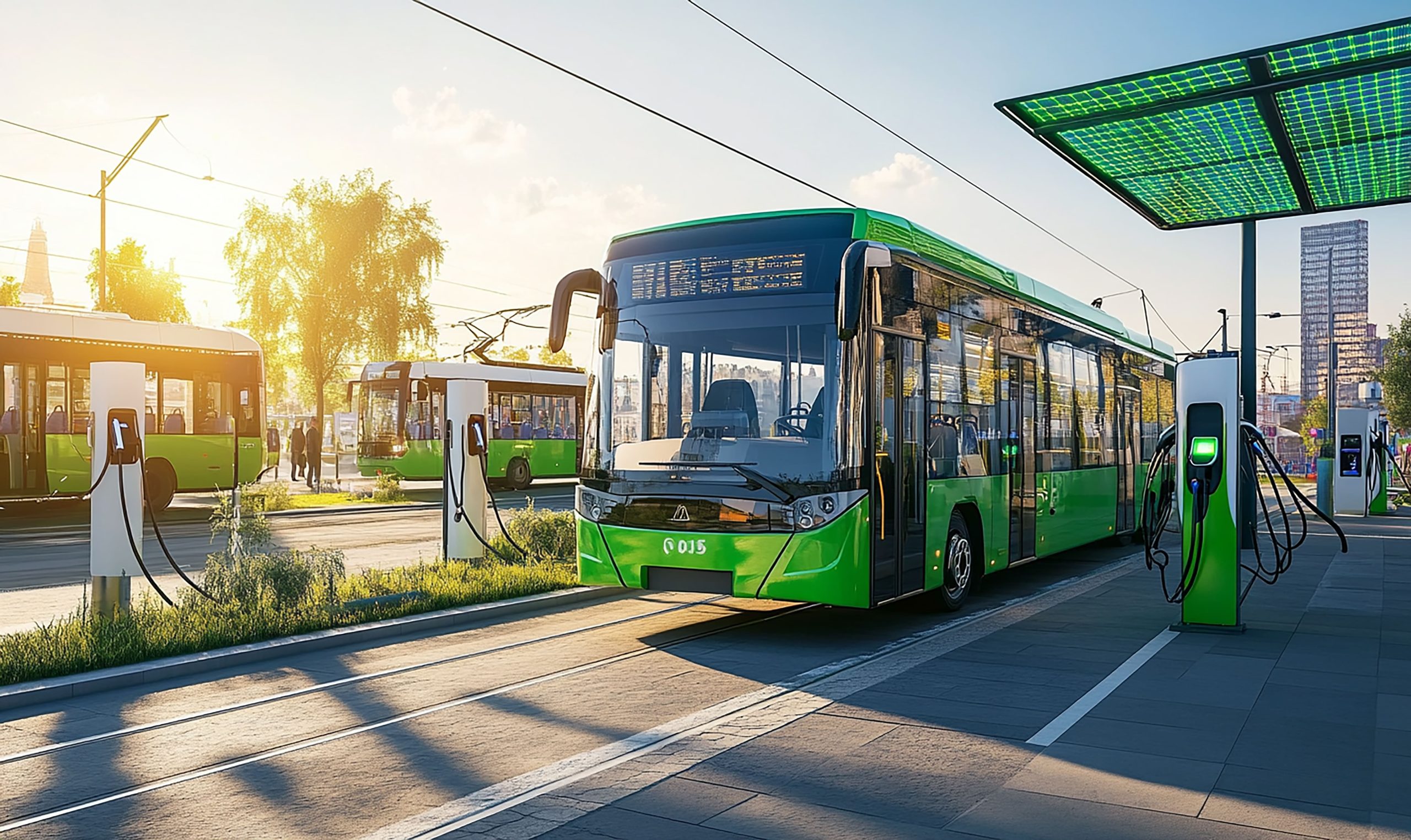
Indonesia’s public transportation sector is entering a transformative phase as the government accelerates its shift toward low-emission mobility solutions. Rapid urbanization, rising air pollution levels, and increasing fuel import bills are pushing policymakers to prioritize electric mobility in major cities. As of 2026, Indonesia remains one of Southeast Asia’s largest diesel bus markets, but the transition toward electric buses is gaining momentum through pilot deployments and national electrification targets. Cities such as Jakarta, Bandung, and Surabaya have begun integrating electric buses into their public transit systems, particularly within Bus Rapid Transit (BRT) corridors. Supported by Indonesia’s ambition to develop a domestic electric vehicle ecosystem and leverage its abundant nickel reserves for battery production, the electric bus market is gradually expanding and is expected to grow steadily through 2035.
What’s Driving the Electric Bus Market in Indonesia?
Urban Air Quality Concerns and Growing Public Transport Demand
Indonesia’s rapidly expanding urban population has increased pressure on city transport networks. Jakarta, one of the world’s most congested cities, has been prioritizing cleaner public transport to address air pollution and reduce greenhouse gas emissions. Electric buses provide a viable solution for high-capacity public transit routes due to their zero tailpipe emissions and lower operating noise. As BRT systems expand across metropolitan areas, transport authorities are gradually integrating electric buses to modernize fleets and improve sustainability in urban mobility.
Declining Battery Costs and Advancements in EV Technology
The cost of lithium-ion batteries has declined significantly over the past decade, making electric buses more economically viable for transit agencies. Improvements in battery energy density and charging infrastructure are enabling buses to operate longer routes with fewer charging interruptions. Several pilot projects across Indonesia are demonstrating the operational feasibility of electric buses in tropical climates, encouraging further procurement by city governments and transport operators.
Expansion of Bus Rapid Transit (BRT) Networks
Indonesia has been investing heavily in Bus Rapid Transit systems as a cost-effective solution to urban congestion. Jakarta’s TransJakarta system is among the largest BRT networks globally and is increasingly incorporating electric buses to reduce emissions across its corridors. Similar BRT expansions in cities such as Surabaya and Bandung are expected to create long-term demand for electric bus fleets. These networks provide structured routes and centralized depots, making them well suited for electric bus deployment and charging infrastructure development.
Government-Led Electrification Initiatives
The Indonesian government has introduced multiple policies aimed at accelerating electric vehicle adoption across the transportation sector. National electrification roadmaps encourage public transport operators to gradually transition from diesel fleets to electric alternatives. Financial incentives, tax exemptions on electric vehicles, and support for domestic battery manufacturing are key pillars of this strategy. Indonesia is also positioning itself as a regional hub for electric vehicle production by leveraging its significant nickel reserves—an essential component for lithium-ion batteries. Government-backed investments in battery manufacturing and EV supply chains are expected to strengthen the domestic ecosystem and reduce long-term procurement costs for electric buses.
Market Competition and Industry Landscape
The Indonesia electric bus market is still at an early stage, with a mix of domestic manufacturers, global electric bus producers, and battery technology providers entering the sector. Local vehicle assemblers are collaborating with international technology partners to develop electric bus platforms suited for Indonesia’s climate and road conditions. Chinese electric bus manufacturers have played a key role in early deployments, providing vehicles for pilot programs and large urban transit projects. At the same time, Indonesian automotive groups are expanding their capabilities in electric vehicle assembly and battery integration. Partnerships between local companies and global EV technology providers are expected to intensify as cities scale up procurement programs.
High Upfront Costs and Infrastructure Constraints
One of the major challenges in Indonesia’s electric bus market is the high upfront procurement cost compared to conventional diesel buses. Electric buses require significant initial investment in batteries, charging infrastructure, and grid upgrades at depots. Many public transport operators and municipal authorities face budget limitations, making large-scale fleet replacement financially challenging. Additionally, charging infrastructure across Indonesian cities is still developing, and limited fast-charging networks can affect operational efficiency. Without strong financing models, subsidies, and public–private partnerships, the transition to electric bus fleets may progress gradually.
Future Outlook
Indonesia’s electric bus market is expected to witness significant growth through 2035 as urban transport electrification becomes a national priority. Major metropolitan areas are likely to gradually replace aging diesel fleets with electric buses, particularly within Bus Rapid Transit networks and municipal transport services. By the early 2030s, electric buses could represent a growing share of newly procured public transport vehicles across major Indonesian cities. The development of a domestic battery manufacturing ecosystem and EV supply chain is also expected to lower vehicle costs and strengthen Indonesia’s position in Southeast Asia’s electric mobility landscape. As charging infrastructure expands and financing mechanisms evolve, electric buses will increasingly become a viable solution for sustainable urban transportation. Indonesia’s long-term mobility strategy is therefore shifting toward cleaner, technology-driven public transport systems that align with global decarbonization goals.
Consultants at Nexdigm, in their latest publication “Indonesia Electric Bus Market Outlook to 2035”, analyzed the market by Battery Type (Lithium-Ion, LFP, Solid-State Emerging Technologies), By Bus Length (Below 9 m, 9–12 m, Above 12 m), By Application (Bus Rapid Transit, City Transit, Intercity Transit, Airport Shuttles), and By Charging Infrastructure (Depot Charging, Opportunity Charging, Fast Charging Networks). Nexdigm believes that transport authorities and private operators should prioritize scalable charging infrastructure, battery lifecycle management, and strategic partnerships with domestic EV manufacturers to accelerate the electrification of Indonesia’s public bus fleets.
To take the next step, simply visit our Request a Consultation page and share your requirements with us.
Harsh Mittal
+91-8422857704