
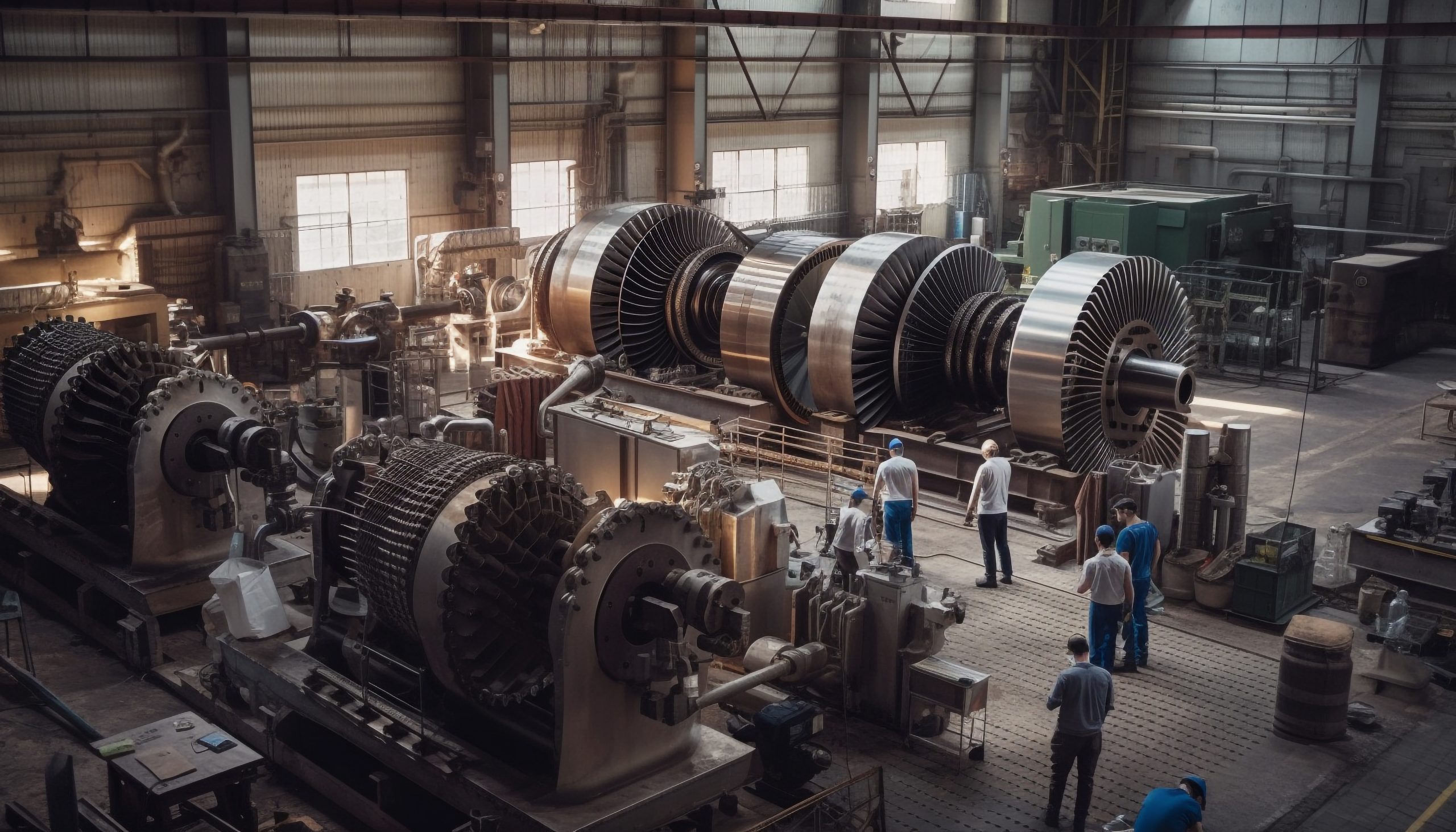
Indonesia’s industrial electric motors market is gaining momentum as the country strengthens its manufacturing capabilities, expands infrastructure and accelerates industrial modernization. Electric motors are essential to production facilities, mining operations, food processing, oil and gas, and other energy-intensive industries. Growing investments in automation and energy-efficient machinery are further supporting market demand. Industry estimates suggest that Indonesia’s broader electric motors market was valued at approximately USD 612 million in 2025, with a projected CAGR of 6.5% through 2032. Looking ahead to 2035, industrial expansion and technology upgrades are expected to create additional growth opportunities.
Key Market Drivers Supporting Industrial Electric Motors Demand in Indonesia
Expansion of Manufacturing and Industrial Infrastructure
Indonesia’s expanding manufacturing sector is creating consistent demand for industrial electric motors. Investments in automotive production, chemicals, cement, textiles, food processing and electronics are increasing the need for reliable motor-driven equipment. Motors are widely used in pumps, compressors, conveyors, fans, and production machinery. The development of industrial estates and mineral-processing facilities is also generating demand for high-capacity motors. As manufacturers expand production and modernize existing facilities, demand for dependable and energy-efficient motor systems is expected to increase.
Rising Adoption of Energy-Efficient Motors
Energy efficiency is becoming an important purchasing consideration for Indonesian industries. Electric motors consume a substantial share of industrial electricity, making their efficiency directly relevant to operating costs. According to the Institute for Essential Services Reform (IESR), electric motors account for approximately 72% of industrial electricity consumption. This creates considerable opportunities for IE3 and IE4 efficiency-class motors, variable frequency drives, and advanced motor-control systems. Industries are increasingly considering lifecycle savings rather than focusing exclusively on initial equipment costs.
Mining, Mineral Processing and Industrial Automation
Indonesia’s strong mining industry, particularly nickel and other mineral-processing activities, is another important demand generator. Smelting plants, extraction facilities and processing units require heavy-duty motors for material handling, ventilation, pumping, and crushing operations. At the same time, industrial automation is encouraging the adoption of precision motors, servo systems, and digitally monitored equipment. These developments are expected to support demand for specialized motor solutions through 2035.
Government Support and Industrial Energy-Efficiency Initiatives
The Indonesian government is promoting industrial modernization through initiatives such as Making Indonesia 4.0, which encourages automation, advanced manufacturing and technology adoption. Government Regulation No. 33/2023 also strengthens industrial energy-management requirements for qualifying facilities, supported by implementing regulations. These measures create opportunities for efficient motor technologies and improved energy management. However, introducing and enforcing minimum energy-performance standards specifically for industrial electric motors remains an important policy opportunity.
Competitive Landscape of Indonesia’s Industrial Electric Motors Industry
Indonesia’s industrial electric motors market features international manufacturers, regional suppliers and domestic distributors competing across different power ratings and applications. Major participants include ABB, Siemens, WEG, TECO, and TMEIC. Companies compete through product reliability, energy efficiency, pricing, technical support, and after-sales services. Domestic suppliers and distributors also play an important role in serving smaller industrial customers. As demand shifts toward advanced motor systems, manufacturers offering integrated motors, drives, automation solutions and maintenance services are likely to strengthen their competitive positions.
Market Challenges Affecting Industrial Electric Motors Growth
Import Dependence and Price Sensitivity
Indonesia’s dependence on imported motor components and finished products exposes manufacturers and buyers to exchange-rate fluctuations, international supply-chain disruptions and changing procurement costs. Competition from lower-priced imports also puts pressure on suppliers’ margins. Smaller industrial businesses may continue choosing conventional motors because of their lower upfront costs.
Limited Awareness and Technology Adoption
Although energy-efficient motors offer long-term savings, their initial purchase prices can discourage adoption. Limited technical expertise, financing constraints, and insufficient awareness of lifecycle costs may slow down the replacement of older equipment. Wider training, financing support, and stronger efficiency regulations will be important to address these barriers.
Future Outlook
Indonesia’s industrial electric motors market is expected to maintain a growth trajectory through 2035, supported by manufacturing expansion, mining investments, infrastructure development and increasing automation. Industry forecasts indicate that the broader electric motors market could grow at approximately 5–7% annually over the 2026–2035 period, although actual performance will depend on investment conditions and product demand. Energy-efficient IE3 and IE4 motors, smart monitoring technologies and variable frequency drives are likely to gain greater acceptance. Suppliers focusing on localized support, product innovation and lifecycle services will be well positioned to benefit from Indonesia’s evolving industrial landscape.
Consultants at Nexdigm, in their latest publication “Indonesia Industrial Electric Motors Market Outlook to 2035,” analyze the sector by Motor Technology (AC Induction Motors, DC Motors, Synchronous Motors, Specialized Industrial Motors), By Power Rating (Micro Motors, Small Industrial, Medium Industrial), and By Mounting Type (Foot Mounted IM B3, Flange Mounted IM B5, Face Mounted IM B14).
Nexdigm suggests that businesses should prioritize energy-efficient motor technologies, strengthen local distribution networks, and invest in automation-ready solutions to capitalize on Indonesia’s growing industrial demand. Companies should also focus on strategic partnerships, competitive pricing, and after-sales services to improve market penetration and achieve sustainable growth through 2035.
To take the next step, simply visit our Request a Consultation page and share your requirements with us.
Harsh Mittal
+91-8422857704