
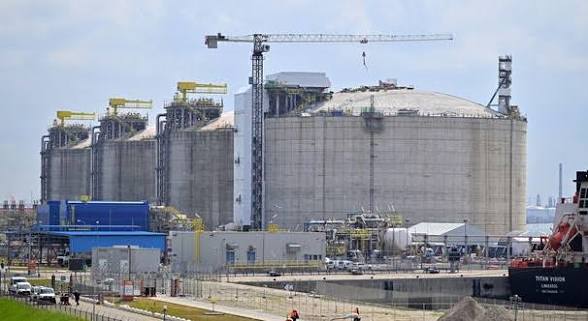
Indonesia’s LNG infrastructure industry is becoming increasingly important as the country balances rising energy demand, industrial growth, and energy security goals. As the world’s largest archipelago, Indonesia faces unique challenges in delivering reliable energy across thousands of islands. LNG infrastructure has emerged as a practical solution, connecting industries, power plants, and communities to cleaner fuel sources. Today, Indonesia has 27 LNG terminals and 50 tracked gas pipelines, creating one of Southeast Asia’s most extensive gas infrastructure networks. The country also operates 22.1 million tonnes per annum (Mtpa) of LNG liquefaction capacity and 8.45 Mtpa of regasification capacity, reinforcing its position as a major player in the global LNG value chain.
Market drivers Advancing the Indonesia LNG Infrastructure Industry
Growing Energy Demand Across Indonesia
Indonesia’s economy continues to expand, bringing greater demand for electricity, manufacturing output, and industrial energy consumption. Gas-fired power generation is increasingly viewed as a reliable complement to renewable energy while offering lower emissions than coal-based alternatives. The country’s LNG demand is projected to grow substantially over the coming decades, encouraging investments in receiving terminals, storage facilities, and LNG distribution networks. As industries such as manufacturing, mining, and processing expand, LNG infrastructure is becoming essential for ensuring stable and affordable energy supplies.
Indonesia LNG Terminals Supporting Energy Security
A key growth driver is the continuous expansion of LNG import and regasification facilities. Infrastructure assets such as Nusantara Regas Satu, Lampung FSRU, and Jawa Satu FSRU help deliver natural gas to major demand centers, particularly on Java, where energy consumption is highest. The Nusantara Regas Satu terminal alone has a capacity of 3 Mtpa and has received more than 450 LNG cargoes, delivering approximately 30 million tonnes of LNG since operations began.
LNG Infrastructure Connecting Indonesia’s Islands
Unlike many countries with contiguous land networks, Indonesia must deliver energy across vast distances and isolated islands. LNG infrastructure, especially floating storage and regasification units (FSRUs) and small-scale LNG facilities, provides a flexible way to bring natural gas to regions where pipeline construction is economically challenging. Projects such as the proposed Sulawesi-Maluku LNG Cluster, designed to support multiple power plants with a combined capacity of 1,510 MW, highlight how LNG infrastructure is helping bridge regional energy gaps throughout the country.
Government Initiatives Supporting Indonesia LNG Infrastructure Growth
The Indonesian government continues to position natural gas as a key transition fuel within the national energy strategy. State-backed organizations including Pertamina, PGN LNG, and PLN Energi Primer Indonesia are actively investing in LNG receiving terminals, regasification facilities, and distribution systems. Government support for projects such as Abadi LNG, Teluk Lamong Mini LNG, and regional LNG hubs reflects a broader effort to improve domestic gas utilization, increase energy resilience, and support long-term economic growth.
Competitive Landscape of the Indonesia LNG Infrastructure Industry
The Indonesia LNG infrastructure market features a blend of state-owned enterprises, international energy companies, and specialized infrastructure developers. Major participants include Pertamina, PGN LNG Indonesia, PLN Energi Primer Indonesia, BP, and ExxonMobil. Large-scale facilities such as Tangguh LNG, Bontang LNG, Lampung FSRU, and Nusantara Regas Satu continue to shape market competition. Strategic partnerships and joint ventures are increasingly common as companies seek to accelerate infrastructure deployment and improve operational efficiency.
Challenges Facing Indonesia LNG Infrastructure Growth
High Infrastructure Investment Costs
Building LNG terminals, storage facilities, floating regasification units, and supporting logistics networks requires significant capital investment. Developers must carefully balance project economics while meeting growing demand across diverse regions.
Geographic Complexity Across the Archipelago
Indonesia’s geography remains one of the industry’s biggest challenges. Thousands of islands, varying demand centers, and long transportation distances can increase project costs and operational complexity. While LNG provides flexibility, efficiently distributing energy across the nation requires continuous infrastructure upgrades and investment.
Future Outlook
The future of Indonesia’s LNG infrastructure industry appears highly promising as the country strengthens its energy security and supports economic development. Continued investment in FSRUs, LNG terminals, storage facilities, and downstream gas networks will help ensure broader access to reliable energy. With expanding industrial activity, rising electricity demand, and strong government backing, LNG infrastructure is expected to remain a cornerstone of Indonesia’s energy transition journey. Emerging projects across Sulawesi, Maluku, Papua, and other regional growth centers are likely to create new opportunities while reinforcing Indonesia’s position as one of Asia-Pacific’s most important LNG markets.
Consultants at Nexdigm, in their latest publication “Indonesia LNG Infrastructure Market” analyze the sector By Facility Type (Floating Storage Regasification Units, Onshore Receiving Terminals and Liquefaction Facilities), By Geographic Region (Java-Bali Power Cluster, Sumatra Industrial Corridor and Kalimantan Extraction Zone) and By Ownership Model (State-Owned Enterprise Dominant and Public-Private Partnership Projects).
Nexdigm suggests that businesses in “Indonesia LNG Infrastructure Industry” focusses on oilfield, desalination, construction, and industrial applications, strengthen local warehousing, develop application-specific grades, improve technical support, and build resilient sourcing networks to serve expanding energy, water, and manufacturing demand.
To take the next step, simply visit our Request a Consultation page and share your requirements with us.
Harsh Mittal
+91-8422857704