
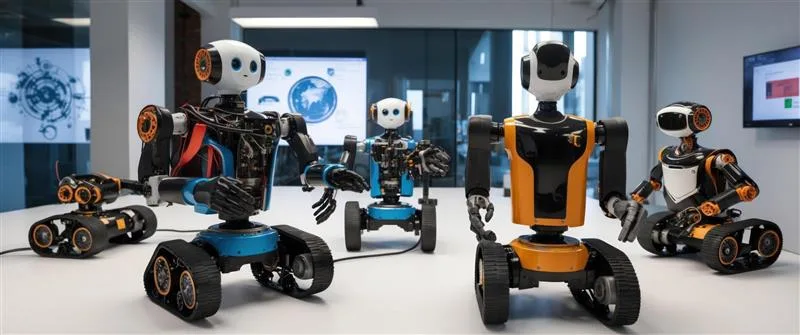
Indonesia’s robotics market is still at a relatively early stage, but it is growing steadily as industries begin to embrace automation. Currently valued at under USD 50 million, the market is projected to expand at a strong 25% CAGR over the coming years, driven by increasing adoption across manufacturing and logistics. As one of Southeast Asia’s largest manufacturing hubs, Indonesia is under pressure to improve productivity and remain globally competitive. Robotics is becoming an important part of this shift, helping businesses automate repetitive tasks, improve precision, and reduce operational costs. While adoption is still evolving, the direction is clear, robotics is gradually becoming a key component of Indonesia’s industrial future.
Key Growth Drivers of Indonesia’s Robotics Market
Rising Demand for Automation in Manufacturing
Manufacturing remains the biggest driver of robotics adoption in Indonesia. Industries such as automotive, electronics, and food processing are increasingly using robots for tasks like assembly, packaging, and quality control. With manufacturing contributing majorly to the country’s GDP, improving efficiency is a top priority. Robots help reduce errors, increase production speed, and maintain consistent quality making them a valuable investment for manufacturers looking to scale operations.
Labor Challenges and Cost Efficiency
While Indonesia has traditionally benefited from low labor costs, this advantage is gradually narrowing. Rising wages and the need for higher productivity are pushing companies toward automation. Robotics offers a long-term solution by reducing dependency on manual labor for repetitive or hazardous tasks. It also improves workplace safety and allows human workers to focus on more skilled roles, creating a more balanced and efficient workforce.
Expansion of Logistics and E-commerce
The rapid growth of e-commerce in Indonesia is also driving demand for robotics, particularly in warehousing and logistics. Automated sorting systems, robotic picking, and smart inventory management are becoming more common as companies look to handle increasing order volumes. As supply chains become more complex, robotics is helping businesses improve speed, accuracy, and overall operational efficiency.
Government Initiatives Supporting Robotics Adoption in Indonesia
The Indonesian government is actively encouraging the adoption of advanced technologies through initiatives. This roadmap focuses on transforming the country into a global manufacturing hub by promoting automation, digitalization, and innovation. Supportive policies, infrastructure investments, and efforts to attract foreign investment are helping create a favourable environment for robotics adoption. Over time, these initiatives are expected to accelerate the integration of robotics across key industries.
Emerging Players in Indonesia Robotics Market
Indonesia’s robotics market features a mix of global automation companies and local system integrators. International players such as ABB, KUKA, Fanuc, and Yaskawa dominate the market, offering advanced robotic solutions and technologies. At the same time, local firms are playing an important role by providing customized solutions and implementation support. Competition is driven by factors such as cost, technology, service quality, and the ability to meet specific industry needs.
Challenges faced by Robotics Market within Indonesia
High Costs and Limited SME Adoption
One of the biggest challenges is the high initial cost of robotic systems, which can be a barrier for small and medium-sized enterprises (SMEs). Many businesses are still hesitant to invest due to long payback periods.
Skills Gap and Technical Expertise
There is also a shortage of skilled professionals who can operate and maintain robotic systems. This skills gap can slow down adoption and limit the effectiveness of automation initiatives, particularly in smaller organizations.
Future Outlook
As we explore and analyze, Indonesia’s robotics market is expected to grow significantly as industries continue to modernize. Increasing investments, improving infrastructure, and rising awareness of automation benefits will drive broader adoption. Emerging technologies such as AI-powered robotics, collaborative robots (cobots), and smart manufacturing systems will further reshape the landscape. As costs gradually decline and expertise improves, robotics will become more accessible to a wider range of businesses. In the long run, robotics is likely to play a central role in Indonesia’s industrial transformation helping the country build more efficient, competitive, and future-ready industries.
Consultants at Nexdigm, in their latest publication Indonesia Robotics Market Outlook to 2035, analyze the sector by System Type (Industrial Robots, Service Robots, Collaborative Robots, Autonomous Mobile Robots and Humanoid Robots), by Platform Type (Manufacturing Type platform, Logistic platform, Healthcare platform, Agriculture Platform).
Nexdigm suggests that businesses should take strategic measure to stay adaptable in a changing environment. By strengthening core operations, embracing digital transformation, and staying aligned with market trends, organizations can respond more effectively to uncertainty. Combining strategic planning with local insights enables companies to build resilience and achieve sustainable, long-term growth.
To take the next step, simply visit our Request a Consultation page and share your requirements with us.
Harsh Mittal
+91-8422857704