
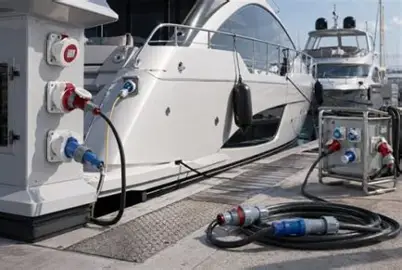
Indonesia’s Shore Power Systems Market is witnessing strong growth as the country modernizes its port infrastructure and advances sustainable maritime operations. As the world’s largest archipelagic nation, comprising more than 17,000 islands, Indonesia relies heavily on maritime transport, with approximately 95% of international trade by volume moving through seaports. The country’s ports handle more than 18 million TEUs of container traffic annually, led by Tanjung Priok Port, which processes over 7 million TEUs each year. Rising cargo volumes, expanding port modernization programs, and increasing pressure to reduce emissions from shipping activities are driving demand for shore power systems that enable vessels to connect to onshore electricity while docked. Supported by Indonesia’s commitment to achieving net-zero emissions by 2060 and growing investment in smart-port infrastructure, shore-side electrification is emerging as a critical solution for reducing fuel consumption, improving air quality, and enhancing the sustainability of maritime operations.
Key Market Drivers for Indonesia’s Shore Power Systems Market
Port Modernization and Rising Cargo Throughput Accelerate Adoption
Indonesia continues to invest heavily in strategic ports such as Tanjung Priok Port, Tanjung Perak Port, Belawan Port, and Makassar Port. The Port of Tanjung Priok alone handles more than 7 million TEUs annually and serves as the country’s primary maritime gateway. Increasing cargo volumes, vessel traffic, and logistics modernization initiatives are encouraging port operators to deploy advanced electrification solutions that improve operational efficiency while reducing environmental impacts.
Maritime Decarbonization and Sustainability Goals Drive Demand
Indonesia is strengthening efforts to reduce transportation-related emissions and support sustainable maritime operations. Shore power systems allow vessels to switch off onboard diesel generators while docked, significantly reducing emissions of CO₂, sulfur oxides, nitrogen oxides, and particulate matter. As international shipping companies increasingly pursue ESG commitments and comply with global emissions standards, Indonesian ports are expected to invest in cleaner energy infrastructure to remain competitive.
Inter-Island Shipping Network Creates Significant Opportunities
As an archipelagic economy, Indonesia operates one of the world’s largest domestic shipping networks connecting thousands of islands. Ferries, cargo ships, passenger vessels, and logistics fleets spend significant time berthed at ports, creating substantial opportunities for shore power deployment. Electrified port infrastructure can help reduce fuel costs, improve air quality, and support sustainable transportation across the country’s extensive maritime network.
Government Initiatives Supporting Indonesia’s Shore Power Systems Market
The Indonesian government is supporting port modernization through the National Port Master Plan, maritime connectivity programs, and strategic infrastructure initiatives. Investments exceeding USD 400 billion across transportation, logistics, industrial development, and energy infrastructure are helping strengthen the country’s maritime competitiveness. Additionally, Indonesia’s commitment to achieving net-zero emissions by 2060 and expanding renewable energy deployment is encouraging investments in sustainable port operations, smart logistics systems, and shore-side electrification technologies.
Competitive Landscape of Indonesia’s Shore Power Systems Market
Indonesia’s Shore Power Systems Market is evolving as port authorities, terminal operators, shipping companies, utilities, and infrastructure developers increasingly focus on sustainable maritime operations. Competition is centered on IEC/IEEE 80005-compliant shore connection technologies, high-voltage power conversion systems, smart energy-management platforms, automated cable-handling solutions, and grid-integration capabilities. Market participants are investing in scalable electrification technologies and digital port-management systems to support rising cargo throughput and stricter environmental performance requirements.
Major Challenges Facing Indonesia’s Shore Power Systems Market
High Capital Investment and Infrastructure Requirements
Deploying shore power systems requires substantial investment in substations, transformers, power converters, cable handling equipment, and port electrical networks. Financing these upgrades can present challenges for regional ports and smaller maritime facilities.
Grid Capacity and Technical Standardization Constraints
Widespread adoption requires reliable electrical infrastructure and compatibility between vessel systems and port-side equipment. Additional investments in grid upgrades and technical standardization will be necessary to support seamless deployment across Indonesia’s diverse port network.
Future Outlook
Indonesia’s Shore Power Systems Market is expected to witness robust growth through 2035, supported by annual container throughput exceeding 18 million TEUs, continued expansion of strategic ports, and rising investment in sustainable maritime infrastructure. As approximately 95% of international trade volume continues to move through seaports and logistics demand increases across the archipelago, port operators are expected to accelerate investments in shore-side electrification. Additional opportunities are likely to emerge from smart-port developments, green shipping corridors, renewable-energy-powered port operations, and digital logistics platforms. Companies investing in advanced power-conversion technologies, smart energy-management systems, and scalable shore power infrastructure will be well-positioned to capitalize on Indonesia’s evolving maritime ecosystem.
Consultants at Nexdigm, in their latest publication “Malaysia Shore Power Systems Market to 2035,” analyse the sector By Power connection Technology (IEC 80005-1 Frequency Converters, Cable Management Systems and Automated Plug-In Units), By Vessel Type Application (Container Ships and Bulk Carriers) and By Port Classifications (International Hub Ports, Regional Collector Ports and Inland Container Depots).
Nexdigm suggests that businesses in Indonesia’s Shore Power Systems Industry prioritize IEC/IEEE 80005-compliant shore connection technologies, advanced power-conversion systems, renewable-energy-integrated port electrification solutions, and smart energy-management platforms to capitalize on the country’s 18 million+ TEU container throughput, extensive inter-island shipping network, expanding smart-port infrastructure, and increasing demand for low-emission maritime operations across commercial and passenger terminals.
To take the next step, simply visit our Request a Consultation page and share your requirements with us.
Harsh Mittal
+91-8422857704