
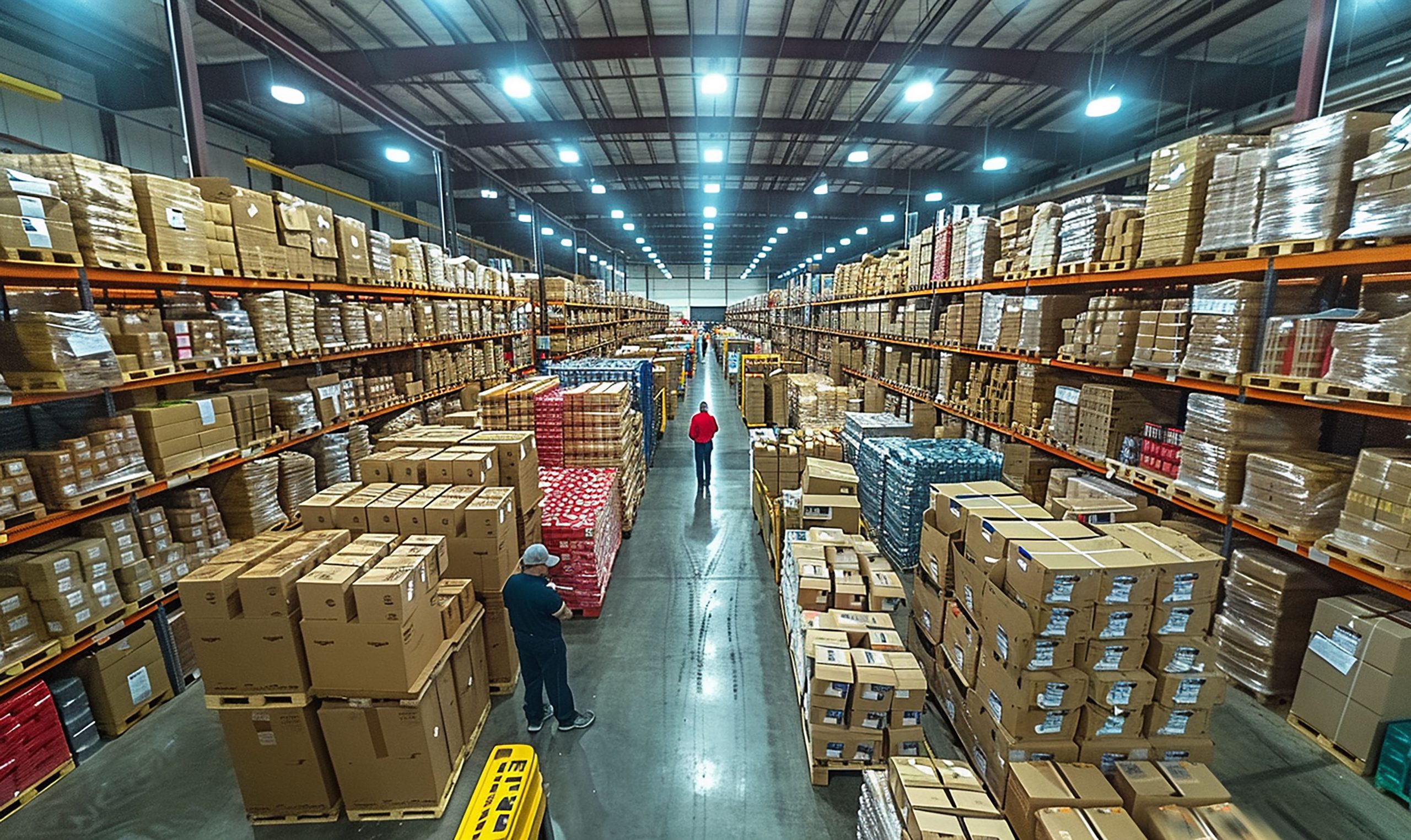
Indonesia warehousing market is entering a far more serious phase of development as trade volumes, domestic consumption, and digital commerce continue to expand across the country. Warehousing in Indonesia was once treated largely as a back-end real estate function, but that view is changing quickly. In 2026, storage and fulfillment capacity have become central to how businesses manage delivery timelines, inventory risk, and regional market access. This matters even more in Indonesia because logistics is not simple here. Serving customers across thousands of islands requires far more than just warehouse space – it requires location strategy, transport coordination, and better inventory planning. For many companies, warehousing is no longer just about storing goods. It is about staying competitive.
What’s Driving the Warehousing Market in Indonesia?
E-commerce Fulfillment Needs Are Reshaping Warehouse Demand
One of the clearest growth triggers is e-commerce. Indonesia has one of the largest digital consumer bases in Southeast Asia, and that creates pressure on retailers and logistics providers to move goods faster and closer to demand centers. A standard warehouse on the outskirts of Jakarta is no longer enough for many sellers. They now need fulfillment hubs, sorting facilities, and smaller urban storage points that can support same-day or next-day delivery. This shift is especially visible in categories such as fashion, beauty, electronics, and household essentials, where order volumes fluctuate sharply during campaign periods and festive sales. In practice, warehouse operators that can offer flexible storage and integrated order management are likely to remain ahead of traditional landlords offering only empty floor space.
Manufacturing and Industrial Clusters Are Creating Steady Demand
Warehousing demand is also being shaped by Indonesia’s broader industrial expansion. Manufacturing activity in sectors such as FMCG, automotive components, packaged food, chemicals, and consumer electronics continues to create a need for reliable storage and distribution infrastructure. Industrial corridors around Greater Jakarta, West Java, and parts of Central Java have become particularly important because they sit close to factories, ports, and dense consumer markets. That said, not all demand is glamorous. A lot of it comes from very practical needs: buffer stock, raw material storage, import handling, and inter-island redistribution. As supply chains become less tolerant of delays, many businesses are holding more inventory locally rather than relying on lean, just-in-time models that often break down on the ground.
Cold Chain and Specialized Warehousing Are Becoming Harder to Ignore
A more interesting shift is happening in temperature-controlled and specialized storage. Indonesia’s growing demand for processed food, fresh produce distribution, pharmaceuticals, and healthcare supplies has made cold storage less of a niche and more of a necessity. Seafood exporters, supermarket chains, vaccine distributors, and food service suppliers all need tighter temperature control than conventional warehouses can provide. This is where the market still has room to mature. Cold chain facilities remain limited in several secondary cities, and operating them is expensive. Still, businesses that ignore this segment may miss one of the more profitable corners of the warehousing industry over the next decade.
Government-Led Infrastructure and Logistics Initiatives
Public infrastructure has a direct impact on warehouse viability in Indonesia. Better toll roads, port upgrades, industrial estates, and special economic zones are making some regions far more attractive for storage and distribution investment than they were a few years ago. Government-backed logistics reforms are also helping improve cargo movement and customs coordination, especially around major trade corridors. Still, infrastructure rollout is uneven. A site may look ideal on paper, but poor feeder road access or local port congestion can quickly undermine its value. That is why location decisions in Indonesia often require a much more practical lens than investors initially expect.
Market Competition and Evolving Business Models
The Indonesia warehousing market remains moderately fragmented, with local operators, industrial park developers, 3PL firms, and international logistics companies all competing in different pockets of demand. What is changing is the business model. Customers increasingly want more than square footage. They want inventory visibility, fulfillment support, cold handling, and shorter lease commitments. As a result, warehouse operators are being pushed to act more like service providers than landlords. That shift may sound simple, but it separates scalable players from those still running storage assets in an old-fashioned way.
Archipelagic Geography and Distribution Complexity
Indonesia’s geography remains the biggest structural hurdle for the warehousing sector. Moving goods efficiently across an island nation is costly, fragmented, and often inconsistent. Demand tends to cluster in Java, while distribution to outer islands can involve multiple handoffs, limited infrastructure, and higher last-mile costs. A common challenge is that businesses often overbuild in one region and under-serve another. That creates inventory imbalances and raises operating costs. In other words, warehousing in Indonesia is not only a real estate problem – it is a network design problem.
Future Outlook
Indonesia warehousing market will likely look far more organized by 2035 than it does today. Demand for Grade A facilities, built-to-suit sites, cold storage, and tech-enabled fulfillment centers should deepen as retail, manufacturing, and inter-island trade become more sophisticated. The biggest winners may not be the largest operators, but the ones that understand local demand patterns and can build around them.
Consultants at Nexdigm, in their latest publication “Indonesia Warehousing Market Outlook to 2035”, analyzed the market by Warehouse Type (General Warehousing, Cold Storage, Bonded Warehousing, Fulfillment Centers), By End User (E-commerce, Retail, Manufacturing, FMCG, Pharmaceuticals, Food & Beverage), and By Region (Java, Sumatra, Kalimantan, Sulawesi, Bali & Eastern Indonesia). Nexdigm believes that businesses should focus on regional hub expansion, technology-led operations, and specialized storage formats to capture long-term opportunities in Indonesia’s warehousing sector.
To take the next step, simply visit our Request a Consultation page and share your requirements with us.
Harsh Mittal
+91-8422857704