

Industrial buying is shifting from a narrow focus on price toward a broader assessment of cost, quality, reliability, resilience, and supplier performance. Deloitte’s 2025 Global CPO Survey found that 72% of procurement leaders ranked margin improvement through cost reduction as a top priority, while 68% prioritized operational efficiency.
At the same time, 74% identified alternative supply sources as an effective risk-mitigation strategy, highlighting the growing importance of sourcing flexibility. With supply disruptions, regulatory pressures, and geopolitical uncertainty continuing to shape procurement, industrial buyers are increasingly consolidating strategic suppliers while maintaining alternatives for critical categories.
The New Priorities Shaping Industrial Procurement
Industrial procurement is becoming more strategic as companies look beyond purchase price to understand the broader value and risk associated with each supplier. Buyers are increasingly weighing several factors when making purchasing decisions:
- Total Cost: Consider purchase prices alongside logistics, tariffs, inventory, quality-related costs, and lifecycle expenses.
- Quality & Consistency: Evaluate product quality, certifications, defect rates, and the supplier’s ability to maintain consistent standards.
- Reliability: Assess delivery performance, lead times, production capacity, responsiveness, and ability to manage unexpected demand.
- Supply Resilience: Examine geographic exposure, supplier concentration, alternative sourcing options, and vulnerability to disruptions.
Together, these priorities are shifting industrial procurement from transactional purchasing toward long-term supplier performance, resilience, and value creation.
The Need for Data-Driven Supplier Selection
As procurement becomes more strategic, organizations need data-driven supplier evaluation frameworks to balance cost, quality, reliability, and resilience. According to McKinsey & Company’s 2024 Global Supply Chain Leader Survey, nine in ten supply chain leaders experienced disruptions during the year, underscoring the importance of stronger supplier assessment and risk management practices. Data-driven supplier evaluation enables procurement teams to make informed decisions, improve continuity, and create sustainable long-term value.
Nexdigm’s Approach to Smarter Industrial Procurement
As procurement decisions become more complex, businesses need reliable market intelligence to evaluate suppliers beyond price. Nexdigm combines procurement research, supplier intelligence, benchmarking, and industry analysis to help companies assess supplier capabilities and concentration risks.
Through an Industrial procurement market study, Nexdigm helps procurement teams identify attractive supplier markets, strengthen strategic relationships, and make more informed consolidation, sourcing, and supplier-development decisions.
Why Nexdigm Is a Strong Fit for Industrial Procurement
Industrial procurement decisions often require more than supplier comparisons. They require an understanding of market dynamics, competitive positioning, cost structures, supplier capabilities, and emerging risks.
Nexdigm brings these perspectives together through its market research and advisory expertise, helping procurement teams with:
- Market Intelligence: Providing current market and supplier insights to support informed procurement strategies.
- Supplier Expertise: Assessing supplier capabilities, performance, capacity, positioning, and potential concentration risks.
- Industry Understanding: Connecting procurement decisions with broader industry trends, demand shifts, regulations, and competitive dynamics.
- Actionable Advisory: Converting research and analysis into practical recommendations for sourcing, consolidation, diversification, and supplier strategy.
This combination helps businesses move from supplier information to informed procurement decisions with measurable commercial and operational objectives.
Nexdigm’s Framework for Industrial Procurement Market Assessment
Nexdigm helps procurement teams move from broad supplier intelligence to a focused supplier strategy. By evaluating suppliers against commercial, operational, and risk-related criteria, the framework identifies and focuses on the areas such as:
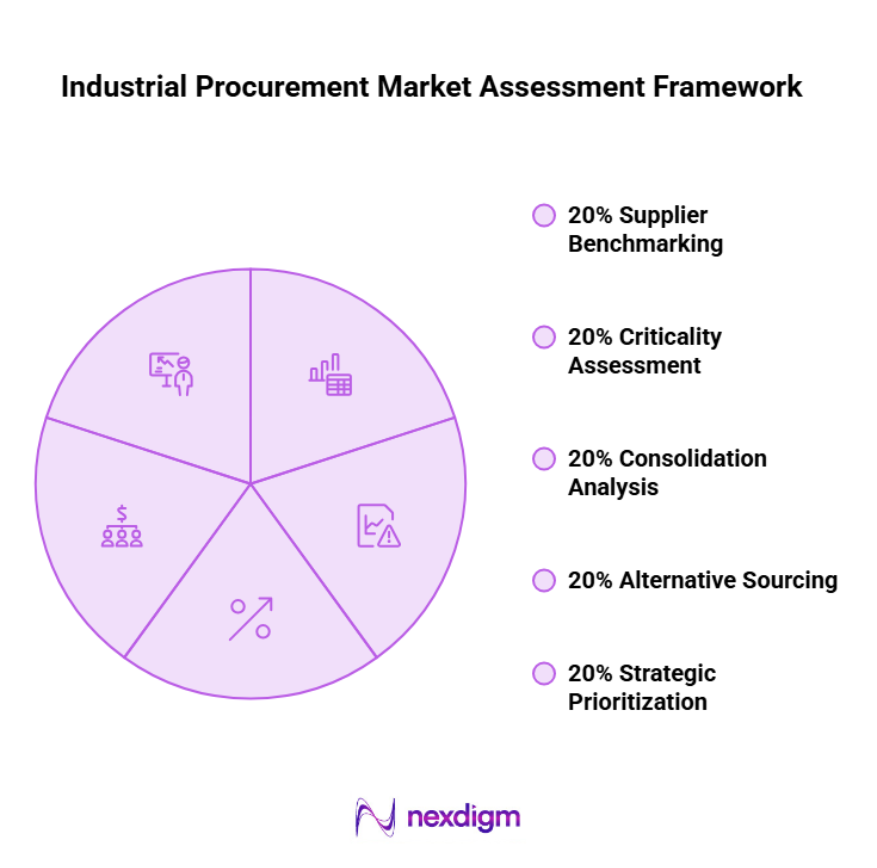
- Supplier Benchmarking: Comparing suppliers across pricing, quality, capacity, delivery performance, capabilities, and service levels.
- Criticality Assessment: Determining which suppliers and categories have the greatest impact on production and business continuity.
- Consolidation Analysis: Identifying opportunities to consolidate spend with high-performing suppliers while avoiding excessive dependency.
- Alternative Sourcing: Evaluating qualified suppliers and markets that can provide backup capacity or reduce concentration risk.
- Strategic Prioritization: Translating findings into clear supplier-selection, negotiation, diversification, and relationship-management priorities.
This approach helps businesses build a supplier base that balances purchasing efficiency, supplier performance, resilience, and long-term strategic value.
Nexdigm’s Framework In Delivering Measurable Procurement Outcomes
A stronger supplier strategy should translate into measurable improvements across procurement and operations. Nexdigm’s analysis helps organizations identify opportunities to improve:
- Cost Savings: Uncovering pricing gaps, sourcing efficiencies, and supplier consolidation opportunities to reduce procurement costs and improve overall spending effectiveness across categories.
- Supplier Performance: Enhancing supplier reliability, product quality, responsiveness, and compliance with service expectations to support consistent operational performance.
- Working Capital: Optimizing inventory levels, payment terms, and order planning to improve cash flow while maintaining adequate stock availability.
- Supply Continuity: Reducing exposure to critical single-source suppliers and strengthening access to alternative supply options.
- Procurement Leverage: Consolidating appropriate spending and strengthen negotiations with strategically important suppliers.
Together, these outcomes help procurement teams demonstrate the financial, operational, and resilience value of better supplier and purchasing decisions.
Nexdigm’s Case
Nexdigm supported a global pharmaceutical company in moving key chemical raw-material procurement from an intermediary to direct manufacturers. The strategy delivered an approximately 23% reduction in raw-material costs and up to 30% faster deliveries, while improving quality consistency and shelf life through stronger supplier relationships and better source-level handling.
To take the next step, simply visit our Request a Consultation page and share your requirements with us.
Harsh Mittal
+91-8422857704