
Global trade is not always uniform across industries. Each sector operates differently influenced by factors such as demand patterns, regulatory requirements, supply chain complexity, technological advancements, and consumer behavior. As businesses expand internationally, understanding these industry-specific trade dynamics becomes essential for identifying opportunities and managing risks.
That’s why Industry-Wise Trade Data plays a critical role. By providing valuable insights into trade activity across different sectors, it helps businesses understand market trends, evaluate demand, monitor competition, and develop informed growth strategies. Whether operating in automotive, healthcare, chemicals, or consumer goods, industry-level trade intelligence enables organizations to make data-driven decisions in an increasingly competitive global marketplace.
Importance of Industry- Wise Trade Data
Industry-Wise Trade Data provides trade insights categorized by specific industries, offering visibility into the movement of products, trade volumes, import-export values, market demand, and competitive activity. By analyzing trade data at the industry level, businesses can identify opportunities for expansion, sourcing, and investment. Its major insights include:
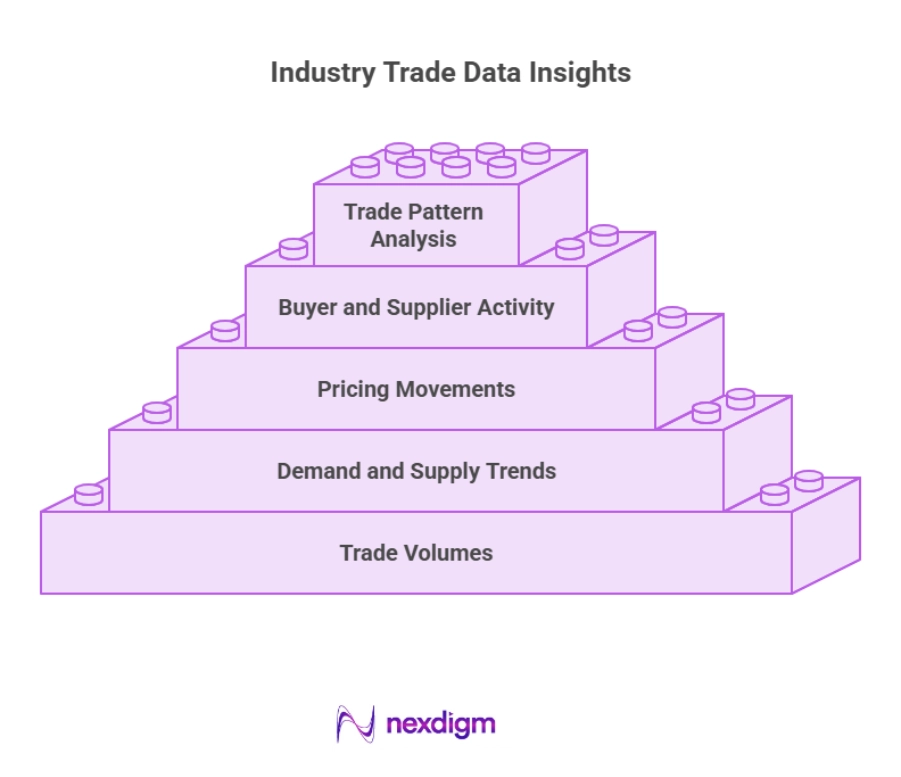
- Industry-specific trade volumes and values: Measure the quantity and value of goods traded within a particular industry to assess market size, growth potential, and trade performance.
- Demand and supply trends: Track changes in industry demand and supply patterns to identify growth opportunities, market gaps, and potential areas for expansion.
- Pricing movements: Monitor fluctuations in product prices across industries and regions to support informed pricing, sourcing, and procurement decisions.
- Buyer and supplier activity: Gain visibility into active buyers, suppliers, and trading partners within a specific industry to identify business opportunities and strengthen trade networks.
- Trade pattern analysis: Analyze import-export trends, trade routes, and market movements to understand industry dynamics and support strategic business planning.
How Trade Data Helps Analyze Automotive Industry Trends
The automotive industry relies heavily on interconnected global supply chains. Manufacturers source components from multiple countries before assembling finished vehicles for domestic and international markets. Trade patterns in the automotive sector are influenced by:
- Availability of critical raw materials
- Trade agreements and tariffs
- Component sourcing strategies
- Manufacturing investments
Using Industry-Wise Trade Data, automotive businesses can monitor vehicle and component trade flows, identify emerging manufacturing hubs, evaluate sourcing opportunities, and track growing markets for electric mobility solutions.
Trade Data in Navigating Healthcare Market Trends
The healthcare sector experiences trade changes that are significantly influenced by population health needs, regulatory requirements, pharmaceutical innovation, and medical technology advancements. Products traded globally usually include Pharmaceutical Medicines, Medical Devices, Equipment and Biotechnology Products. Here, Trade Data helps healthcare businesses with:
- Tracking pharmaceutical import and export trends
- Identifying growing healthcare markets
- Monitoring medical device demand
- Evaluation of opportunities in emerging economies
- Supporting strategic planning for healthcare expansion
How Trade Data Supports Chemical Industries
The chemicals sector serves as a critical provider for industries such as manufacturing, agriculture, healthcare, automotive, and construction. Trade patterns within this industry are often driven by industrial production levels, regulatory compliance, and raw material availability. Through Industry-Trade Data, chemical companies can:
- Monitor chemical demand across industries
- Track global supply and demand shifts
- Identify emerging industrial markets
- Evaluate export growth opportunities
- Support sourcing and procurement decisions
What Trade Data Reveals About Consumer Markets
Consumer goods trade is directly influenced by evolving lifestyles, purchasing power, digital commerce, and changing customer preferences. Unlike industrial sectors, consumer markets can experience rapid shifts in demand due to trends, seasonality, and economic conditions. Some important trade categories include:
- Apparel and fashion products
- Electronics
- Household goods
- Personal care products
- Food and beverages
Businesses can leverage Trade Data to understand product demand, identify fast-growing consumer segments, monitor import-export trends, discover emerging consumer markets and support expansion strategies.
Nexdigm’s Industry Specific Trade Intelligence Solutions
Businesses need industry-specific insights that help them understand market dynamics, demand patterns, competitive activity, and growth opportunities. Nexdigm helps organizations leverage comprehensive Industry-Wise Import Export Data to:
- Analyze sector-specific trade trends: Gain visibility into industry trade movements, import-export activity, and emerging trends to identify growth opportunities and market shifts.
- Evaluate industry demand patterns: Understand demand fluctuations across sectors and regions to align products, services, and business strategies with market needs.
- Monitor competitive activity: Track competitor trade movements, market presence, and industry developments to benchmark performance and strengthen competitive positioning.
- Assess market expansion potential: Identify new markets, evaluate industry growth prospects, and prioritize expansion opportunities based on data-driven trade insights.
- Strengthen strategic decision-making: Transform complex trade data into actionable insights that support business planning, investment decisions, and long-term growth strategies.
By transforming complex trade data into actionable business intelligence, Nexdigm helps businesses to make informed decisions, uncover new opportunities, and achieve sustainable growth across automotive, healthcare, chemicals, consumer goods, and other industries.
Nexdigm’s Case
Nexdigm supported an India-based diversified manufacturer by comparing trade patterns across automotive, healthcare, chemicals, and consumer markets. Sector-level insights enabled differentiated market-entry strategies, improving opportunity prioritization by 32%, increasing qualified export leads by 24%, and reducing cross-sector market assessment time too.
To take the next step, simply visit our Request a Consultation page and share your requirements with us.
Harsh Mittal
+91-8422857704