

As integrated logistics gains traction across global trade, intermodal transport analysis becomes essential for optimizing multi-modal supply chains. By combining road, rail, sea, and air transport, businesses can reduce costs, improve transit times, and enhance operational efficiency. Competitive intelligence help companies gain insights into competitor strategies, regional trade flows, and emerging bottlenecks, enabling proactive decision-making.
Integrating intermodal transport analysis with intelligence allows organizations to streamline logistics, manage risks effectively, and maintain a strategic advantage in increasingly complex and interconnected global trade networks.
Globally, approximately 78 % of containerized freight movements involve at least two transport modes, highlighting the growing adoption of intermodal logistics. Intermodal systems generate over USD 55 billion in annual revenue, handle around 76 million loaded TEUs annually, and support millions of drayage and rail moves each year. These figures illustrate the scale and efficiency of coordinated multimodal networks in modern freight transport.
The Role of Intermodal Transport Analysis in Global Trade
Intermodal transport analysis evaluates the efficiency of combining rail, road, sea, and air logistics, helping businesses optimize costs, reduce transit times, manage risks, and gain strategic advantage in global trade.
-
Optimizing Multi-Modal Logistics
Analyzing intermodal transport enables efficient coordination between rail, road, sea, and air, reducing costs and improving overall transit times.
-
Evaluating Cost and Time Efficiency
Transport analysis compares expenses and transit durations across modes, identifying optimal combinations for faster, more economical global shipments.
-
Leveraging Competitive Intelligence
Monitoring competitors’ intermodal strategies provides insights into best practices, capacity allocation, and service differentiation for strategic advantage.
-
Enhancing Supply Chain Flexibility
Intermodal insights allow businesses to adapt routes and modes based on demand fluctuations, congestion, and market conditions.
-
Mitigating Operational Risks
Analysis helps anticipate disruptions like port delays, infrastructure bottlenecks, or regulatory changes, enabling proactive contingency planning.
Nexdigm Competitive Intelligence for Integrated Logistics
Nexdigm’s competitive intelligence for integrated logistics provides businesses with actionable insights into multi-modal transport, market trends, and competitor strategies. By analyzing rail, road, sea, and air networks, Nexdigm enables optimized routing, cost reduction, and efficient capacity planning. These insights support proactive decision-making, mitigate risks, and enhance supply chain resilience, ensuring organizations maintain a strategic advantage in global trade.
Nexdigm’s Predictive Analytics for Intermodal Transport Planning
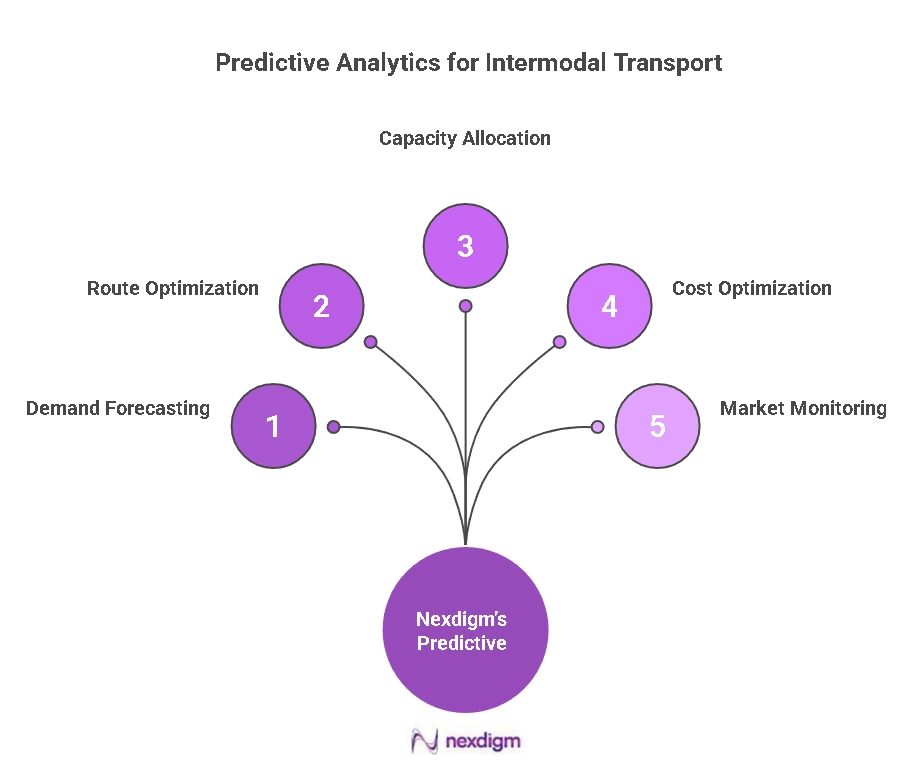
Nexdigm’s predictive analytics for intermodal transport planning uses historical data, market trends, and competitive intelligence to forecast demand, optimize routes, allocate capacity efficiently, reduce costs, and enhance overall supply chain performance:
-
Demand Forecasting Across Modes
Predictive analytics helps anticipate cargo volumes across road, rail, sea, and air, enabling proactive planning and resource allocation.
-
Optimizing Route and Network Planning
Analyzing historical and real-time data allows Nexdigm to recommend the most efficient routes, reducing transit time and operational costs.
-
Capacity Allocation and Resource Management
Insights guide optimal deployment of vehicles, vessels, and personnel to meet forecasted demand without overutilization or bottlenecks.
-
Cost Optimization Strategies
Predictive models identify opportunities to reduce fuel, labor, and operational expenses while maintaining service quality and reliability.
-
Monitoring Market Trends
Tracking competitor movements, seasonal demand, and trade flows allows businesses to adjust intermodal strategies proactively.
Nexdigm’s case:
Nexdigm assisted a French logistics company in identifying revenue leakages and improving operational efficiency across more than 90 warehouses and distribution services. By standardizing processes and redesigning vendor contracts, Client reduced transit times by 12%, improved on‑time deliveries to 98%, cut freight spend by 14%, and boosted warehouse throughput by 22%.
Nexdigm helped the client eliminate complex mechanisms and reduce vulnerabilities, enhancing cost control and operational effectiveness across its multi‑location logistics network.
To take the next step, simply visit our Request a Consultation page and share your requirements with us.
Harsh Mittal
+91-8422857704