
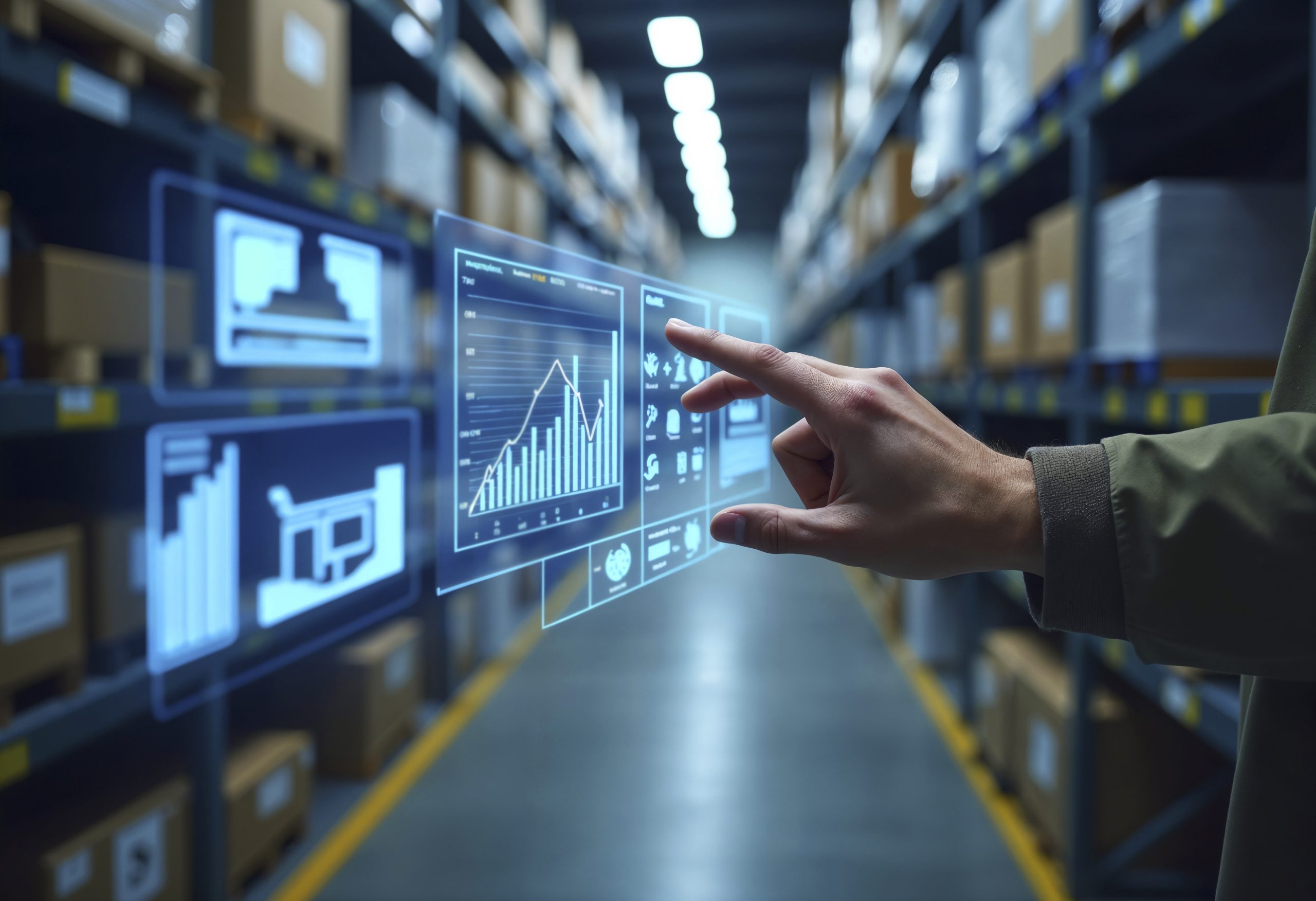
IoT in logistics has moved beyond basic GPS tracking. Modern systems combine location data with temperature, humidity, shock, vibration, door activity, fuel consumption, and engine diagnostics. This allows logistics operators to identify risks while shipments and vehicles are still in transit, rather than investigating problems after delivery.
The commercial value, however, depends on where this visibility is deployed, what decisions it enables, and whether the resulting savings justify the hardware, connectivity, and maintenance costs.
Visibility Is Moving From Location to Condition
Traditional fleet telematics typically captured vehicle coordinates at fixed intervals. Newer IoT architectures provide a much richer picture of what is happening to both the asset and its cargo.
Depending on the application, sensors can continuously monitor:
- Temperature with precision of around ±0.1°C for pharmaceutical and cold-chain shipments
- Humidity and moisture for food, chemicals, and sensitive electronics
- Three-axis shock and vibration for high-value machinery and fragile cargo
- Door openings and light exposure to detect potential tampering
- Fuel consumption, engine performance, braking, and other vehicle diagnostics
This changes the role of visibility. Operators can identify a temperature excursion, abnormal fuel consumption, or unexpected cargo access while there is still an opportunity to intervene.
Different Assets Require Different IoT Models
A refrigerated trailer does not have the same tracking requirements as a retail parcel or an ocean container. Hardware, connectivity, power requirements, and sensor frequency therefore need to be matched to the asset.
Commercial tractor fleets can use hardwired CAN-bus or OBD-II gateways with continuous vehicle power and 4G/5G connectivity, capturing engine RPM, fuel burn, idle time, and braking behaviour.
Ocean containers may require ruggedized, battery-powered devices designed for 5–7 years of operation, using satellite or cellular connectivity. Pallets and high-value shipments can instead use wireless beacons with 30–90-day battery life to monitor temperature, moisture, tilt, and package-level conditions.
The architecture determines both the quality of the data and the economics of deployment.
Data Creates Value Only When It Changes an Outcome
A control tower receiving millions of sensor readings does not necessarily have better visibility. Too many low-priority alerts can create fatigue and cause critical exceptions to be missed.
The stronger IoT applications connect telemetry directly to an operational response. A temperature sensor approaching a critical threshold can be cross-checked against reefer engine data to determine whether mechanical failure is developing. Live vehicle location and driver hours can update ETAs and trigger delivery rescheduling when an appointment is at risk. A container opened outside an approved facility can trigger a security response.
The objective is therefore to manage the network by exception, rather than simply accumulate more data.
Device Economics Can Make or Break the Business Case
IoT investment extends well beyond the sensor itself. Hardware, connectivity subscriptions, battery replacement, installation, maintenance, and device recovery all contribute to total cost of ownership.
Battery life is particularly important for unpowered assets. Continuous cellular transmission can drain batteries quickly, making low-power protocols such as LTE-M and NB-IoT more suitable for long-duration deployments.
Reusable sensors introduce another cost. Devices attached to pallets or containers need to be recovered, cleaned, tested, and redeployed. Without effective recovery processes, device loss can reach 20%–35% per shipment loop, weakening the economics of the entire program.
Where Is Real-Time Monitoring Commercially Viable?
IoT adoption tends to be strongest where the cost of failure is high enough to justify continuous monitoring.
Pharmaceutical and biologics shipments can exceed $2 million per consignment, making temperature excursions financially significant. Fleet telematics can deliver another clear return: driver coaching focused on idling, speeding, and harsh braking can reduce fuel consumption by 8%–15%.
High-value industrial equipment and electronics also benefit from shock, tilt, and tamper monitoring, while food logistics can use continuous temperature and humidity tracking to protect shelf life across long-distance routes.
The opportunity therefore depends less on the number of assets that can be connected and more on the financial consequence of what those assets carry or how they operate.
Nexdigm’s Approach to Evaluating Automation Opportunities
Nexdigm’s IoT logistics market analyses evaluates automation investments across operational, technological, and financial dimensions:
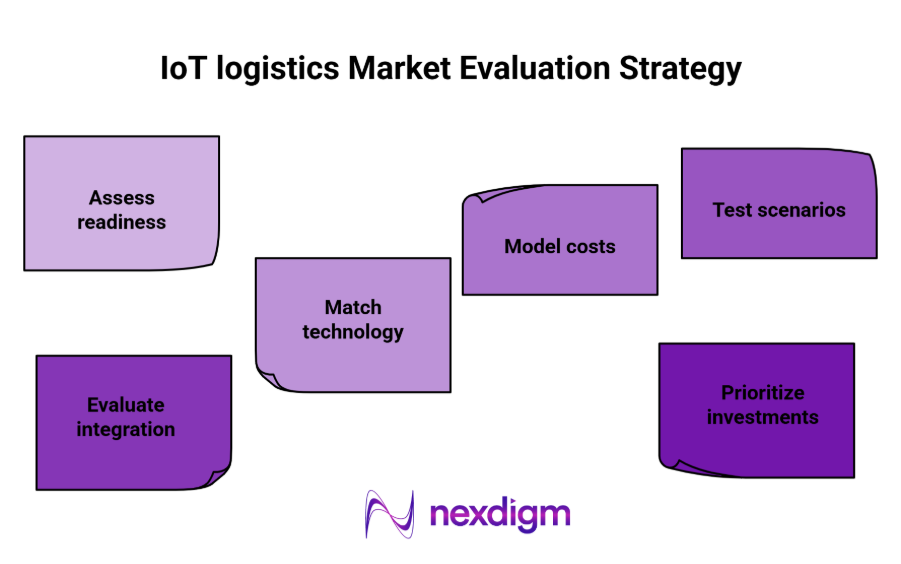
- Assess facility readiness: Examine workflows, layouts, SKU characteristics, labour requirements, and throughput patterns.
- Match technology to use case: Compare AMRs, AS/RS, sortation, AGVs, and vision systems against specific operational requirements.
- Model total cost of ownership: Account for CapEx, facility modifications, software, maintenance, and specialist labour.
- Test peak and baseline scenarios: Determine whether proposed systems remain economically viable across seasonal demand variations.
- Evaluate integration: Assess WMS, WES, WCS, ERP, API, and data requirements before technology selection.
- Prioritize investments: Identify facilities and processes where automation can deliver the strongest combination of productivity, flexibility, and payback.
How Nexdigm Cut Fuel Costs and Cold-Chain Claims
A cold-chain operator with 1,200 refrigerated trucks across eight corridors was spending ₹118 crore annually on diesel and ₹8.2 crore on temperature-related claims. Nexdigm analyzed 18 months of fleet data and introduced integrated engine telematics, three-point temperature monitoring, automated alerts, and driver scorecards.
Within nine months, fuel spend fell 13.4%, saving ₹15.8 crore annually. Temperature-excursion claims fell 76%, saving another ₹6.2 crore, while the IoT investment achieved payback in 7.5 months.
To take the next step, simply visit our Request a Consultation page and share your requirements with us.
Harsh Mittal
+91-8422857704