
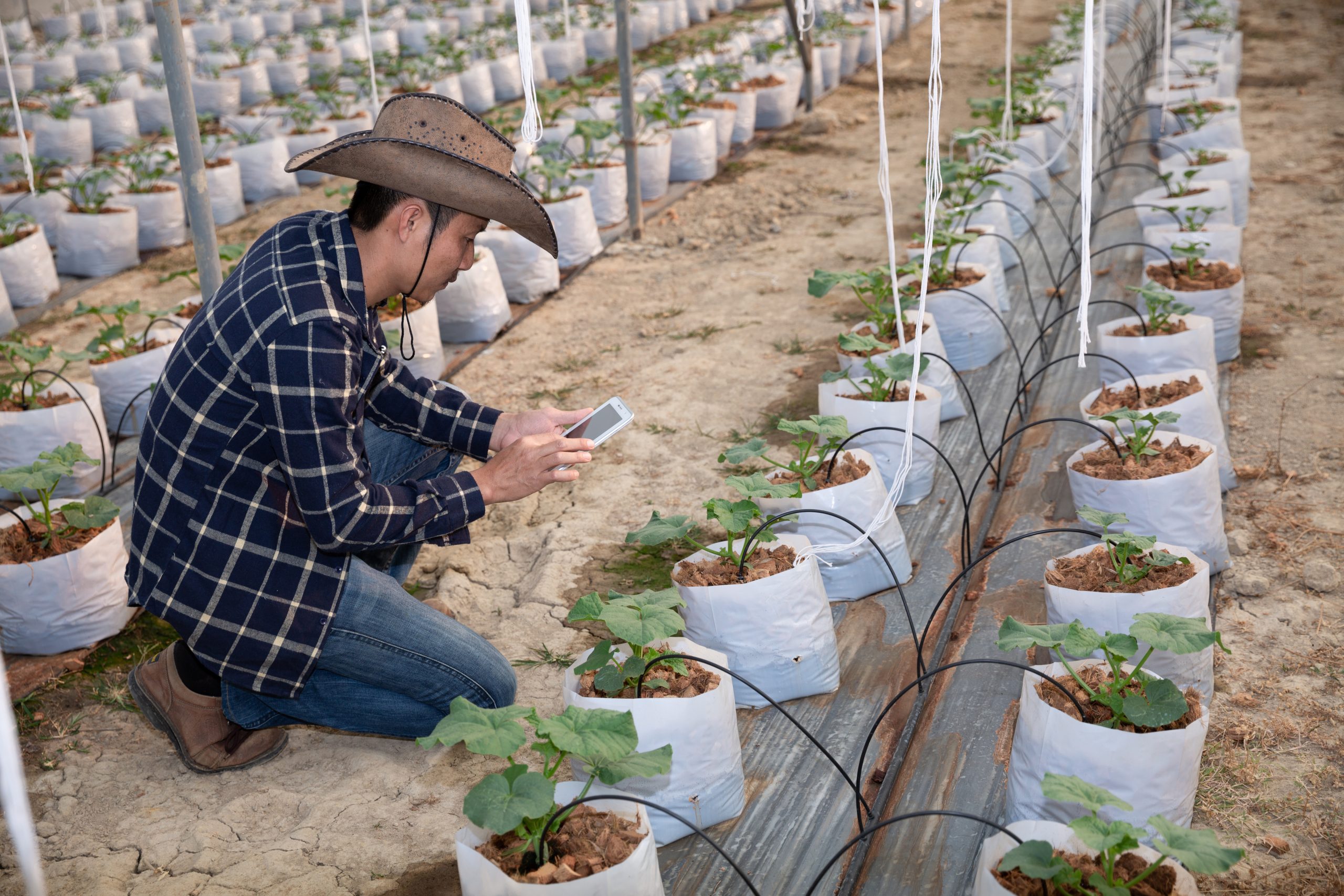
Water availability and agricultural productivity are increasing the importance of efficient irrigation infrastructure. According to the FAO’s 2025 AQUASTAT data, agriculture accounts for approximately 72% of global freshwater withdrawals, while renewable freshwater availability per person has declined by 7% over the past decade.
The global agricultural irrigation machinery market is estimated at US$9.3 billion in 2026 and is projected to reach US$15.4 billion by 2033, according to Grand View Research. Sprinkler systems accounted for 34.8% of market revenue in 2025, while drip irrigation is identified as the fastest-growing segment.
This evolving landscape makes irrigation system supplier mapping important for businesses seeking to understand manufacturers, compare technology offerings, and identify providers suited to different agricultural requirements.
Why Irrigation Procurement Requires Category-Level Understanding
Irrigation systems differ in water delivery methods, infrastructure requirements, operating costs, and suitability across crops and terrain. Drip systems provide targeted water application, while sprinklers distribute water across wider areas. Pumps, filters, pipes, valves, controllers, and sensors support system performance. Understanding these distinctions helps buyers identify suppliers against specific agricultural and operational requirements.
How Farm Conditions Influence Irrigation System Requirements
The choice of irrigation equipment is also shaped by the conditions in which it will operate. Crop type, soil characteristics, land size, water availability, terrain, and energy access influence system design and equipment requirements. A solution suited to a large field may not work equally well in an orchard or greenhouse. These differences make application-specific supplier identification important.
What Businesses Should Establish Before Identifying Irrigation Suppliers
Once operational requirements are clear, businesses can define the criteria for identifying suitable providers. The following considerations help establish this direction:
- Equipment and Infrastructure Needs: Identify requirements for pumps, motors, pipelines, filtration units, valves, controllers, and monitoring devices.
- Supplier Support Requirements: Establish expectations around product quality, installation, maintenance, spare-parts availability, and regional distribution.
These considerations help organizations move from broad equipment requirements to a more focused supplier search.
Nexdigm’s Approach to Mapping the Irrigation Supplier Ecosystem
With procurement requirements established, our organization helps agricultural businesses develop a structured view of the irrigation equipment market. Our experts identify manufacturers, distributors, technology providers, and specialized solution vendors across relevant categories. We examine supplier portfolios, manufacturing presence, market positioning, distribution arrangements, and product capabilities to establish a supplier universe aligned with the organization’s requirements.
Looking Across the Irrigation Equipment Value Chain with Nexdigm
The supplier search needs to account for the different products and technologies that work together within an irrigation system. Our irrigation system supplier mapping research can identify providers across four important categories:
- Drip and Micro-Irrigation Providers: Identify manufacturers of drip lines, emitters, micro-sprinklers, filters, and fertigation equipment, assessing their product portfolios and application coverage.
- Sprinkler and Mechanized Irrigation Suppliers: Map providers of center-pivot, lateral-move, solid-set, and portable sprinkler systems across different agricultural applications.
- Pumps and Water Distribution Equipment Manufacturers: Examine suppliers of agricultural pumps, motors, pipes, valves, filtration systems, and related water conveyance components.
- Smart and Precision Irrigation Providers: Identify companies offering sensors, automated controllers, monitoring platforms, and data-enabled solutions for irrigation management.
This value-chain perspective helps businesses identify providers across individual components as well as broader irrigation solutions.
Nexdigm’s Role in Assessing Supplier Readiness for Irrigation Project Requirements
A supplier’s product range alone does not establish its suitability for an irrigation project. Our experts follow a structured assessment process to understand supplier capabilities:
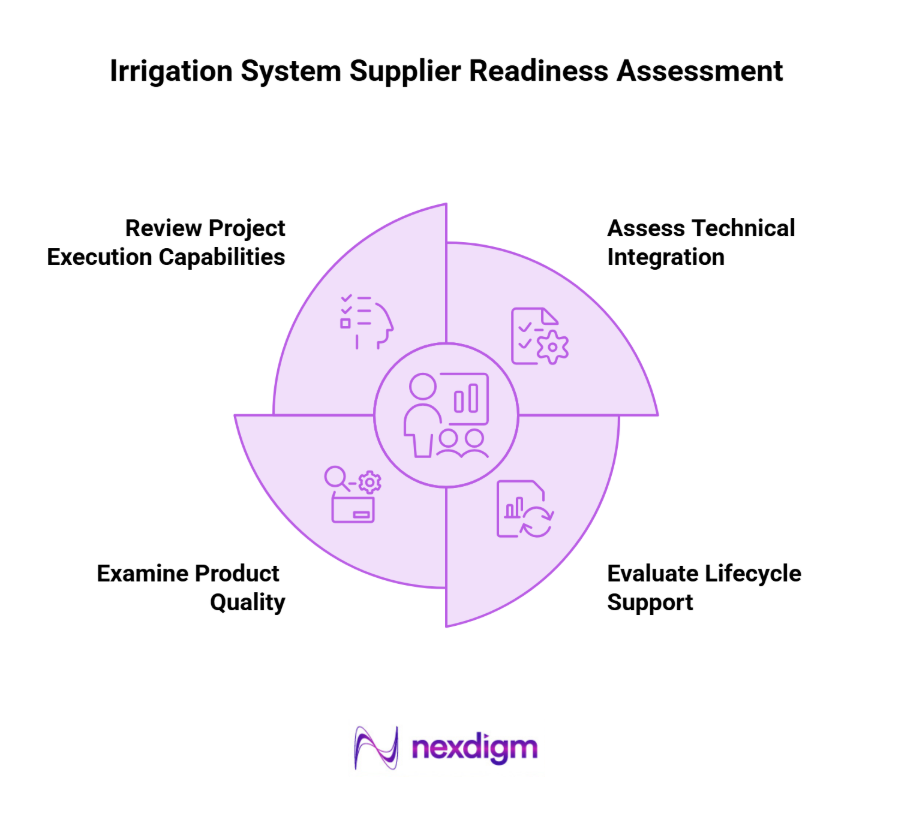
- Review Project Execution Capabilities: Examine suppliers’ experience in irrigation system design, installation, commissioning, and implementation across agricultural applications.
- Assess Technical Integration: Evaluate compatibility between pumps, pipelines, filtration equipment, controllers, and monitoring technologies within integrated irrigation systems.
- Examine Product Quality and Reliability: Review product specifications, quality certifications, material standards, and equipment durability to understand supplier performance capabilities.
- Evaluate Lifecycle Support: Assess technical assistance, repair services, replacement components, and maintenance arrangements to understand long-term supplier support.
This stepwise assessment helps organizations move beyond product availability and identify suppliers capable of meeting broader irrigation project requirements.
Translating Irrigation Supplier Research into Procurement Opportunities
Our Supplier Mapping initiative brings supplier profiles, technical assessments, market presence, and competitive intelligence together to highlight relevant sourcing opportunities. It helps businesses identify capability gaps, compare potential providers, and prioritize suppliers for further evaluation. These findings provide a structured basis for procurement decisions and help organizations align supplier selection with their irrigation infrastructure requirements.
Nexdigm’s Case
An irrigation equipment distributor sought to identify suppliers with stronger regional reach and product availability. Nexdigm assessed 26 providers across product portfolios, distribution networks, and service capabilities. The study found that 29% had limited rural coverage, while 24% lacked integrated smart irrigation offerings. The distributor used these insights to prioritize alternative suppliers.
To take the next step, simply visit our Request a Consultation page and share your requirements with us.
Harsh Mittal
+91-8422857704