
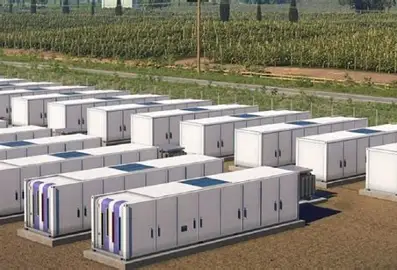
Italy’s Battery Energy Storage for Microgrids Market is witnessing strong growth, driven by renewable energy expansion, grid decentralization, energy security concerns, and industrial electrification. Battery Energy Storage Systems (BESS) are increasingly being integrated into microgrids to improve grid resilience, optimize renewable energy generation, and provide backup power for critical facilities. As one of Europe’s leading renewable energy markets, Italy has installed more than 40 GW of solar power capacity and approximately 13 GW of wind power capacity. Growing investments in distributed energy resources, smart grids, and local energy communities are creating significant opportunities for battery-backed microgrids across industrial, commercial, municipal, and remote applications.
Key Market Drivers for Italy’s Battery Energy Storage for Microgrids Market
Renewable Energy Expansion Accelerates Energy Storage Demand
Italy continues to expand its renewable energy portfolio, with installed solar capacity exceeding 40 GW and wind capacity approaching 13 GW. As renewable generation increases, battery storage systems are becoming essential to manage intermittency, improve energy reliability, and maximize self-consumption. Solar-plus-storage microgrids are increasingly being adopted across commercial buildings, industrial facilities, agricultural operations, and community energy projects.
Industrial Electrification and Energy Security Strengthen Market Growth
Italy’s manufacturing sector contributes approximately 16–18% of GDP, making it one of Europe’s largest industrial economies. Rising electricity costs, energy security concerns, and sustainability requirements are encouraging businesses to deploy battery-backed microgrids that provide peak-load management, backup power, and renewable energy optimization. Industrial parks, logistics facilities, and manufacturing plants are increasingly investing in advanced energy storage systems to improve operational resilience.
Energy Communities and Smart Grid Development Create New Opportunities
Italy is actively promoting renewable energy communities and decentralized electricity generation. Battery storage systems enable local energy communities to optimize renewable generation, increase self-consumption rates, and participate in energy-sharing programs. The expansion of smart-grid infrastructure and digital energy management solutions continues to support growth in battery-integrated microgrid deployments.
Government Initiatives Supporting Italy’s Battery Energy Storage for Microgrids Market
The Italian government is actively supporting energy storage deployment through the National Recovery and Resilience Plan (PNRR) and broader decarbonization initiatives. More than EUR 200 billion has been allocated toward energy transition, renewable energy development, grid modernization, storage infrastructure, and sustainable mobility projects. In addition, Italy’s commitment to achieving climate neutrality and expanding renewable electricity generation is accelerating investments in battery storage systems, smart grids, and distributed energy resources. Government support for renewable-energy communities and utility-scale energy storage projects continues to create favorable conditions for microgrid deployment.
Competitive Landscape of Italy’s Battery Energy Storage for Microgrids Market
Italy’s Battery Energy Storage for Microgrids Market is becoming increasingly competitive as international battery suppliers, renewable energy developers, and technology companies expand their activities. Competition is focused on battery efficiency, storage duration, lifecycle performance, energy-management software, and microgrid integration capabilities. Major participants including Enel X, Fluence, Tesla Energy, BYD, Huawei Digital Power, Sungrow, Schneider Electric, ABB, Siemens Energy, and Hitachi Energy continue to expand energy-storage solutions for industrial, commercial, and utility-scale projects. Increasing deployment of solar-plus-storage systems, community microgrids, and intelligent energy-management platforms is accelerating innovation and market development.
Major Challenges Facing Italy’s Battery Energy Storage for Microgrids Market
High Initial Investment Costs
Despite declining battery costs globally, battery storage projects require significant upfront capital investment. Achieving favorable project economics and financing structures remains a key consideration for commercial and industrial users.
Grid Integration and Regulatory Complexity
Integrating battery storage systems with existing electricity infrastructure requires advanced control software, smart-grid connectivity, and compliance with evolving energy regulations. Effective coordination between utilities, developers, and technology providers remains essential for successful deployment.
Future Outlook
Italy’s Battery Energy Storage for Microgrids Market is expected to witness strong growth through 2035, supported by more than 40 GW of installed solar capacity, nearly 13 GW of wind power capacity, and energy-transition investments exceeding EUR 200 billion. Expansion of renewable energy communities, commercial solar-plus-storage projects, industrial microgrids, and smart-grid infrastructure will continue to strengthen battery-storage demand. Additionally, increasing adoption of lithium-ion batteries, AI-enabled energy-management systems, electric vehicle charging networks, and distributed renewable generation is expected to create substantial opportunities for battery manufacturers, system integrators, and microgrid developers across Italy’s evolving decentralized energy ecosystem.
Consultants at Nexdigm, in their latest publication “Italy Battery Energy Storage for Microgrids Market Outlook to 2035” analyse the sector By Energy Storage Technology (Lithium Iron Phosphate (LFP), Nickel Manganese Cobalt (NMC) and Lithium Titanate (LTO)), By Grid Connection Status (Grid-Tier Microgrid and Islanded Autonomous) and By Power Rating (Small Scale, Medium Scale and Utility Scale Microgrids).
Nexdigm suggests that businesses in Italy’s Battery Energy Storage for Microgrids Industry prioritize lithium-ion battery systems, solar-plus-storage microgrids, AI-enabled energy-management platforms, and energy-community solutions to capitalize on the country’s 40 GW+ solar capacity, EUR 200 billion+ energy-transition investments, expanding distributed renewable-energy ecosystem, and growing demand for resilient, low-carbon, and decentralized power infrastructure across industrial, commercial, agricultural, and community applications.
To take the next step, simply visit our Request a Consultation page and share your requirements with us.
Harsh Mittal
+91-8422857704