
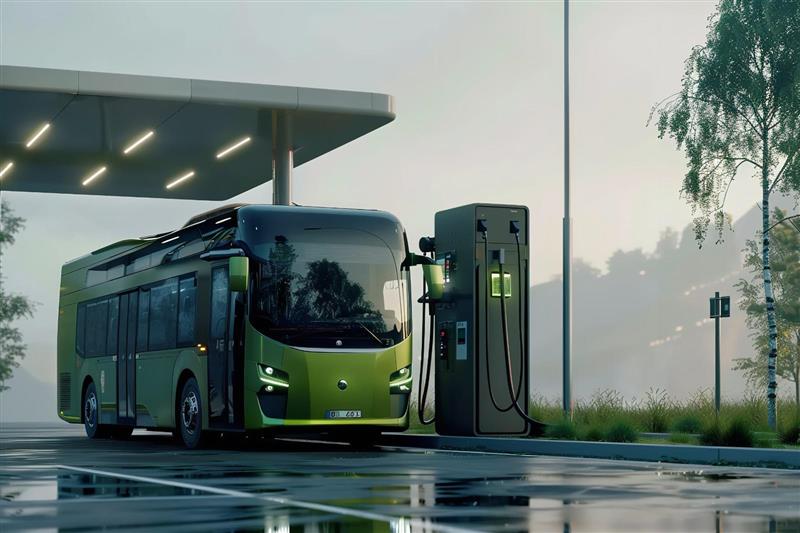
The electric bus market in Italy is growing as the country continues to drive towards clean and green urban mobility. Environmental awareness has been on the rise in Italy over the last few years. Additionally, the cost of batteries and charging points has fallen. This has created an enabling environment for clean and green urban mobility to take root in Italy. For instance, the transition from diesel to electric buses in metropolitan cities such as Milan, Rome, and Turin has been on the rise. The country’s commitment to the EU Green Deal and the National Recovery and Resilience Plan (NRRP) has greatly contributed to the growth of the electric bus market in Italy. Although the electric bus market in Italy was small in 2023, its growth in the coming years up to 2035 is remarkable.
Key Factors Fueling the Growth of Italy’s Electric Bus Market
Emission Reduction Targets and Policy Alignment
The growth of the electric bus market in Italy has been fueled by the country’s push towards reducing urban pollution and mitigating the effects of climate change. The growth of the electric bus market in Italy has been fueled by the push to reduce pollution in urban centers. The transportation sector has been one of the major contributors to Italy’s carbon footprint. Although this sector has contributed significantly to Italy’s total carbon dioxide emission in the past, the sector contributed more than 25% to the total emission of greenhouse gases in Italy. The electric bus is set to play a critical role in the push to reduce pollution in Italy.
Lower Operating Costs and Total Cost of Ownership
Despite the high cost associated with buying an electric bus, which is 20-40 percent higher compared to a conventional bus, the cost of ownership for electric buses is becoming competitive. For example, there are fewer parts in an electric bus compared to a conventional bus. Moreover, the electric bus uses electricity as a source of power compared to diesel. Therefore, the cost of owning an electric bus is becoming attractive, especially considering the technology used in electric buses.
Infrastructure Expansion and Technological Advancements
The development in technology concerning electric bus batteries has reduced the fear of electric buses running out of power during long journeys. This has encouraged investments in electric bus charging stations, especially fast charging stations for electric bus depots. This has led to the expansion of electric bus fleets in Italy. Moreover, there has been increased cooperation between transport authorities and energy companies in Italy. This has encouraged the expansion of electric bus charging infrastructure.
Government Policies and Incentives for the Adoption of Electric Bus Technology in Italy
The Italian government has offered various incentives for the development of electric bus technology in Italy. For example, the Italian government has offered subsidies for the purchase of electric vehicles and investments in charging infrastructure under the NRRP. In addition, public transport authorities have received financial assistance for setting up charging stations in bus depots. As a result, there has been increased promotion of zero-emission vehicles in Italy.
Key Players and Market Dynamics in Italy’s Electric Bus Market
The Italian electric bus market features both local and global manufacturers vying for contracts from regional authorities. Key players include well-known companies that offer e-buses with different capacities and battery options. To ensure the vehicles meet local needs, many transport authorities have teamed up with these manufacturers to test the performance and efficiency of electric buses in real-world Italian conditions.
Challenges Hindering the Widespread Adoption of Electric Buses in Italy
High Upfront Costs and Infrastructure Gaps
Though there are cost-saving advantages in the adoption of electric buses in Italy, as discussed in the previous section, the main drawback in the adoption of electric buses in Italy is the high cost, which is a hindrance. For the small cities, it has been difficult to raise funds to cover the cost of the initial investment. Additionally, there has been a gap in the infrastructure in Italy, in the sense that charging infrastructure has not yet been sufficiently developed.
Future Outlook
In the future, up to 2035, it is believed that the rate of adoption of electric buses in Italy will increase. This is because there has been a tendency to adopt environmentally friendly buses. By the year 2035, it is believed that the rate of purchasing electric buses will increase. This is because it is believed that by the year 2035, electric buses will form a significant part of the public transportation system. Additionally, it is believed that technology will improve the efficiency of service delivery.
Consultants at Nexdigm, in their latest publication “Italy Electric Bus Market Outlook to 2035,” analyze the sector by System Type (Battery Electric Bus, Plug-in Hybrid Electric bus, Fuel Cell Electric Bus, Depot Charging Electric Bus), By Platform Type (Urban Transit Electric Buses, Intercity Electric Buses, Airport Shuttle Electric Buses), and By Fitment Type (OEM Factory Build Electric Buses, Retrofitted Diesel to Electric Buses, Modular Electric Bus Platforms). Nexdigm suggests that businesses should focus on aligning their strategies with emerging trends in sustainability and technological innovation, particularly in the electric vehicle sector. By staying ahead of market shifts, leveraging government incentives, and investing in the right infrastructure, businesses can position themselves for long-term growth in the evolving transportation landscape. This approach is critical in industries like electric buses, where demand is poised to rise in response to environmental concerns and regulatory pressures.
To take the next step, simply visit our Request a Consultation page and share your requirements with us.
Harsh Mittal
+91-8422857704