
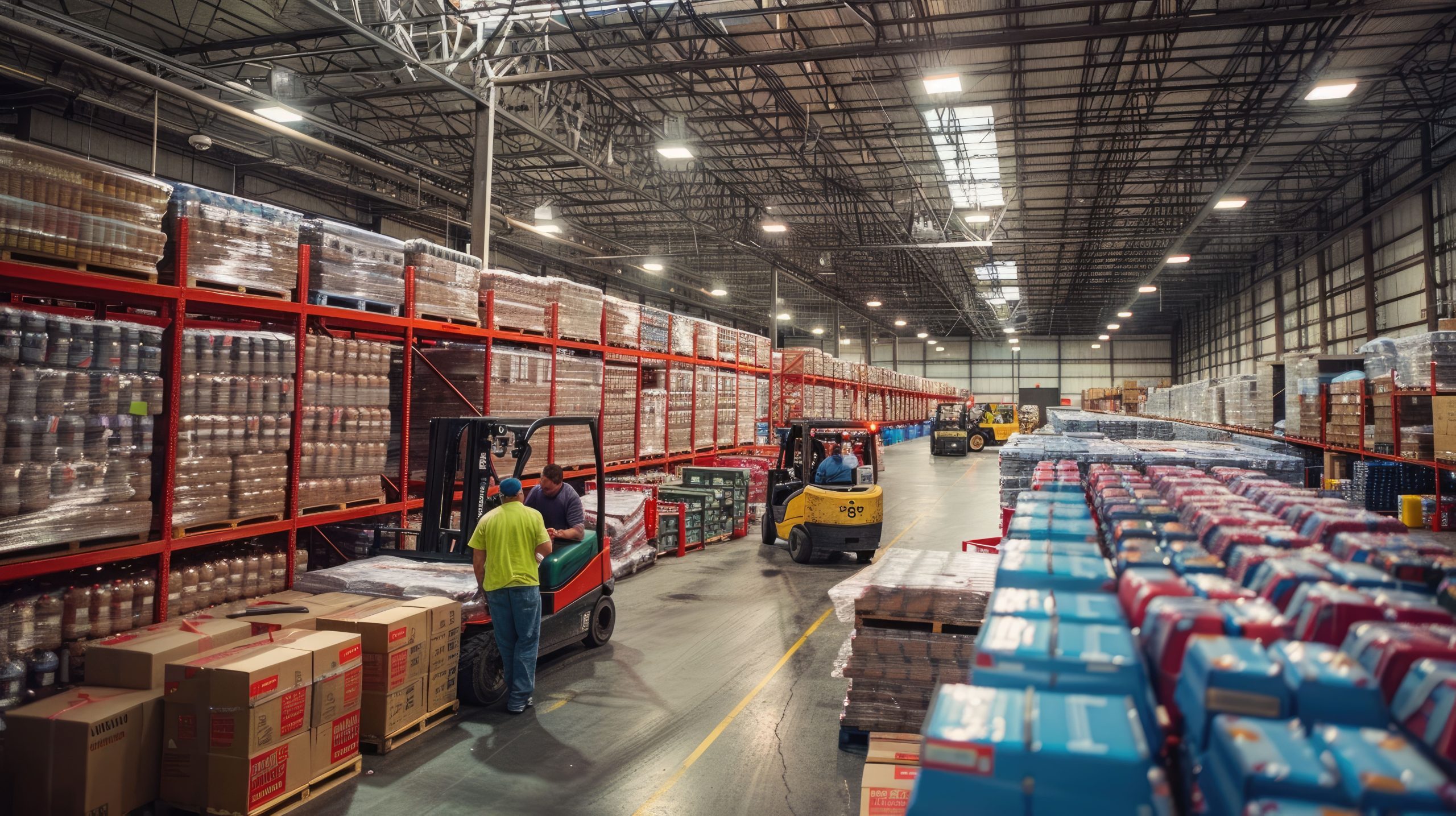
Italy’s warehousing market has moved well beyond the old image of storage sheds on the outskirts of industrial towns. By 2026, the sector sits at the center of a broader logistics rethink, shaped by online retail, nearshoring trends, and pressure for faster delivery across Europe. Italy has one obvious advantage: geography. It sits between Northern Europe, the Mediterranean, and major maritime trade routes. That makes it valuable not just for domestic distribution, but also for regional cargo movement. Still, the market is not without friction. High-quality warehouse stock remains uneven, especially outside the north, and many facilities still fall short of what modern occupiers actually need. The next decade will likely reward operators that can combine location, efficiency, and flexibility rather than simply adding more square footage.
What’s Driving the Warehousing Market in Italy?
E-commerce Keeps Rewriting Warehouse Demand
One of the clearest demand drivers has been the continued expansion of e-commerce and omnichannel retail. Consumers in Italy are now far less tolerant of long delivery windows than they were even five years ago. That has pushed retailers, marketplaces, and logistics firms to secure warehouse space closer to dense consumption zones such as Milan, Rome, Bologna, and Naples. In practice, this means rising demand for urban logistics hubs, cross-docking facilities, and smaller fulfillment centers that can support same-day or next-day delivery. Traditional bulk storage still matters, but speed has become a deciding factor in warehouse strategy.
Italy’s Trade Geography Still Matters
Italy’s role in European trade is another major factor. Ports such as Genoa, Trieste, La Spezia, and Naples are not just maritime entry points; they shape where inventory sits inland. Businesses moving consumer goods, automotive parts, machinery, or food products often use Italy as a redistribution base into Central Europe and the Mediterranean. That is especially relevant as companies rethink supply chains after years of disruption. Some are reducing overdependence on distant sourcing markets and holding more inventory closer to end demand. Warehousing, in that context, becomes less about storage and more about resilience.
Automation Is Becoming Less Optional
There is also a clear shift toward smarter facilities. Warehouse users today are paying closer attention to automation, energy efficiency, and labor productivity. This is particularly visible in larger logistics parks where occupiers want high clear heights, better loading infrastructure, and systems that support robotics or digital inventory tracking. The logic is simple: labor shortages and rising operating costs make outdated buildings harder to justify. Not every operator can afford full automation, but even mid-sized facilities are moving toward warehouse management systems, conveyor integration, and semi-automated picking setups.
Government-Led Initiatives and Infrastructure Development
Public infrastructure policy has played a meaningful role, even if progress on the ground can be slower than investors would like. Italy’s National Recovery and Resilience Plan has directed funding toward rail freight, intermodal transport, port upgrades, and logistics corridor improvements. That matters because warehousing does not function in isolation. A modern facility loses value quickly if truck access, rail links, or customs efficiency remain weak. There is also a sustainability angle that is becoming harder to ignore. New warehouse developments increasingly need to meet environmental standards around insulation, rooftop solar, and energy consumption. For developers, this creates a trade-off: higher upfront costs, but stronger long-term appeal to institutional tenants and investors.
Market Competition and Key Players
Italy’s warehousing market is moderately fragmented, though the quality end of the market is becoming more competitive. International logistics real estate players, domestic developers, and third-party logistics providers are all active, particularly in Northern Italy where demand remains strongest. Lombardy, Emilia-Romagna, and Veneto continue to attract the most serious investment because they offer access to manufacturing clusters, transport links, and large consumer bases. That said, competition is no longer just about who has land. Occupiers are becoming more selective. A warehouse with poor truck circulation, low energy performance, or limited scalability can struggle even in a strong location. In that sense, the market is maturing.
Regional Imbalance Remains a Real Constraint
A common challenge is the uneven development of logistics infrastructure across the country. Northern Italy remains far ahead in terms of modern warehouse stock, transport connectivity, and investor confidence. Southern Italy has potential, especially given its port access, but logistics execution often lags behind opportunity. This creates an imbalance where occupiers may want broader national coverage but still end up concentrating assets in the north. Land availability and permitting delays add another layer of complexity. In several high-demand corridors, suitable development plots are limited, and approvals can stretch timelines well beyond what tenants would prefer.
Future Outlook
Through 2035, Italy’s warehousing sector is likely to become more specialized, more technology-enabled, and more selective in terms of location. The strongest demand will likely center on Grade A assets near major transport corridors and urban consumption zones. Cold storage, e-commerce fulfillment, and multi-tenant logistics parks should see particularly solid momentum. Still, this will not be a uniform story across the country. The winners will probably be the regions and operators that can solve practical bottlenecks – land, labor, transport access, and building quality. That is where the market will separate into premium and obsolete stock.
Consultants at Nexdigm, in their latest publication “Italy Warehousing Market Outlook to 2035”, analyze the sector by Warehouse Type (General Warehousing, Cold Storage, Automated Warehouses), By End User (E-commerce, Retail, Manufacturing, Pharmaceuticals, Food & Beverage), and By Region (Northern Italy, Central Italy, Southern Italy). Nexdigm believes businesses should focus on automation readiness, energy-efficient assets, and location-specific demand rather than treating Italy as one uniform warehousing market.
To take the next step, simply visit our Request a Consultation page and share your requirements with us.
Harsh Mittal
+91-8422857704