
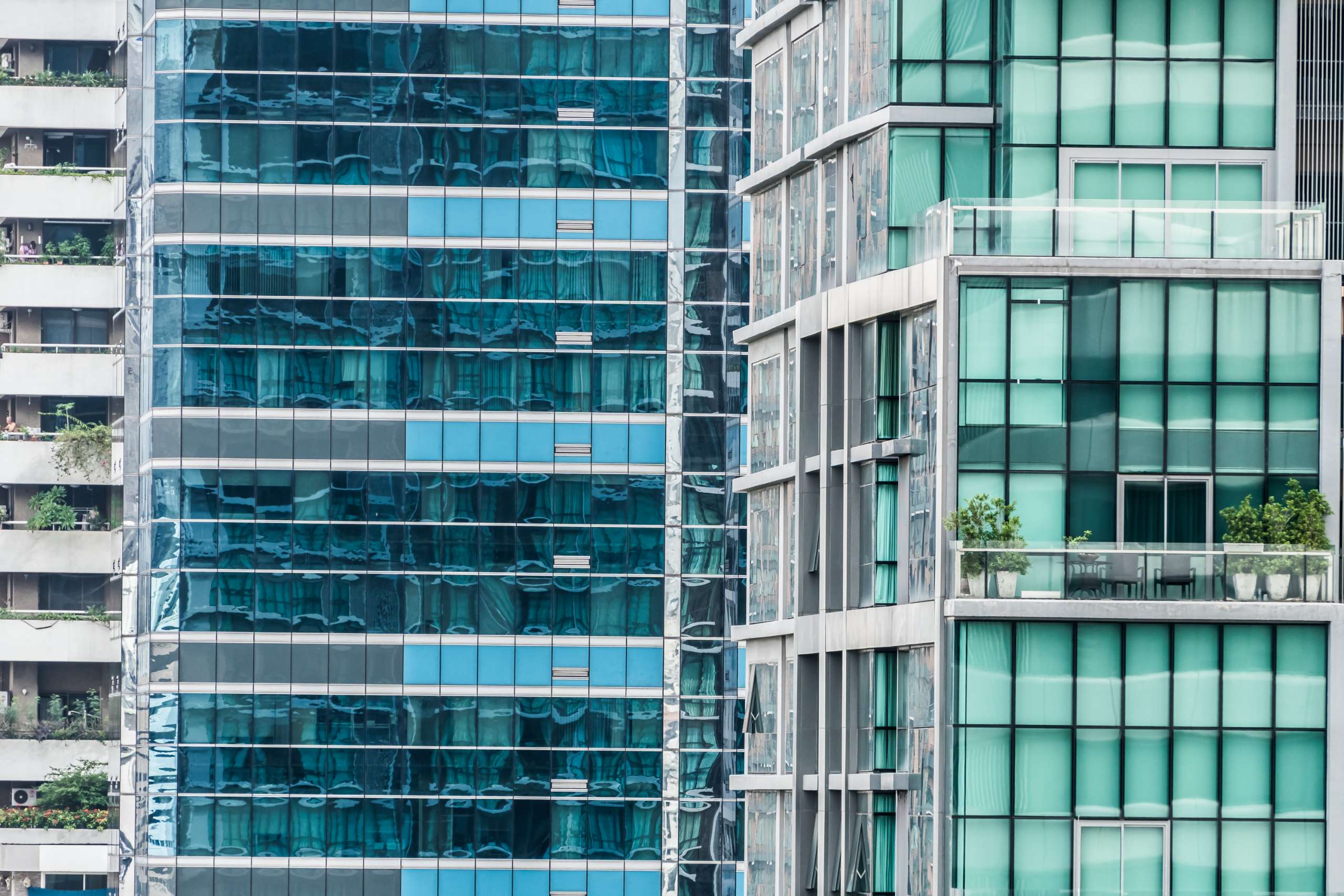
Japan’s architectural and construction glass market is evolving as the country balances urban redevelopment, aging infrastructure modernization, and sustainability-driven construction practices. Architectural glass plays a crucial role in commercial buildings, high-rise residential projects, transportation hubs, healthcare facilities, and public infrastructure, where energy efficiency, natural daylight utilization, and seismic performance are increasingly important. Japan’s construction industry was estimated to reach approximately JPY 32.4 trillion in 2024, supported by private building investments, infrastructure upgrades, and preparations for large-scale development projects. As developers focus on green buildings, resilient structures, and smart urban environments, demand for high-performance glazing solutions continues to strengthen.
Key Market Drivers for Japan’s Architectural and Construction Glass Industry
Urban Redevelopment and High-Rise Construction Projects Drive Glass Demand
Japan’s ongoing urban redevelopment initiatives are creating substantial opportunities for architectural and construction glass manufacturers. Major redevelopment districts across Tokyo, Osaka, and other metropolitan areas continue to incorporate modern office towers, mixed-use complexes, and high-density residential developments that rely heavily on advanced glazing systems. The value of private investment in buildings increased by 2.1% year-over-year in Q1 2024, while investment in non-residential buildings grew by 3.0%, reflecting continued demand for modern construction materials and façade solutions. These projects increasingly utilize curtain wall systems, insulated glass units, and large-format glazing to improve both aesthetics and building performance.
Carbon Neutrality Targets Accelerate Adoption of Energy-Efficient Glazing Solutions
Japan’s commitment to achieving carbon neutrality is encouraging developers to invest in high-performance building materials that reduce energy consumption. The government aims to increase the share of renewable energy in the national power mix to 36-38% by 2030, compared with approximately 21% in 2022, supporting broader sustainability objectives across the construction sector. Energy-efficient products such as Low-E glass, vacuum-insulated glazing, solar-control glass, and triple-glazed systems are witnessing increasing adoption as developers seek to improve thermal efficiency, lower operational costs, and comply with evolving environmental standards.
Infrastructure Modernization and Public Investment Support Long-Term Market Growth
Government investment in transportation, utilities, and public infrastructure continues to support demand for architectural glass solutions. Japan is advancing several large-scale infrastructure projects, including transportation modernization initiatives and long-term urban mobility developments. In parallel, overall construction output is expected to reach approximately JPY 32.4 trillion in 2024, highlighting the scale of ongoing construction activity across the country. Growing investments in transit hubs, airports, healthcare facilities, and public buildings are increasing demand for durable, safety-enhancing, and energy-efficient glazing systems.
Government Support Through Sustainable Construction Policies and Infrastructure Development
Japan’s architectural and construction glass market benefits from strong government support for urban redevelopment, carbon reduction, and infrastructure modernization. The government aims to increase renewable energy’s share of electricity generation to 36–38% by 2030, while continuing investments in transportation and public infrastructure projects. In addition, Japan’s construction industry is projected to reach approximately JPY 32.4 trillion in 2024, supported by public and private investments. These initiatives are accelerating demand for energy-efficient glazing systems, sustainable façades, and advanced building materials across commercial and institutional developments.
Competitive Landscape Driven by Innovation, Energy Efficiency, and Advanced Building Solutions
Japan’s architectural and construction glass market is characterized by strong competition among domestic manufacturers, specialized fabricators, and glazing solution providers focused on high-performance building applications. Supported by a construction market valued at approximately JPY 32.4 trillion in 2024 and a 3.0% increase in non-residential building investment, market participants are expanding capabilities in Low-E glass, vacuum-insulated glazing, smart glass, and seismic-resistant façade systems. Competition is increasingly shaped by technological innovation, sustainability performance, customization expertise, and compliance with stringent energy-efficiency standards.
Market Challenges Facing Japan’s Architectural and Construction Glass Industry
Construction Labor Shortages and Rising Project Costs
Japan’s construction industry continues to face labor constraints due to an aging workforce and skilled worker shortages. Construction starts declined by 8.1% year-over-year during the first five months of 2024, creating challenges for project delivery timelines and increasing operational costs across the construction value chain.
Stringent Energy and Regulatory Requirements
Developers are under increasing pressure to comply with stricter energy efficiency, safety, and sustainability standards. Meeting evolving performance expectations requires continued investment in advanced manufacturing processes, product innovation, testing, and certification capabilities, which can increase costs for suppliers and project stakeholders.
Future Outlook
Looking ahead, Japan’s architectural and construction glass market is expected to benefit from continued urban redevelopment, infrastructure modernization, and sustainable building investments. The country’s construction output is projected to reach approximately JPY 37.6 trillion by 2028, supported by investments in commercial infrastructure, renewable energy projects, smart-city development, and public facilities. Demand is expected to shift toward Low-E glazing, vacuum-insulated glass, smart glass technologies, and advanced façade systems that help enhance energy efficiency and occupant comfort. Companies focusing on innovation, sustainability, and next-generation glazing solutions will be well-positioned to capitalize on Japan’s evolving construction landscape.
Consultants at Nexdigm, in their latest publication “Japan Architectural and Construction Glass Market Outlook to 2035,” analyse the sector By Product Technology Type (Double-Pane Argon Gas Filled and Triple Pane Low-E Vacuum Filled), By End User Application (Commercial Real Estate and High-Rise Residential Towers) and By Project Scale (Mega-Projects Skyscrapers, Mid-Scale Urban Developments and Residentials Retrofitting Programs).
Nexdigm suggests that businesses in Japan’s Architectural and Construction Glass Industry prioritize energy-efficient glazing innovations, sustainable building solutions, seismic-resilient glass technologies, and advanced processing capabilities to capitalize on urban redevelopment and infrastructure modernization opportunities.
To take the next step, simply visit our Request a Consultation page and share your requirements with us.
Harsh Mittal
+91-8422857704