
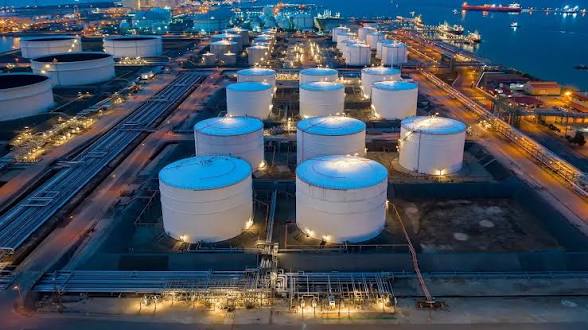
Japan has long been one of the world’s most influential LNG markets, with liquefied natural gas playing a critical role in powering industries, homes, and electricity generation. As an island nation with limited domestic energy resources, Japan continues to rely heavily on LNG imports to ensure a stable and diversified energy supply. The country imports roughly 65 million tonnes of LNG annually and operates one of the world’s largest LNG receiving networks, comprising more than 37 terminals across its coastline. With growing energy security concerns and the ongoing transition toward cleaner fuels, investment in LNG infrastructure remains a strategic priority for Japan.
Market Drivers Advancing the Japan’s LNG Infrastructure Industry
Rising Energy Security Requirements
Energy security remains the strongest growth driver for Japan’s LNG infrastructure sector. Since the country produces very little natural gas domestically, it depends almost entirely on imported LNG to meet demand. This dependence has encouraged continuous investments in import terminals, storage facilities, and transportation networks. Japan’s diversified LNG sourcing strategy, involving suppliers such as Australia, Malaysia, the United States, and others, helps reduce supply risks and strengthens national energy resilience. Businesses, utilities, and policymakers increasingly view LNG infrastructure not simply as energy assets but as critical components of national security.
Modernization of Aging LNG Facilities
Many of Japan’s LNG terminals have been operating for decades, creating a strong need for modernization and technological upgrades. Operators are investing in advanced storage systems, digital monitoring technologies, safety enhancements, and efficiency improvements. Japan possesses approximately 242 million tonnes per annum of LNG import capacity, the largest globally, making infrastructure optimization essential for maintaining operational reliability. Modernized facilities are helping operators reduce maintenance costs while improving handling capacity and environmental performance.
Growing Role of LNG in Cleaner Energy Transition
While renewable energy deployment continues to expand, LNG remains a crucial transition fuel within Japan’s energy mix. Natural gas emits fewer carbon emissions than coal and oil during power generation, making it an attractive bridge fuel during the shift toward lower-carbon energy systems. Industries seeking reliable energy supplies alongside emissions reduction goals continue to support investments in LNG storage, regasification, and distribution infrastructure. This balance between sustainability and reliability is expected to sustain long-term infrastructure demand.
Government Initiatives Supporting the Japan LNG Infrastructure Growth
The Japanese government continues to prioritize LNG within its broader energy security and decarbonization strategies. Policymakers support terminal upgrades, supply diversification, strategic LNG reserves, and international energy partnerships. Government-backed organizations and energy companies are also encouraged to secure overseas LNG investments to strengthen supply stability and reduce exposure to market disruptions. These measures help maintain Japan’s position as one of the world’s leading LNG infrastructure hubs.
Competitive Landscape of Japan LNG Infrastructure Industry
Japan’s LNG infrastructure market features a mix of major utilities, energy trading companies, and gas operators. Leading participants include JERA, Tokyo Gas, Osaka Gas, Kansai Electric Power, Chubu Electric Power, and Toho Gas. These companies operate extensive terminal networks, storage facilities, and distribution systems while investing in modernization projects, digital technologies, and supply-chain diversification strategies to maintain competitiveness in an evolving energy environment.
Challenges Facing Japan LNG Infrastructure Industry
High Import Dependence and Global Price Volatility
Japan’s reliance on imported LNG exposes the market to international price fluctuations, geopolitical tensions, and shipping disruptions. Changes in global supply-demand dynamics can significantly influence procurement costs and infrastructure planning decisions.
Competition from Renewable Energy Expansion
As solar, wind, and battery technologies continue gaining momentum, LNG infrastructure operators face increasing pressure to remain relevant in a rapidly changing energy landscape. Balancing long-term LNG investments with decarbonization commitments remains a key challenge for industry stakeholders.
Future Outlook
The future of Japan’s LNG infrastructure market is expected to be shaped by a combination of energy security priorities, infrastructure modernization, and cleaner energy objectives. While renewable energy capacity will continue expanding, LNG is likely to remain an essential component of Japan’s energy portfolio due to its reliability and flexibility. With around 242 million tonnes per year of LNG import capacity and one of the world’s most extensive terminal networks, Japan is well-positioned to strengthen its role as a regional LNG hub. Continued investments in smart infrastructure, storage expansion, and supply diversification are anticipated to support sustainable growth across the industry for years to come.
Consultants at Nexdigm, in their latest publication “Japan LNG Infrastructure Market Outlook to 2035” analyze the sector By Terminal Configuration (Onshore Receiving Terminals, Floating Storage Regasification Units and Satellite Storage Terminals), By Facility Operator (Major Utility Providers, Industrial Energy Consumers and Regional Power Cooperatives) and By Tank Technology (Single Containment, Double Containment and Full Containment).
Nexdigm suggests that businesses in “Japan LNG Infrastructure Industry” focusses on oilfield, desalination, construction, and industrial applications, strengthen local warehousing, develop application-specific grades, improve technical support, and build resilient sourcing networks to serve expanding energy, water, and manufacturing demand.
To take the next step, simply visit our Request a Consultation page and share your requirements with us.
Harsh Mittal
+91-8422857704