
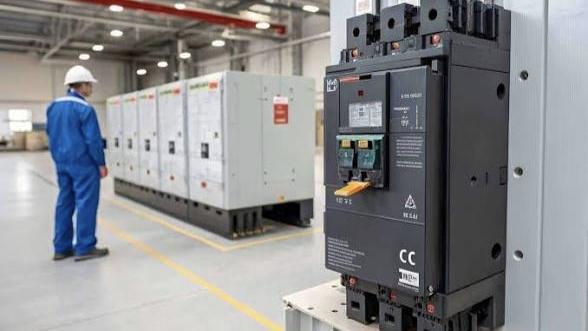
Japan’s energy transition is creating new opportunities for the low-voltage DC circuit breakers market. As the country expands renewable energy generation, energy storage deployments, electric vehicle infrastructure, and smart manufacturing facilities, demand for reliable DC power protection solutions continues to rise.Low-voltage DC circuit breakers play a critical role in protecting solar photovoltaic systems, battery storage installations, EV charging equipment, and industrial DC networks from electrical faults. With Japan operating more than 91 GW of installed solar capacity, making it one of the world’s largest solar markets, the need for advanced DC protection technologies has become increasingly important. The industry is benefiting from a broader shift toward electrification, sustainability, and grid modernization.
Market Drivers Advancing the Japan Low-Voltage DC Circuit Breakers Industry
Japan’s Expanding Solar Energy Ecosystem
Solar energy remains the single most influential driver for the Japanese low-voltage DC circuit breakers industry. Japan’s installed solar capacity exceeded 91 GW, while solar power contributes around 10–13% of national electricity generation, highlighting the technology’s growing importance in the country’s energy mix. Every solar installation requires robust DC-side protection to safeguard panels, inverters, and connected equipment. As businesses, industries, and households continue adopting rooftop and utility-scale solar projects, demand for high-performance low-voltage DC circuit breakers naturally grows alongside them.
Rising Battery Storage and Smart Energy Investments
Japan is increasingly investing in energy storage to enhance grid stability and support renewable integration. The country has already deployed more than 10 GWh of battery storage capacity, particularly in residential and distributed energy applications. Battery systems operate primarily on direct current, creating strong demand for specialized circuit protection devices capable of handling complex DC fault conditions. As utilities and commercial facilities pursue greater energy resilience, low-voltage DC circuit breakers are becoming essential infrastructure components.
Electric Vehicle Infrastructure Driving DC Protection Needs
Japan’s transition toward cleaner transportation is creating another valuable market opportunity. Government policies supporting carbon neutrality and charging network expansion are encouraging investments in EV infrastructure. Industry participants are accelerating deployment of fast-charging stations and intelligent charging systems across urban centers and highways. Since fast chargers operate on DC power, reliable circuit protection is critical for safety, performance, and operational continuity. Growing electrification of transportation will therefore continue supporting long-term demand for low-voltage DC circuit breakers.
Government Initiatives Supporting the Japan Low-Voltage DC Circuit Breakers Industry
Government support remains a significant growth enabler. Japan has committed to achieving carbon neutrality by 2050 and continues promoting renewable energy, battery technologies, smart energy systems, and transportation electrification. The Green Growth Strategy and Strategic Energy Plans encourage investments in solar energy, storage batteries, advanced power management, and next-generation electrical infrastructure. These initiatives indirectly strengthen demand for low-voltage DC circuit breakers by expanding the deployment of DC-based energy assets throughout the country.
Competitive Landscape of Japan Low-Voltage DC Circuit Breakers Sector
Japan’s market features a mix of domestic industrial leaders and global electrical equipment manufacturers. Key participants include Mitsubishi Electric, Fuji Electric, Panasonic, Toshiba, ABB, Schneider Electric, Siemens, and Eaton. Competition increasingly focuses on product durability, compact design, enhanced safety performance, and intelligent monitoring capabilities. Manufacturers are investing in solutions tailored for solar, battery storage, EV charging, and industrial automation applications, while partnerships with renewable energy developers continue to grow.
Challenges Affecting Japan Low-Voltage DC Circuit Breakers Industry
Higher Technical Requirements for Modern DC Systems
As renewable and storage projects become larger and more complex, circuit breakers must withstand higher fault currents and increasingly sophisticated operating environments. Continuous innovation is required to meet evolving performance expectations.
Renewable Integration and System Complexity
Japan’s growing deployment of distributed energy resources creates additional challenges for electrical protection systems. Diverse applications, varying voltage levels, and advanced grid architectures require highly specialized DC protection products, increasing development and implementation costs.
Future Outlook
The long-term outlook for Japan’s low-voltage DC circuit breakers market remains highly positive. Continued solar capacity expansion, growing battery storage deployment, EV charging network investments, and industrial electrification will support sustained market demand. Japan’s broader commitment to energy transition and carbon neutrality is expected to accelerate adoption of DC-powered technologies across multiple sectors. As renewable energy penetration increases and smart energy infrastructure becomes more widespread, low-voltage DC circuit breakers will remain a foundational technology ensuring safety, efficiency, and reliability throughout Japan’s modern electrical ecosystem.
Consultants at Nexdigm, in their latest publication “Japan Low-Voltage DC Circuit Breakers Market Outlook to 2035” analyze the sector By Circuit Breaker Technology ( Molded Cases Circuit Breakers, Miniature Circuit Breakers and Air Circuit Breakers), By End Uses Application (Industrial Manufacturing, Photovoltaic Powers Plants and Electric Vehical Charging Stations) and By Rated Crurrent Capacity ( Below 16 Amperes, 16-63 Amperes and 64-250 Amperes).
Nexdigm suggests that businesses in “Japan Low-Voltage DC Circuit BreakersIndustry” focusses on oilfield, desalination, construction, and industrial applications, strengthen local warehousing, develop application-specific grades, improve technical support, and build resilient sourcing networks to serve expanding energy, water, and manufacturing demand.
To take the next step, simply visit our Request a Consultation page and share your requirements with us.
Harsh Mittal
+91-8422857704