
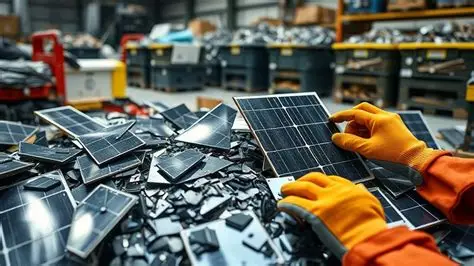
Japan’s clean energy journey has been remarkable. With more than 90 GW of installed solar capacity, the country ranks among the world’s largest solar markets. However, another challenge is now emerging alongside this success: what happens to solar panels once they reach the end of their useful lives? As thousands of photovoltaic (PV) systems installed during the solar boom begin to age, the need for efficient recycling solutions is becoming increasingly important. Valuable materials such as glass, aluminum, silicon, copper, and silver can be recovered and reused, creating both environmental and economic benefits. As a result, Japan’s solar panel recycling industry is evolving into a critical component of the nation’s broader sustainability strategy.
Market Drivers Advancing the Japan’s Solar Panel Recycling Industry
Growing Volumes of Retired Solar Panels Creating Recycling Demand
Japan’s extensive solar deployment has laid the foundation for significant future recycling requirements. Industry estimates indicate that end-of-life solar panel waste could reach hundreds of thousands of tons as early-generation installations approach retirement. For recycling companies, this represents a substantial opportunity. Modern recycling facilities can recover more than 80% of a solar panel’s total weight, helping reduce waste while generating valuable secondary raw materials. With disposal needs steadily increasing, demand for specialized recycling services is expected to accelerate across residential, commercial, and utility-scale projects.
Japan’s Circular Economy Vision Supporting Material Recovery
Resource efficiency has long been a cornerstone of Japan’s environmental policies. Rather than treating retired solar panels as waste, the country increasingly views them as a source of reusable materials. Recovered aluminum, glass, and precious metals can re-enter manufacturing supply chains, reducing dependence on virgin resources. This circular economy approach not only supports sustainability targets but also helps manufacturers address rising concerns around raw material availability and supply chain resilience.
Corporate Sustainability Goals Boosting Industry Investments
Many Japanese corporations are strengthening their Environmental, Social, and Governance (ESG) commitments, making responsible solar panel disposal a business priority. Renewable energy operators, industrial facilities, and large commercial organizations are actively seeking recycling partners that can ensure compliant and environmentally responsible waste management. The growing emphasis on carbon reduction, waste minimization, and sustainable procurement is encouraging investments in advanced recycling technologies and long-term recycling partnerships.
Government Initiatives Supporting the Japan’s Solar Panel Recycling Industry
Recognizing the long-term challenge of solar panel waste, Japanese authorities have introduced policies and guidelines promoting proper collection, transportation, and recycling of photovoltaic modules. Organizations such as the Ministry of the Environment and the Ministry of Economy, Trade and Industry (METI) continue to support research into advanced recycling technologies and resource recovery processes. These initiatives aim to build a robust recycling ecosystem before solar panel waste volumes increase significantly, ensuring sustainable management of retired renewable energy assets.
Competitive Landscape of Japan’s Solar Panel Recycling Industry
The Japanese market is becoming increasingly competitive as recycling specialists and environmental service providers expand their capabilities. Companies including NPC Incorporated, Hamada Co., Ltd., and Mitsubishi Materials Corporation are actively investing in recycling technologies designed to improve material recovery rates and operational efficiency. Strategic partnerships between recyclers, solar developers, and waste management firms are also helping strengthen collection networks and expand processing capacity nationwide.
Challenges Facing Japan’s Solar Panel Recycling Sector
High Recycling Costs Compared with Traditional Disposal
Although recycling offers substantial environmental benefits, processing solar panels remains relatively expensive. Advanced separation technologies require specialized equipment and skilled operations, which can increase costs compared with conventional disposal methods.
Collection and Logistics Remain Complex
Solar installations are spread across rooftops, industrial facilities, and utility-scale solar farms throughout Japan. Gathering and transporting large volumes of retired panels safely and economically presents logistical challenges that can impact overall recycling efficiency and profitability.
Future Outlook
The future of Japan’s solar panel recycling industry looks increasingly promising. As larger volumes of panels reach the end of their operational lives, recycling will shift from a niche service to an essential part of the renewable energy value chain. Continued innovation in material recovery technologies, growing government support, and stronger corporate sustainability commitments are expected to drive industry expansion. As Japan advances toward its long-term carbon neutrality and circular economy objectives, solar panel recycling will play an increasingly important role in maximizing resource efficiency while supporting the nation’s clean energy transition.
Consultants at Nexdigm, in their latest publication “Japan Solar Panel Recycling Market Outlook to 2035” analyze the sector By Recycling Process (Mechanical Separation, Thermal Delamination and Optical Sorting), By Prefectural Cluster (Kanto-Koshinetsu, Kansai-Chugoku and Tohoku-Hokkaido) and By Owner Segment (Residential Utility, Industrial and Commercial Rooftop).
Nexdigm suggests that businesses in “Japan Solar Panel Recycling Industry” focusses on oilfield, desalination, construction, and industrial applications, strengthen local warehousing, develop application-specific grades, improve technical support, and build resilient sourcing networks to serve expanding energy, water, and manufacturing demand.
To take the next step, simply visit our Request a Consultation page and share your requirements with us.
Harsh Mittal
+91-8422857704