
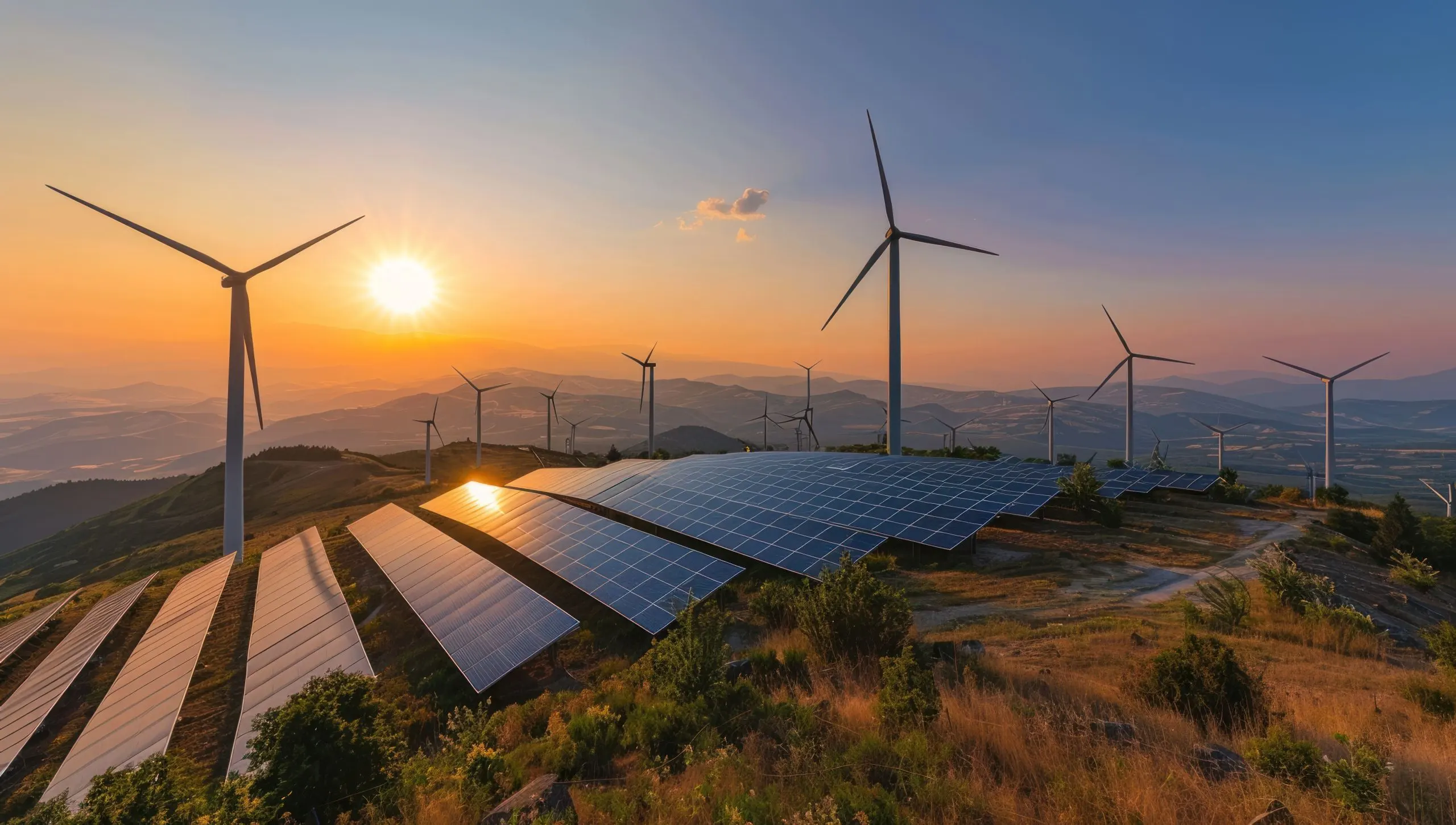
Kenya has quietly built one of the cleanest power mixes in Africa, and that advantage is starting to shape its broader economy. By 2026, renewable sources already account for the majority of the country’s electricity generation, with geothermal plants carrying much of the load while solar and wind continue to expand into newer regions. Unlike many developing markets still dependent on diesel generation, Kenya has spent years investing in long-term energy infrastructure, particularly around the Rift Valley geothermal belt. What makes the market interesting is that renewable energy in Kenya is no longer limited to large utility projects. Solar panels are now common in rural towns, logistics hubs, flower farms, schools, and even small retail centers where grid reliability remains inconsistent.
What’s Driving the Renewable Energy Market in Kenya?
Geothermal Expansion Continues to Anchor the Power Sector
Kenya sits on substantial geothermal reserves, and this resource has become the backbone of its electricity network. Facilities in Olkaria have already transformed the country’s energy mix over the last decade, while newer developments around Menengai are adding fresh capacity. Geothermal remains attractive because it offers stable baseload power unlike solar or wind, which fluctuate depending on weather conditions. In practice, this reliability matters for manufacturers and industrial users that cannot afford regular outages or voltage instability.Wind energy has also gained traction, particularly after the success of the Lake Turkana Wind Power project. Large wind installations are helping diversify supply while reducing the country’s reliance on imported fuel for thermal plants.
Off-Grid Solar Adoption Is Changing Rural Energy Access
Outside Nairobi and other major cities, many communities still deal with patchy grid coverage. This gap has created strong demand for standalone solar systems and mini-grids. Small solar kits are now widely used for lighting, mobile charging, irrigation pumps, and refrigeration in rural households. What used to be viewed as temporary backup power is increasingly becoming the primary energy source for some regions. Falling battery prices have made adoption easier over the past few years. For small businesses such as grocery stores or rural clinics, solar often provides a cheaper alternative than diesel generators, especially with fuel costs remaining volatile. A common challenge, though, is maintenance quality. Low-cost imports occasionally fail within a few years, which has created trust issues in parts of the market.
Industrial Growth and Urban Demand Are Putting Pressure on Supply
Kenya’s electricity demand keeps climbing as industrial activity expands and urban populations grow. Data centers, manufacturing clusters, transport infrastructure, and real estate developments all require more dependable power than the grid historically provided. Renewable projects are increasingly being viewed as an economic necessity rather than just an environmental initiative. Large commercial operators are also paying closer attention to electricity costs. Some horticulture exporters and tea processing facilities have already adopted captive solar installations to reduce operating expenses. For energy-intensive industries, stable pricing matters almost as much as sustainability commitments.
Government-Led Initiatives Supporting Clean Energy
The Kenyan government has maintained relatively consistent support for renewable power development, which is not always common across emerging markets. Policies tied to the Least Cost Power Development Plan continue to favor geothermal, wind, and solar investments over expensive fossil-fuel generation. Feed-in tariff programs and public-private partnership models have attracted both regional and international developers. Rural electrification remains another major priority. While progress has been visible, connecting remote communities still requires substantial investment in transmission lines and substations. On the ground, infrastructure rollout tends to move slower than policy announcements, particularly in sparsely populated areas.
Market Competition and Investment Landscape
The market includes a mix of state-backed utilities, international developers, and private independent power producers. Companies such as Kenya Electricity Generating Company and Lake Turkana Wind Power remain central to large-scale generation projects, while foreign firms continue exploring opportunities in battery storage and grid modernization. Competition is becoming more noticeable in the commercial solar segment, where local installers now compete alongside global renewable firms. Financing access often determines which companies scale successfully because project development costs remain high.
Grid Infrastructure Remains a Key Challenge
One issue that repeatedly slows renewable expansion in Kenya is transmission capacity. Some renewable projects are built far from high-demand urban centers, making grid connectivity expensive and time-consuming. Delays in transmission upgrades have occasionally left completed generation assets underutilized.Land acquisition can also become politically sensitive, particularly for large wind or geothermal developments near local communities. These projects may promise long-term economic benefits, but negotiations over compensation and land rights can extend timelines considerably.
Kenya Accelerates Geothermal and Battery Storage Investments
Kenya has recently intensified investments in geothermal expansion and battery storage projects as the country works toward improving grid stability and lowering dependence on thermal generation. New funding commitments from international lenders and climate-focused investors are supporting geothermal drilling activities around the Rift Valley region, particularly near Olkaria and Menengai. At the same time, energy authorities are evaluating large-scale battery storage systems to manage fluctuations from wind and solar generation. The government is also pushing transmission upgrades to support growing industrial electricity demand. Industry observers believe these projects could strengthen Kenya’s position as one of Africa’s leading renewable electricity markets over the next decade.
Future Outlook
Kenya’s renewable energy market is likely to expand steadily through 2035 as electricity demand rises and investment in clean power continues. Geothermal will probably remain dominant, though solar adoption may accelerate faster than earlier projections because of lower equipment costs and wider battery integration. Cross-border electricity trade within East Africa could also become more important over time, especially as regional interconnection projects improve.
Consultants at Nexdigm, in their latest publication “Kenya Renewable Energy Market Outlook to 2035”, analyzed the market by Source Type (Geothermal, Solar, Wind, Hydropower, Biomass), By Application (Utility-Scale Power Generation, Commercial & Industrial, Residential, Rural Electrification), and By End User (Utilities, Manufacturing, Agriculture, Commercial Establishments, Public Infrastructure). Nexdigm believes businesses should focus on decentralized solar deployment, localized maintenance networks, and transmission partnerships while exploring battery storage opportunities as Kenya’s power sector matures over the next decade.
To take the next step, simply visit our Request a Consultation page and share your requirements with us.
Harsh Mittal
+91-8422857704