
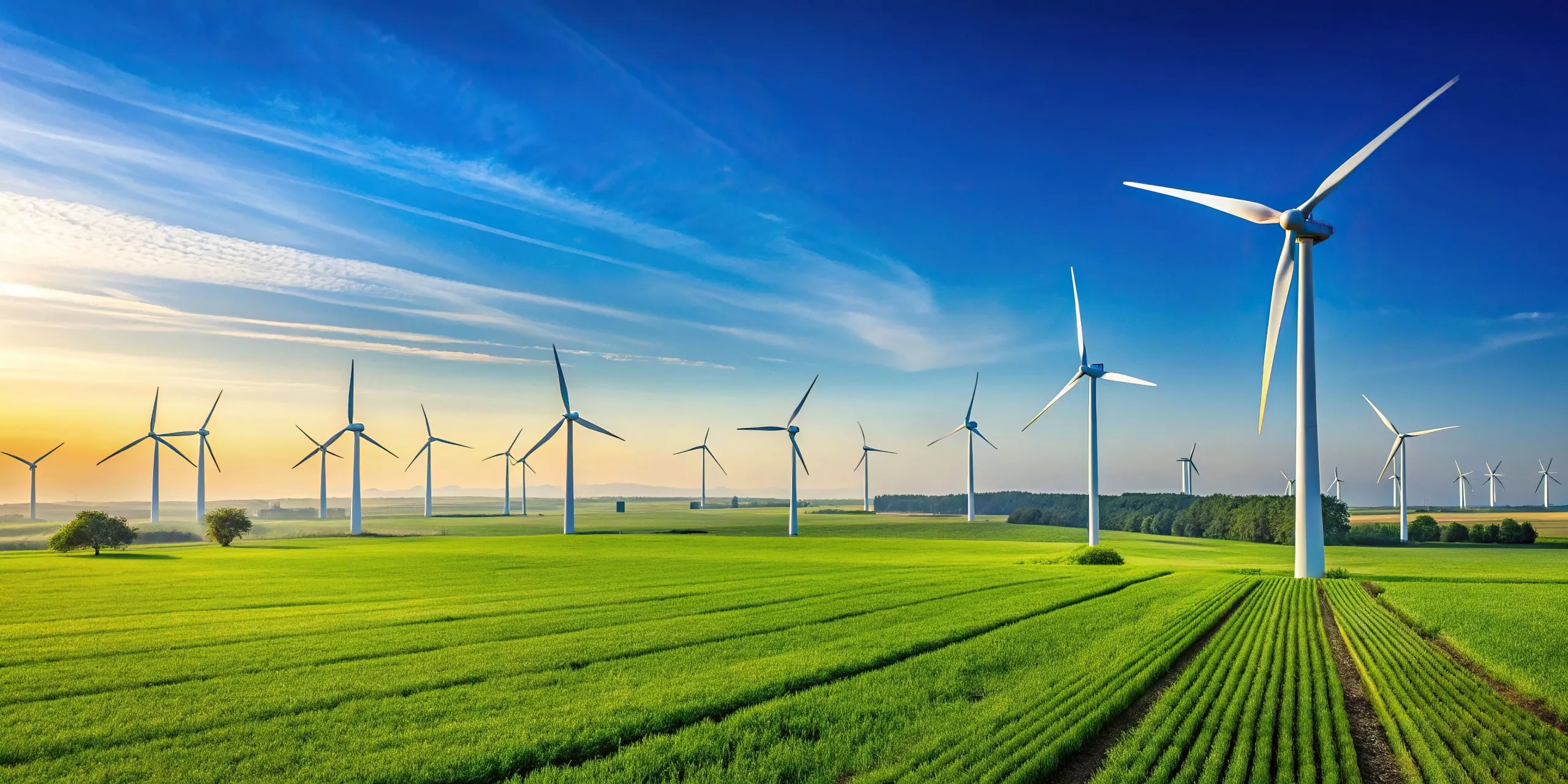
Kenya has quietly become one of Africa’s more serious renewable energy stories, and wind power now sits near the center of that conversation. While countries across the region still rely heavily on thermal generation, Kenya has spent years building a cleaner electricity mix through geothermal, hydropower, and more recently, utility-scale wind projects. By 2026, the country’s wind sector is no longer viewed as experimental. Large projects in regions such as Turkana and Kajiado have already proven that commercial wind generation can work at scale in East Africa, even with difficult terrain and infrastructure gaps. Electricity demand continues to climb as urban centers expand and industrial activity spreads beyond Nairobi. At the same time, the pressure to reduce expensive fuel imports has made renewable energy far more attractive from both an economic and policy perspective. Wind energy, despite its intermittency challenges, offers Kenya a relatively stable long-term option because the country benefits from some of the strongest onshore wind corridors on the continent.
What’s Driving the Wind Energy Market in Kenya?
Expanding Power Demand Across Industry and Cities
Manufacturing activity, new housing developments, and rising electricity access have all pushed Kenya’s power consumption upward over the last few years. Industrial zones require more reliable electricity than what diesel backup systems can realistically provide at scale. In practice, many businesses have become increasingly sensitive to fuel price volatility, especially after periods of global oil market instability. Wind projects help soften part of that exposure. There is also a broader electrification angle. Counties that previously struggled with inconsistent grid access are gradually becoming connected to national transmission networks. As this happens, renewable generation capacity needs to keep pace. Wind farms are filling part of that gap, particularly in areas where geothermal development may not be geographically feasible.
Strong Wind Corridors and Available Land
Few African countries possess wind conditions as commercially attractive as northern Kenya. The Lake Turkana corridor, for instance, has consistently high wind speeds that allow turbines to operate efficiently for large parts of the year. That matters because project economics in wind energy depend heavily on utilization rates rather than just installed capacity. Land availability also works in Kenya’s favor. Semi-arid regions with lower population density have made it easier to secure space for utility-scale installations compared to densely populated agricultural zones. Of course, land negotiations are never completely straightforward. Community engagement and compensation disputes still emerge from time to time, especially when transmission infrastructure cuts across local settlements. A common challenge on the ground is balancing national energy priorities with local expectations around jobs and land use.
Foreign Investment and Private Sector Participation
International lenders and private developers have played a major role in getting Kenya’s wind market off the ground. Large renewable projects require significant upfront capital, and local financing capacity alone has often been insufficient for projects running into hundreds of millions of dollars. Development finance institutions from Europe and multilateral agencies have therefore become deeply involved in project funding and risk sharing. Global turbine suppliers such as Vestas and Siemens Gamesa continue to view Kenya as one of the more bankable renewable markets in sub-Saharan Africa. That said, investors still approach the market carefully. Currency depreciation, payment delays, and regulatory uncertainty occasionally complicate project timelines.
Government-Led Renewable Energy Initiatives
The Kenyan government has spent years pushing renewable energy through policy reforms, grid expansion programs, and long-term development planning. Under Vision 2030, clean energy remains closely tied to industrialization goals and broader economic modernization efforts. Independent power producers have received stronger institutional support compared to many neighboring countries, which has helped attract foreign capital into large infrastructure projects. Public authorities have also prioritized transmission upgrades, particularly for connecting remote renewable sites to urban demand centers. Without those investments, many wind projects would struggle commercially regardless of generation capacity. In reality, transmission planning often matters just as much as turbine installation.
Market Competition
The Kenya wind energy market remains moderately concentrated, with participation from state-linked utilities, international developers, and engineering firms. General Electric and Kenya Electricity Generating Company remain visible players within the broader renewable power landscape. Technology competition has also intensified as developers seek turbines capable of performing efficiently under Kenya’s varying climatic conditions.
Grid Infrastructure and Financing Challenges
One issue continues to slow the market more than anything else – infrastructure bottlenecks. Several wind-rich regions remain far from high-capacity transmission networks, which raises project costs considerably. Developers often need to invest in substations and transmission lines before electricity can even reach consumers. Financing these supporting assets is not always easy, particularly during periods of tighter global credit conditions.
Lake Turkana Wind Power Expansion Discussions Gain Momentum in Kenya
Recent developments in Kenya’s renewable energy sector have brought renewed attention to the Lake Turkana Wind Power project, Africa’s largest operational wind farm. Project stakeholders and investors are reportedly evaluating expansion opportunities that could add nearly 400 MW of additional capacity near the existing site. The project currently contributes a significant share of Kenya’s electricity supply and remains central to the country’s clean energy ambitions. Industry discussions have also focused on transmission modernization and grid stability upgrades to support future renewable integration. Kenya’s government continues prioritizing renewable infrastructure as electricity demand rises across industrial and urban regions.
Future Outlook
Kenya’s wind energy market will likely expand steadily through 2035, though growth may not always follow a smooth path. New wind farms, hybrid renewable systems, and battery storage projects are already entering planning discussions. Industrial users are also becoming more open to direct renewable procurement models as electricity reliability gains importance.
Consultants at Nexdigm, in their latest publication “Kenya Wind Energy Market Outlook to 2035,” analyzed the market by Turbine Capacity (Below 2 MW, 2-5 MW, Above 5 MW), By Application (Utility-Scale Power Generation, Commercial and Industrial, Off-Grid Systems), and By Region (Northern Kenya, Rift Valley, Eastern Kenya, Others). Nexdigm believes businesses should focus on localized maintenance capabilities, stronger grid integration partnerships, and blended financing models that can absorb some of the risks tied to large renewable infrastructure projects in Kenya.
To take the next step, simply visit our Request a Consultation page and share your requirements with us.
Harsh Mittal
+91-8422857704