
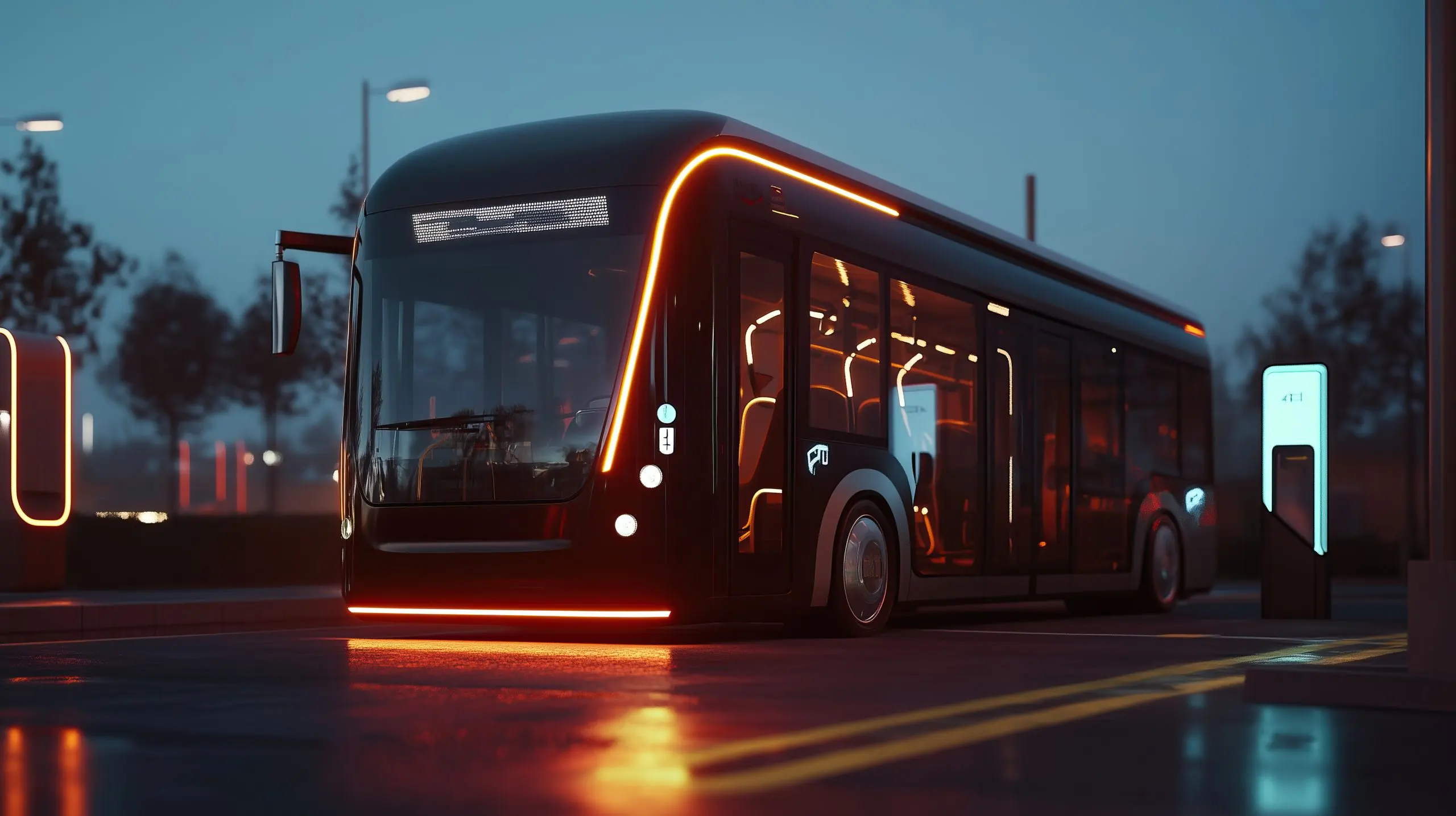
Kenya is emerging as one of Africa’s most active electric mobility markets, with electric buses gaining traction in urban transport, particularly in Nairobi. Although still at an early stage, adoption is accelerating, supported by rising fuel costs, environmental concerns, and innovative business models. Electric buses accounted for just about 2.2% of new bus registrations by 2025, up from negligible levels in 2022, indicating rapid early-stage growth. With broader EV adoption surging to over 35,000 units by 2025, Kenya is positioning itself as a regional leader in electrified public transport, setting the foundation for long-term expansion toward 2035.
Key Market Drivers Shaping the Growth of Kenya’s Electric Bus Market
Rising Demand for Clean Urban Transport
Urban centers such as Nairobi are facing increasing air pollution and congestion, prompting a shift toward cleaner mobility solutions. Electric buses offer zero tailpipe emissions and lower noise levels, making them attractive for public transit systems. Across Africa, transport contributes significantly to emissions, with urban buses alone responsible for a notable share, reinforcing the need for electrification. As public transport demand grows—supported by Kenya’s extensive reliance on buses and matatus—electric buses are expected to play a key role in decarbonizing mass transit.
Cost Advantages and Total Cost of Ownership (TCO)
While upfront costs of electric buses remain higher than diesel alternatives, declining battery prices are narrowing the gap. Lithium-ion battery prices have been falling steadily, with projections indicating cost parity with diesel buses around the mid-to-late 2020s. Operators benefit from lower fuel and maintenance costs, making electric buses increasingly viable, particularly for high-utilization urban routes.
Growth of Local Ecosystem and Innovative Business Models
Companies like BasiGo are introducing leasing and “pay-as-you-drive” models, reducing upfront capital requirements for operators. Local assembly initiatives and partnerships with global OEMs are also strengthening the domestic value chain. This ecosystem-driven approach is accelerating adoption while creating jobs and supporting industrial development.
Policies and Strategic Initiatives Accelerating Electric Bus Adoption in Kenya
The Kenyan government is actively promoting electric mobility through policy frameworks, tax incentives, and partnerships with private players. Public sector involvement in energy generation—led by entities like Kenya Electricity Generating Company—ensures a relatively green electricity mix, enhancing the sustainability of e-buses. Additionally, government procurement programs and climate commitments are expected to drive adoption, aligning with broader goals of reducing fuel imports and carbon emissions.
Competitive Landscape and Key Players Driving Innovation in Kenya’s Electric Bus Market
The market is moderately competitive, with a mix of local startups and international manufacturers. Key players include BasiGo, along with global OEMs such as BYD and Yutong entering through partnerships and assembly operations. Local innovators are focusing on adapting vehicles to African conditions, while international firms bring technological expertise. This combination is fostering a dynamic ecosystem with increasing investment and innovation.
Key Challenges Hindering the Growth of Kenya’s Electric Bus Market
Charging Infrastructure Constraints
One of the biggest barriers is the limited availability of charging infrastructure. Despite rapid EV growth, charging networks are struggling to keep pace, especially for large vehicles like buses. Long charging times and inadequate depot infrastructure can reduce operational efficiency.
High Initial Investment Costs
Electric buses still require significant upfront capital, which can deter small and mid-sized operators. Although financing models are evolving, affordability remains a concern in a price-sensitive transport market.
Future Outlook
The Kenya electric bus market is expected to expand significantly through 2035, supported by strong policy backing, declining technology costs, and rising urbanization. Market share is projected to increase rapidly beyond the current low base, potentially reaching double-digit penetration by the late 2020s if deployment targets are met. With Africa’s electric bus market growing at over 14% CAGR, Kenya is likely to remain one of the fastest-scaling markets in the region. Continued investment in infrastructure, local manufacturing, and financing solutions will be critical to unlocking the sector’s full potential.
Consultants at Nexdigm, in their latest publication “Kenya Electric Bus Market Outlook to 2035,” analyze the sector by System Type (Electric City Buses, Electric Long-Distance Buses, Electric School Buses, Electric Shuttle Buses), By Platform Type (Electric Buses for Public Transport, Electric Buses for Private Fleet Operations, Electric Buses for Government Fleets), and By Fitment Type (On-road Buses, Off-road Buses, Hybrid Systems). Nexdigm suggests that businesses should align their strategies with evolving regulatory frameworks, invest in localized partnerships, and adopt flexible financing models to effectively capitalize on emerging opportunities in Kenya’s electric bus market.
To take the next step, simply visit our Request a Consultation page and share your requirements with us.
Harsh Mittal
+91-8422857704