
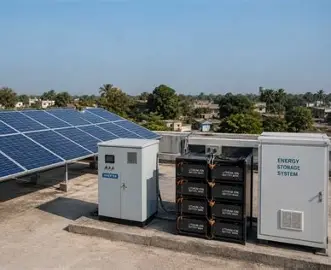
Saudi Arabia’s Battery Energy Storage for Microgrids Market is witnessing rapid growth, driven by renewable energy expansion, grid modernization, and the Kingdom’s energy diversification strategy. Battery Energy Storage Systems (BESS) are increasingly deployed in microgrids to improve grid stability, integrate solar generation, reduce diesel dependency, and ensure uninterrupted power supply for critical infrastructure. With a population exceeding 36 million, installed power-generation capacity above 90 GW, and ambitious plans to deploy 130 GW of renewable energy by 2030, demand for battery-backed microgrids is growing across industrial facilities, remote communities, commercial complexes, mining operations, and smart-city developments.
Key Market Drivers for KSA’s Battery Energy Storage for Microgrids Market
Large-Scale Renewable Energy Development Accelerates Storage Demand
Saudi Arabia is rapidly developing utility-scale renewable energy projects under the National Renewable Energy Program (NREP). The Kingdom aims to install 130 GW of renewable energy capacity by 2030, primarily from solar and wind resources. As solar generation expands across remote and grid-connected locations, battery storage systems are becoming essential for managing intermittency, improving reliability, and maximizing renewable energy utilization within microgrid environments.
Vision 2030 Mega Projects Create Significant Opportunities
Mega developments such as NEOM, The Line, Red Sea Global, Qiddiya, and AMAALA are being designed around sustainable energy systems and smart-grid infrastructure. These projects require resilient power solutions capable of integrating renewable generation with advanced battery storage technologies. Microgrids supported by BESS are increasingly viewed as critical infrastructure components for ensuring reliable and efficient energy supply across these large-scale developments.
Mining, Industrial Diversification, and Energy Security Support Market Growth
Saudi Arabia is expanding its industrial and mining sectors as part of economic diversification efforts. Mining investments exceeding USD 170 billion and growth in manufacturing, logistics, and industrial cities are increasing demand for reliable energy infrastructure. Battery-backed microgrids provide energy resilience, peak-load management, and backup power capabilities for remote operations where grid connectivity may be limited or costly
Government Initiatives Supporting KSA Battery Energy Storage for Microgrids Market
The Saudi government actively supports battery energy storage through Vision 2030, the Saudi Green Initiative, and the National Renewable Energy Program (NREP). Investments exceeding USD 1 trillion across energy, infrastructure, industrial development, and smart-city projects are creating favorable conditions for energy storage deployment. In addition, Saudi Arabia’s target of developing 130 GW of renewable energy capacity by 2030 and achieving net-zero emissions by 2060 is accelerating investments in battery storage, smart-grid technologies, and distributed energy systems. Government-backed initiatives are also supporting domestic battery manufacturing, renewable hydrogen projects, and next-generation energy infrastructure.
Competitive Landscape of KSA Battery Energy Storage for Microgrids Market
Saudi Arabia’s Battery Energy Storage for Microgrids Market is becoming increasingly competitive as international battery suppliers, renewable-energy developers, and technology companies expand operations within the Kingdom. Competition is centered on battery performance, storage duration, lifecycle costs, thermal management technologies, microgrid integration capabilities, and energy-management software. Major participants including Huawei Digital Power, BYD, Tesla Energy, Sungrow, Schneider Electric, Siemens, Hitachi Energy, Fluence, and regional renewable-energy developers are actively pursuing opportunities across utility, industrial, mining, and smart-city projects. The increasing scale of solar-plus-storage installations and intelligent energy-management systems continues to drive innovation and investment.
Major Challenges Facing KSA Battery Energy Storage for Microgrids Market
High Initial Capital Investment Requirements
Large-scale battery storage projects require substantial upfront investment despite declining battery costs globally. Financing structures and project economics remain important considerations for industrial and commercial users.
Extreme Climate and Thermal Management Challenges
Saudi Arabia’s high temperatures and desert conditions require advanced thermal management systems to maintain battery performance and lifespan. Technology providers must increasingly focus on climate-resilient battery designs optimized for harsh operating conditions.
Future Outlook
Saudi Arabia’s Battery Energy Storage for Microgrids Market is expected to witness robust growth through 2035, supported by the Kingdom’s target to deploy 130 GW of renewable energy capacity, installed power-generation capacity exceeding 90 GW, and USD 1 trillion+ investments under Vision 2030. Mega-projects such as NEOM, The Line, Red Sea Global, and major mining developments worth over USD 170 billion are expected to accelerate demand for resilient microgrid solutions. Additionally, increasing adoption of lithium-ion battery systems, solar-plus-storage microgrids, AI-enabled energy management platforms, and green hydrogen infrastructure will strengthen deployment across industrial facilities, remote communities, logistics hubs, and commercial complexes. As renewable energy penetration rises and grid modernization progresses, battery energy storage is expected to become a critical component of Saudi Arabia’s decentralized and low-carbon energy ecosystem.
Consultants at Nexdigm, in their latest publication “KSA Battery Energy Storage for Microgrids Market Outlook to 2035” analyse the sector By Battery Storage Technology (Lithium Iron Phosphate (LFP), Nickel Manganese Cobalt (NMC) and Lithium Titanate (LTO)), By Grid Connectivity Type (Grid-Tied Microgrid and Islanded/Standalone Microgrid) and By Power Capacity Rating (Below 100 kWh, 100 kWh to 1 MWh and 1MWh to 10MWh).
Nexdigm suggests that businesses in Saudi Arabia’s Battery Energy Storage for Microgrids Industry prioritize lithium-ion battery systems, hybrid solar-plus-storage microgrids, AI-driven energy-management platforms, and climate-resilient storage technologies to capitalize on the Kingdom’s 130 GW renewable energy target, USD 1 trillion+ Vision 2030 investments, expanding smart-city ecosystem, and growing demand for reliable, low-carbon, and distributed energy infrastructure across industrial, commercial, utility, and remote applications.
To take the next step, simply visit our Request a Consultation page and share your requirements with us.
Harsh Mittal
+91-8422857704