
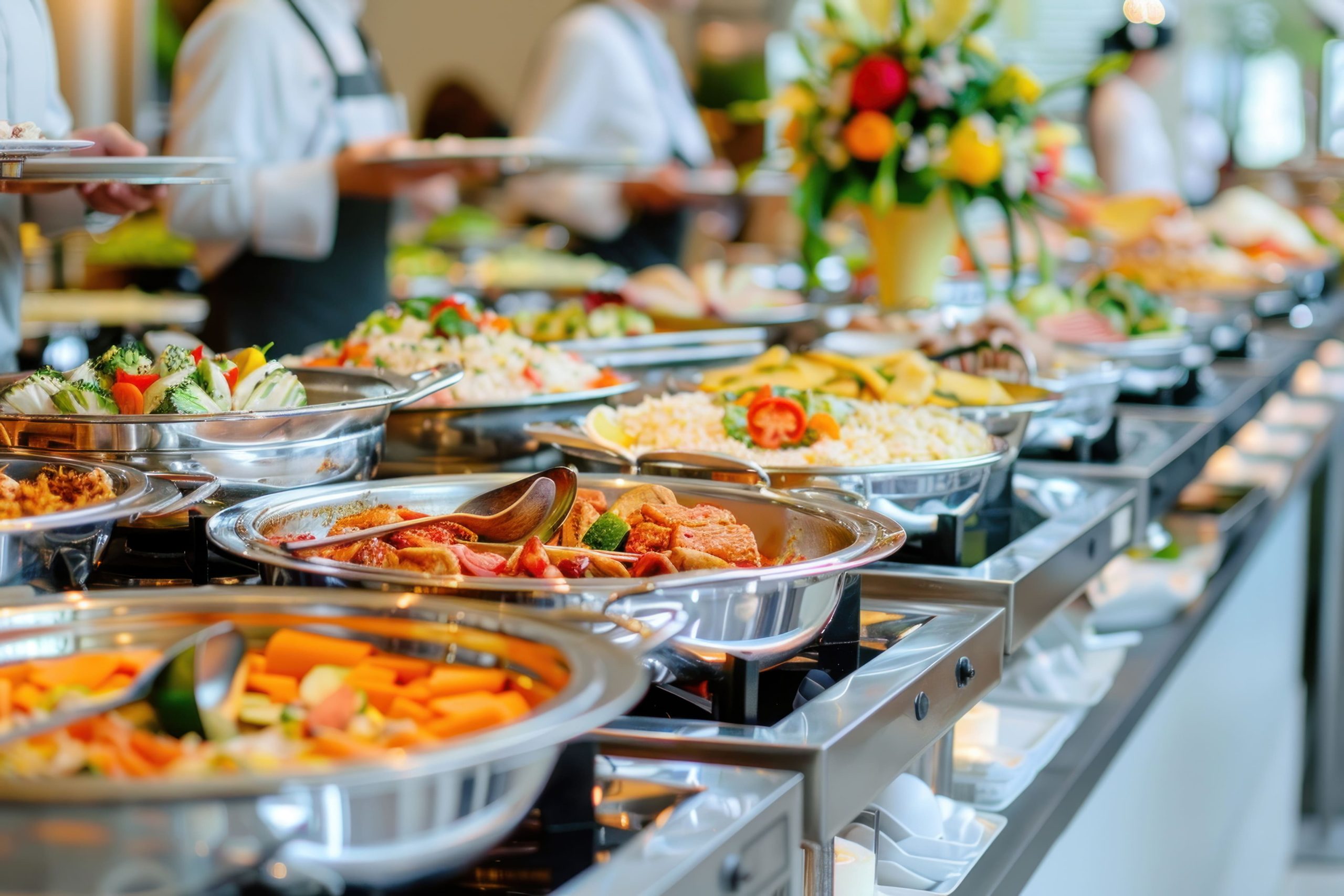
The KSA catering market is undergoing steady transformation as Saudi Arabia accelerates its Vision 2030 agenda focused on tourism, mega infrastructure projects, and diversification of the economy beyond oil. Large-scale developments such as NEOM, Qiddiya, the Red Sea Project, and Diriyah Gate are creating sustained demand for institutional catering, workforce meal services, and event-based food solutions. As of 2026, Saudi Arabia’s hospitality and foodservice sector continue to expand, driven by religious tourism in Makkah and Madinah, rising domestic tourism, and an increasing number of international events and exhibitions. The market is shifting from fragmented, price-driven contracts toward more structured, technology-enabled, and compliance-focused catering operations.
What’s Driving the Catering Market in Saudi Arabia?
Vision 2030-Linked Mega Projects and Workforce Catering Demand
Saudi Arabia’s mega infrastructure and tourism projects are generating continuous demand for large-scale workforce catering. Developments such as NEOM and the Red Sea Project require catering services for tens of thousands of workers, including daily meal provision, remote-site catering, and logistics-driven food supply chains. Catering companies are increasingly investing in centralized kitchens, cold-chain infrastructure, and mobile catering units to serve large labor camps and project sites efficiently.
Growth in Religious Tourism and Event-Based Catering
The rising number of Umrah pilgrims and international visitors is supporting catering demand in Makkah and Madinah, particularly for group dining, hotel catering, and institutional food services. Additionally, Saudi Arabia’s expanding calendar of sports events, cultural festivals, and global exhibitions is driving short-term, high-volume catering contracts. Event organizers are increasingly outsourcing food services to professional caterers capable of handling hygiene compliance, menu customization, and crowd management.
Corporate Outsourcing and Institutional Dining Expansion
Corporate offices, hospitals, schools, and universities are increasingly outsourcing food services to specialized catering providers to improve quality consistency and operational efficiency. Institutional catering demand is also rising in industrial cities such as Jubail, Yanbu, and King Abdullah Economic City, where large manufacturing and logistics clusters require daily meal services for employees. This trend is supporting long-term, contract-based revenue models for organized catering players.
Government-Led Initiatives Supporting the Foodservice Ecosystem
The Saudi government’s push to develop tourism, entertainment, and healthcare infrastructure is indirectly strengthening the catering market. Initiatives under Vision 2030, including investment in hospitality zones, expansion of airports, and development of convention and exhibition centers, are increasing the addressable market for catering companies. Moreover, stricter food safety regulations by the Saudi Food and Drug Authority and municipality-led hygiene compliance programs are encouraging formalization within the catering industry. These regulatory upgrades are raising entry barriers for informal operators while benefiting organized players with strong compliance systems.
Market Competition and Industry Structure
The KSA catering market remains moderately fragmented, with a mix of large multinational catering companies, regional players, and local SMEs. Major organized caterers dominate contracts in oil & gas, healthcare, aviation, and mega infrastructure projects due to their scale, compliance capabilities, and centralized kitchen infrastructure. At the same time, local caterers retain strong positions in small corporate offices, schools, and community events due to pricing flexibility and localized menus. The market is witnessing growing adoption of digital contract management, menu planning software, and supply chain tracking to improve operational efficiency and client transparency.
High-Cost Pressures and Supply Chain Dependence
The catering industry in Saudi Arabia faces cost pressures from imported food ingredients, cold-chain logistics, and rising energy and labor costs. Despite growing localization of food production under national food security initiatives, a significant portion of specialty ingredients and packaged food products is still imported. This exposes caterers to currency fluctuations and supply chain disruptions, impacting profit margins on fixed-price long-term contracts.
Future Outlook
The KSA catering market is expected to witness sustained growth through 2035, supported by continuous investment in tourism, mega projects, healthcare, and industrial infrastructure. By 2035, the market is likely to become more structured, with higher penetration of large-scale centralized kitchens, standardized food safety protocols, and technology-enabled service delivery. Demand for specialized catering such as healthy meals, halal-certified international cuisines, and nutritionally optimized workforce diets is expected to rise. Sustainability practices including food waste management, energy-efficient kitchens, and local sourcing will increasingly influence contract awards, particularly for government and giga-project tenders.
Consultants at Nexdigm, in their latest publication “KSA Catering Market Outlook to 2035”, analyzed the market by Service Type (Workforce Catering, Corporate Catering, Healthcare Catering, Education Catering, Event Catering), By End User (Oil & Gas, Construction & Infrastructure, Hospitality & Tourism, Healthcare, Education, Corporate Offices), and By Contract Type (Long-term Contracts, Short-term Projects, Event-Based Contracts). Nexdigm believes that businesses should prioritize centralized kitchen scalability, SFDA-compliant food safety systems, and technology-enabled operations, while building strong partnerships with giga-project developers and hospitality operators to capture long-term catering contracts in Saudi Arabia.
To take the next step, simply visit our Request a Consultation page and share your requirements with us.
Harsh Mittal
+91-8422857704