
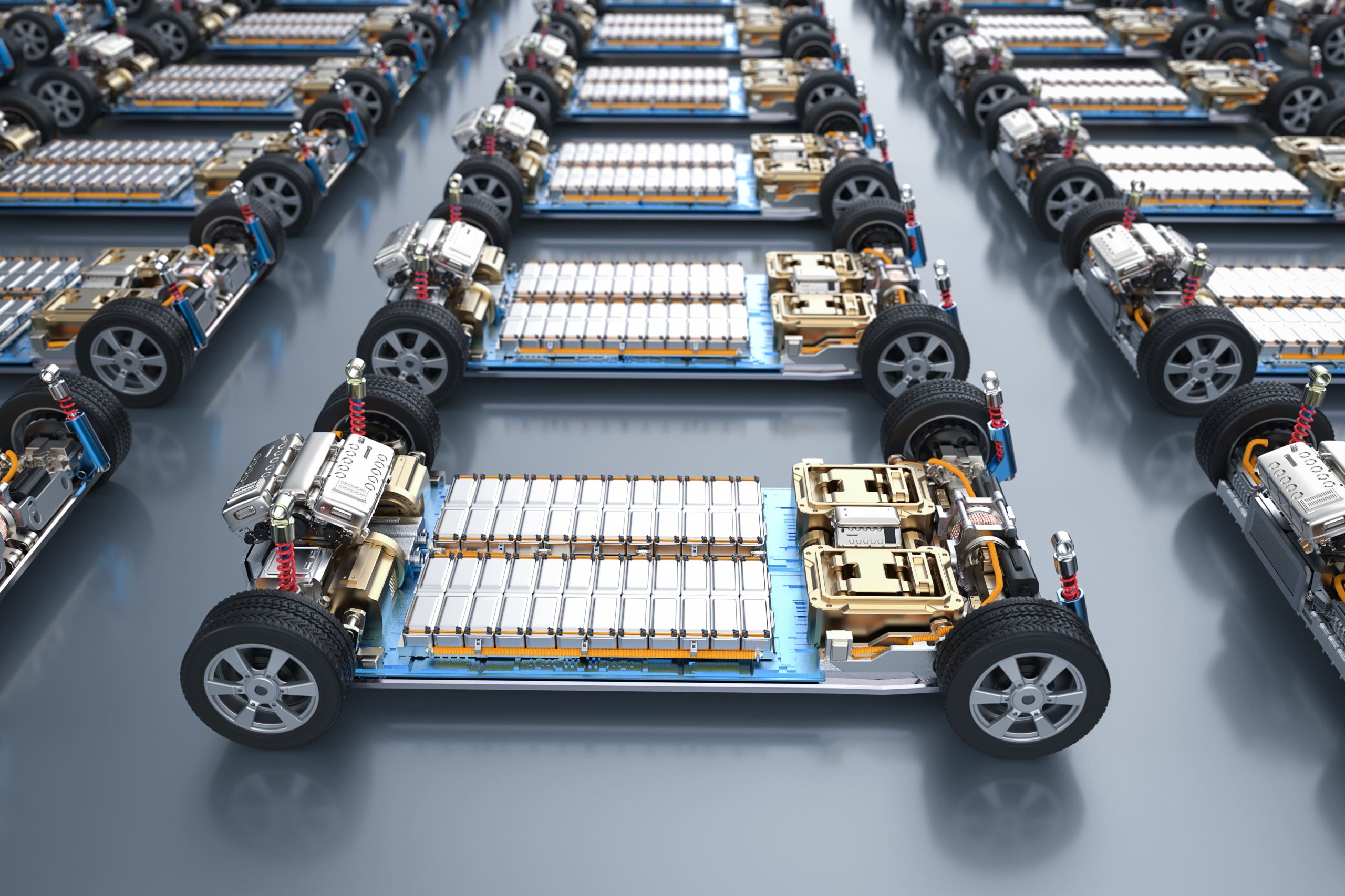
Saudi Arabia is still in the early innings of its electric vehicle journey, but the battery side of the story is becoming harder to ignore. As the Kingdom pushes industrial diversification under Vision 2030, EV batteries are starting to matter not just as imported components, but as a future manufacturing and supply chain opportunity. In 2026, most battery cells, packs, and key components used in Saudi Arabia still come from abroad, especially from Asia. That part has not changed yet. What has changed is the seriousness of local EV production, charging infrastructure, and government-backed industrial investment. Taken together, these are beginning to create real demand for battery assembly, battery management systems, thermal controls, and eventually recycling. Saudi Arabia is not yet a battery manufacturing powerhouse, but it is clearly laying the groundwork to become an important market and possibly a regional processing and assembly hub by 2035.
What’s Driving the EV Battery Market in KSA?
Local EV Production is Starting to Create Real Battery Demand
One major driver is local EV production. Saudi Arabia is no longer only talking about EV adoption from the consumer side. It is now trying to build vehicles at home through projects such as Lucid Motors and Ceer. That matters because battery demand grows much faster when a country starts assembling or producing EVs locally. Once factories begin scaling, the need extends beyond battery imports into pack integration, software systems, cooling technology, and quality testing.
Charging Infrastructure is Becoming a Key Enabler
Charging infrastructure is another important piece. On the ground, EV adoption does not move very far without visible and reliable charging access. Saudi Arabia has been expanding public charging points in cities like Riyadh and Jeddah, while EVIQ plans to roll out a large charging network over the next few years. In practical terms, this gives both consumers and fleet operators more confidence to consider EVs seriously, which naturally feeds demand for batteries and replacement services over time.
Industrial Diversification is Opening a Bigger Opportunity
There is also a broader industrial angle here. Batteries sit at the intersection of mobility, energy storage, electronics, and advanced manufacturing. That makes them attractive for a country trying to build new industries. The real opportunity may not start with battery cells, which are difficult and expensive to localize, but with modules, packs, control systems, and eventually second life battery applications.
Government-Led Initiatives
The Saudi government is doing much of the heavy lifting in the early phase of this market. Through Vision 2030 and Public Investment Fund backed projects, the Kingdom has created a strong policy push for EVs, charging networks, and domestic manufacturing. That kind of top-down support matters in a market where private demand is still developing. Still, policy support alone does not guarantee a strong battery industry. In practice, success will depend on whether Saudi Arabia can attract technical partnerships, skilled labor, and long-term supplier commitments. The ambition is clear. The harder part is execution.
Market Competition
At the moment, the KSA EV battery market is not crowded in the traditional sense. Competition is shaped more by who controls the supply chain than by how many battery brands are visible in the market. Global battery producers still dominate the technology side, while local activity is centered around vehicle manufacturers, infrastructure developers, and industrial investors. Lucid Motors and Ceer are among the most important names influencing battery demand in Saudi Arabia today. Over time, the market will likely open up for battery pack assemblers, electronics suppliers, thermal management firms, and recycling operators. That is where competition could get more interesting, especially if Saudi Arabia begins to attract component manufacturers serving the wider GCC.
High Import Dependency
This remains one of the biggest constraints. Saudi Arabia still relies heavily on imported battery cells, advanced materials, and power electronics. That leaves the market exposed to shipping disruptions, currency fluctuations, and pricing pressure from global battery supply cycles. A common challenge is that countries often want to localize the full battery value chain too quickly. In reality, battery cell production is capital intensive, technically demanding, and hard to justify without very large domestic demand. Saudi Arabia may find more success in the medium term by focusing on assembly, integration, diagnostics, and recycling rather than trying to build gigafactories too early.
Early EV Adoption in Saudi Arabia Signals Long Run Potential for Battery Demand
Saudi Arabia’s EV battery outlook received a fresh boost after recent attention around EV adoption and charging constraints in the Kingdom. In April 2025, Reuters reported that Saudi Arabia sold only around 2,000 EVs in the prior year, highlighting how early the market still is, but also underscoring the scale of future upside. The same report noted the country had just 101 charging stations as of 2024, while EVIQ aims to expand that to 5,000 by 2030. For battery players, that matters. Charging visibility, not just vehicle launches, will ultimately decide how fast battery demand becomes commercially meaningful in Saudi Arabia.
Future Outlook
By 2035, the KSA EV battery market will likely look far more developed than it does today, though probably not in the way some headline forecasts suggest. The strongest progress is likely to come from battery pack assembly, aftermarket services, charging-linked storage, and eventually battery recycling. If EV manufacturing gains traction locally, battery demand will follow in a much more meaningful way. Saudi Arabia may not become a global battery cell giant by 2035, and that is perfectly fine. A more realistic and commercially sensible path is becoming a regional center for battery integration, industrial processing, and EV supply support. That would still make the Kingdom one of the more important battery-linked markets in the Middle East.
Consultants at Nexdigm, in their latest publication “KSA EV Battery Market Outlook to 2035”, analyze the market by Battery Type (Lithium-ion, LFP, NMC, Emerging Chemistries), By Vehicle Type (Passenger EVs, Commercial EVs, Buses), By Value Chain Stage (Battery Cells, Modules, Packs, BMS, Recycling), and By End Use (OEMs, Fleet Operators, Charging-linked Storage, Aftermarket). Nexdigm believes that businesses should focus on battery pack localization, global supplier partnerships, thermal management technologies, and recycling capacity if they want to build a durable presence in Saudi Arabia’s EV battery market.
To take the next step, simply visit our Request a Consultation page and share your requirements with us.
Harsh Mittal
+91-8422857704