
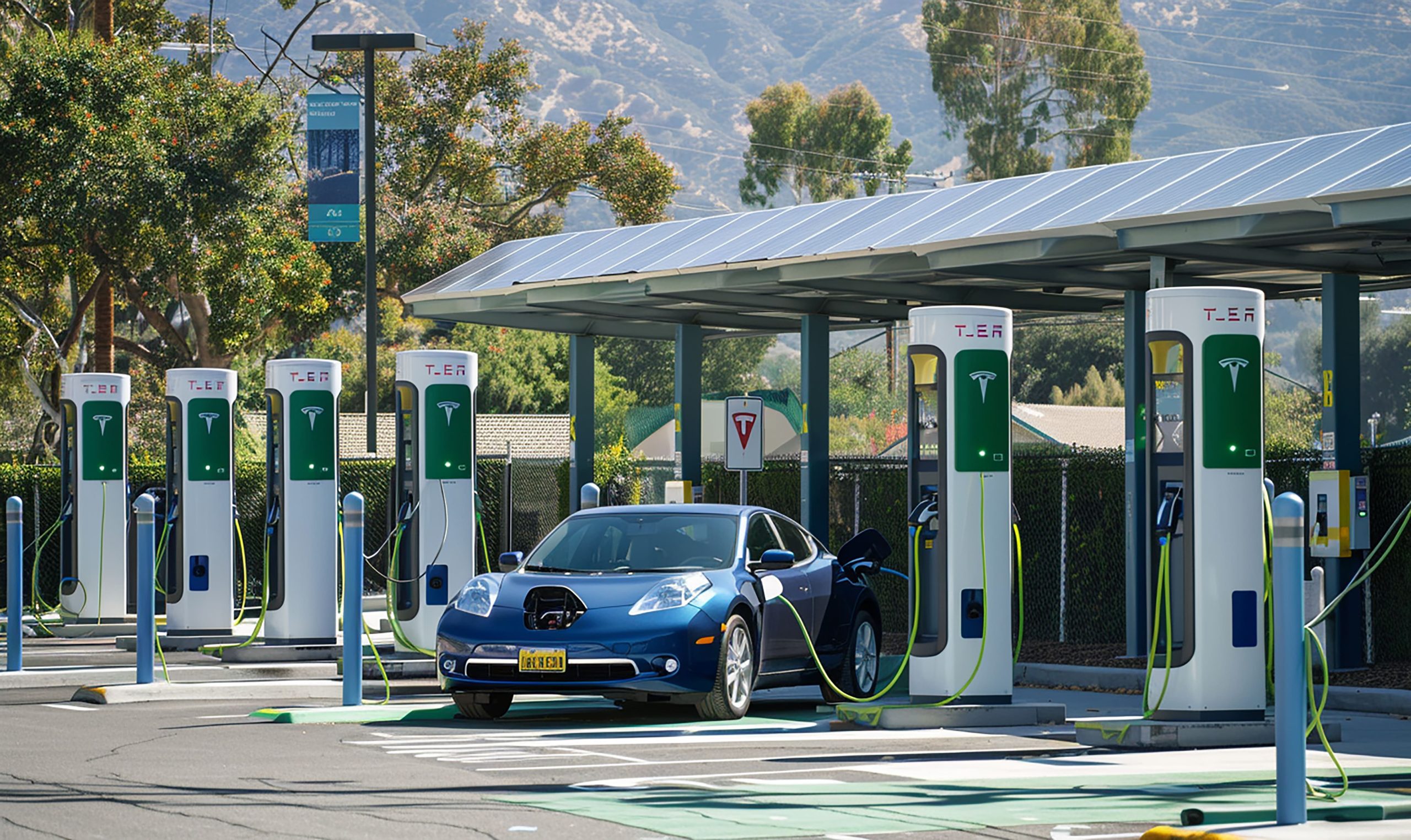
Saudi Arabia’s EV charging infrastructure market is moving from concept to execution much faster than many expected. A few years ago, EV adoption in the Kingdom still felt distant, largely because charging access was limited and consumer confidence was low. That picture is now changing. Backed by Vision 2030, large scale urban projects, and state supported investment, the country is laying the groundwork for a charging network that can support both private vehicles and commercial fleets over the long term. A major turning point came with the launch of EVIQ, the joint venture between the Public Investment Fund and Saudi Electricity Company, which aims to deploy more than 5,000 fast chargers across 1,000 plus locations by 2030. That kind of rollout matters. In practice, people do not buy EVs simply because they like the technology. They buy them when charging feels visible, convenient, and reliable.
What’s Driving the EV Charging Infrastructure Market in KSA?
Urban Transformation and Changing Mobility Habits
The biggest driver behind EV charging infrastructure growth in Saudi Arabia is not just sustainability policy. It is the broader transformation of how cities are being planned and how mobility is being reimagined. As urban centers such as Riyadh and Jeddah continue to expand, transport is becoming more integrated with digital services, cleaner energy systems, and smarter real estate development. EV charging fits naturally into that shift because it supports both convenience and long term mobility planning. In many ways, charging infrastructure is becoming part of the urban utility layer rather than just a transport add on.
Commercial Real Estate and Destination Charging Demand
Another important growth factor is the way private property owners are beginning to view charging stations. Real estate developers, shopping malls, office complexes, and hospitality groups are increasingly treating EV chargers as a practical amenity rather than a premium feature. That shift matters because charging demand in most early stage EV markets usually begins with convenience, not highway infrastructure alone. If consumers can charge their vehicles while working, shopping, dining, or staying at hotels, EV ownership becomes far easier to justify. In practice, destination charging often plays a bigger role in early adoption than many operators initially assume.
Fleet Electrification and Commercial Use Cases
There is also a strong commercial transport case emerging in Saudi Arabia. Fleet electrification could become one of the most important contributors to charging demand over the next decade, especially across delivery networks, corporate mobility services, ride hailing fleets, and logistics operators. Fleet owners tend to adopt new vehicle technologies faster than private buyers when operating economics are favorable. Lower fuel costs, more predictable routes, and centralized charging setups can make EV adoption financially viable much earlier in commercial applications. This creates a more immediate and measurable use case for charging deployment compared to waiting for private passenger EV demand to scale gradually.
Government-Led Initiatives
Government support is doing much of the heavy lifting in this market, and realistically, that was always going to be the case. Charging infrastructure is expensive to build early on, especially before EV volumes reach commercial scale. Saudi Arabia has taken a more coordinated route than many countries by linking infrastructure planning with utilities, public investment, and long-term transport policy. The formation of EVIQ is one of the clearest examples of that. It signals that the Kingdom is not waiting for fragmented private investment to solve a national infrastructure challenge. That said, public rollout alone will not be enough. The real test will be whether regulation, permitting, grid access, and payment interoperability can keep pace once deployments start scaling across cities and highways.
Market Competition
The competitive landscape is still taking shape, but the early structure is already visible. EVIQ will likely dominate the organized public charging space, while specialist operators, technology providers, and infrastructure partners carve out roles in installation, software, fleet charging, and maintenance. Electromin has already emerged as one of the more visible private players in the Kingdom, and international charger manufacturers are increasingly looking at Saudi Arabia as a Gulf entry point. On the ground, the market will probably split between high traffic urban charging, destination charging at commercial sites, and depot-based charging for fleets. One thing worth watching is whether the market consolidates quickly. In charging, scale matters. Operators with weak uptime, poor maintenance, or clunky payment systems tend to lose trust fast.
Early-Stage EV Penetration and Grid Readiness
A common challenge in Saudi Arabia is that charging infrastructure may arrive before meaningful EV adoption does. That is not necessarily a bad thing, but it does create a timing mismatch. For operators, underused chargers can hurt returns in the short term. For users, a poorly maintained network can damage confidence before the market has even matured. Then there is the grid question. Fast charging puts serious pressure on electricity infrastructure, especially in high demand urban zones. Saudi Arabia also has to deal with harsh climate conditions. Heat, dust, and heavy outdoor exposure are not minor issues for charging equipment. Reliability will matter just as much as charger count.
Future Outlook
By 2035, Saudi Arabia is likely to have one of the most developed EV charging networks in the GCC, not simply because of policy ambition, but because the supporting pieces are now falling into place. Public fast charging corridors, residential installations, fleet depots, and destination charging are all likely to expand in parallel. The more interesting shift may come from smarter infrastructure rather than just more hardware. Over time, load management, solar integration, app based access, and dynamic pricing will become increasingly important, especially as charger usage rises. In other words, the market will not be defined only by how many chargers are installed, but by how well they actually work in daily life.
Consultants at Nexdigm, in their latest publication “KSA EV Charging Infrastructure Market Outlook to 2035”, analyzed the market by Charging Type (AC Chargers, DC Fast Chargers, Ultra Fast Chargers), By Installation Type (Public, Private, Commercial, Fleet), By Connector Type, By Application (Passenger Vehicles, Commercial Fleets, Public Transport), and By Region (Riyadh, Jeddah, Dammam, NEOM and Others). Nexdigm believes that businesses should focus on high utilization locations, dependable uptime, fleet partnerships, and smart charging solutions, as these are likely to matter far more than simply expanding charger numbers.
To take the next step, simply visit our Request a Consultation page and share your requirements with us.
Harsh Mittal
+91-8422857704