
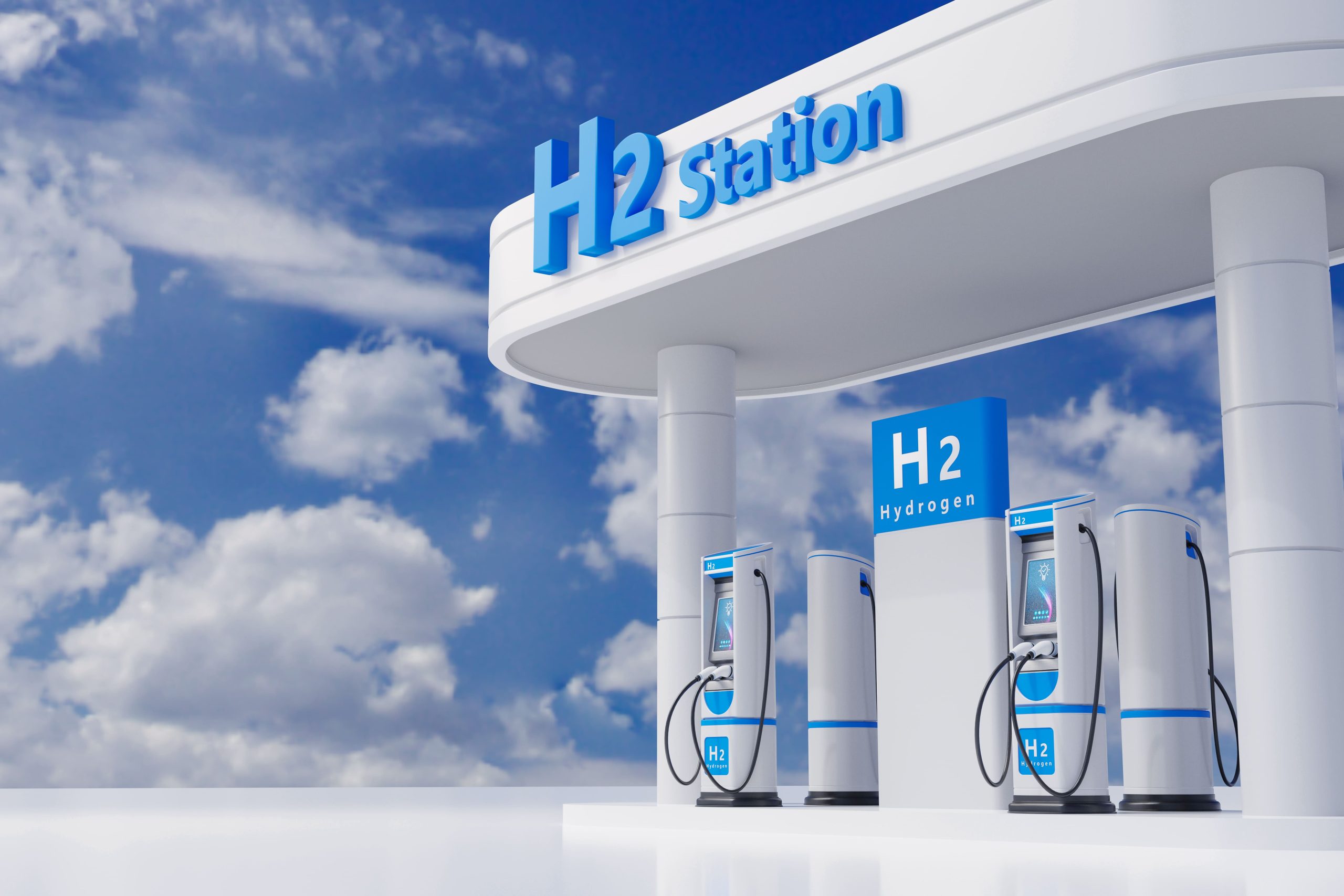
Saudi Arabia’s hydrogen refueling station market is still small today, but it sits in one of the most interesting corners of the Kingdom’s energy transition story. The conversation is no longer only about producing green or blue hydrogen for export. The bigger question now is whether Saudi Arabia can also build practical local demand for hydrogen, especially in transport. That is where refueling infrastructure becomes important. Without stations, fuel cell vehicles remain a concept rather than a working mobility solution. With projects like NEOM, industrial freight corridors, and clean public transport pilots coming into focus, the groundwork for hydrogen refueling stations in KSA is starting to look more credible than it did a few years ago.
What’s Driving the Hydrogen Refueling Stations Market in KSA?
Large-Scale Hydrogen Production Projects
One of the clearest enablers is Saudi Arabia’s push into large-scale hydrogen production. The Kingdom has already committed significant capital toward hydrogen and ammonia projects, especially in NEOM, where clean hydrogen is expected to become a core industrial output. This matters because refueling infrastructure rarely develops in isolation. It usually follows supply. Once hydrogen production, storage, and transport systems are in place, the economics of building nearby stations become far more practical. In simple terms, if Saudi Arabia is producing hydrogen at scale, someone will eventually look for local transport use cases rather than exporting every molecule.
Heavy-Duty Mobility Has Better Logic Than Passenger Cars
Passenger hydrogen cars may grab headlines, but in Saudi Arabia the stronger case is likely to come from buses, trucks, port vehicles, and industrial fleets. These segments need fast refueling and longer range, which makes hydrogen more compelling than battery-electric alternatives in certain settings. A logistics operator moving freight between industrial zones cannot always afford long charging downtime. That is where hydrogen starts to make operational sense. In practice, one hydrogen station serving a concentrated fleet can be more viable than trying to support scattered retail vehicle demand.
NEOM as a Real-World Testbed
NEOM gives Saudi Arabia something many countries do not have: the chance to build hydrogen mobility into a city and transport network from the ground up. That is a major advantage. Instead of retrofitting old fuel infrastructure, planners can design refueling, fleet routes, and clean transport systems together. If hydrogen buses, service vehicles, or autonomous freight units become part of NEOM’s daily operations, refueling stations will move from pilot assets to functioning infrastructure. That is often how new energy technologies gain credibility – not through announcements, but through repetitive daily use.
Government-Led Initiatives Supporting Market Development
Government support remains central because this market is unlikely to mature on commercial logic alone in the early years. Vision 2030, industrial diversification targets, and clean energy investment programs are all creating a favorable backdrop for hydrogen-related infrastructure. Saudi Arabia has been more aggressive than many regional peers in putting hydrogen on the national agenda, even if transport applications are still behind production ambitions. The state’s role will likely be less about directly building every station and more about funding pilots, reducing project risk, and aligning public transport or industrial fleet procurement with hydrogen infrastructure rollout.
Market Competition and Emerging Ecosystem
At this stage, competition is still limited to a small group of large, well-capitalized players. Saudi Aramco, Air Products, ACWA Power, NEOM, and ENOWA are among the names most likely to shape the early market. This is not yet a space where smaller private operators can easily enter and scale. Hydrogen stations are expensive, technically demanding, and highly dependent on upstream coordination. Over time, that could change as engineering firms, gas technology suppliers, and fleet operators begin carving out more specialized roles. For now, the market remains top-heavy and heavily project-led.
Limited Hydrogen Vehicle Adoption
The biggest obstacle is straightforward: there are still too few hydrogen-powered vehicles on Saudi roads. That creates a classic chicken-and-egg problem. Investors hesitate to build stations without vehicle demand, while fleet buyers hesitate to commit without reliable refueling access. Cost only makes this harder. Hydrogen stations require compression systems, storage units, transport logistics, and strict safety controls, all of which push capital costs well above conventional fuel infrastructure. A common challenge is that the technology conversation moves faster than actual fleet deployment on the ground.
Future Outlook
By 2030, Saudi Arabia is unlikely to have a widespread public hydrogen refueling network in the way EV charging is being discussed globally. That said, the country does not need a massive station footprint to build a meaningful market. A smaller number of well-placed stations serving buses, trucks, industrial fleets, and smart-city transport could be enough to establish real commercial momentum. The more likely path is selective deployment, not blanket rollout. If that happens, KSA could become one of the first markets in the region where hydrogen mobility moves beyond ambition and starts operating at a practical level.
Consultants at Nexdigm, in their latest publication “KSA Hydrogen Refueling Stations Market Outlook to 2030”, analyze the market by Station Type (On-Site Generation, Delivered Hydrogen, Mobile Refueling Units), By Pressure Level (350 Bar, 700 Bar), By End User (Passenger Vehicles, Buses, Trucks, Industrial Fleets), and By Region (Central, Western, Eastern, NEOM/Northwest). Nexdigm believes businesses should closely track fleet-based hydrogen adoption, prioritize corridor-level infrastructure planning, and focus less on passenger mobility hype and more on use cases that can actually sustain station economics.
To take the next step, simply visit our Request a Consultation page and share your requirements with us.
Harsh Mittal
+91-8422857704